
Subtitle: Why Great Photography is About Deleting Your Work
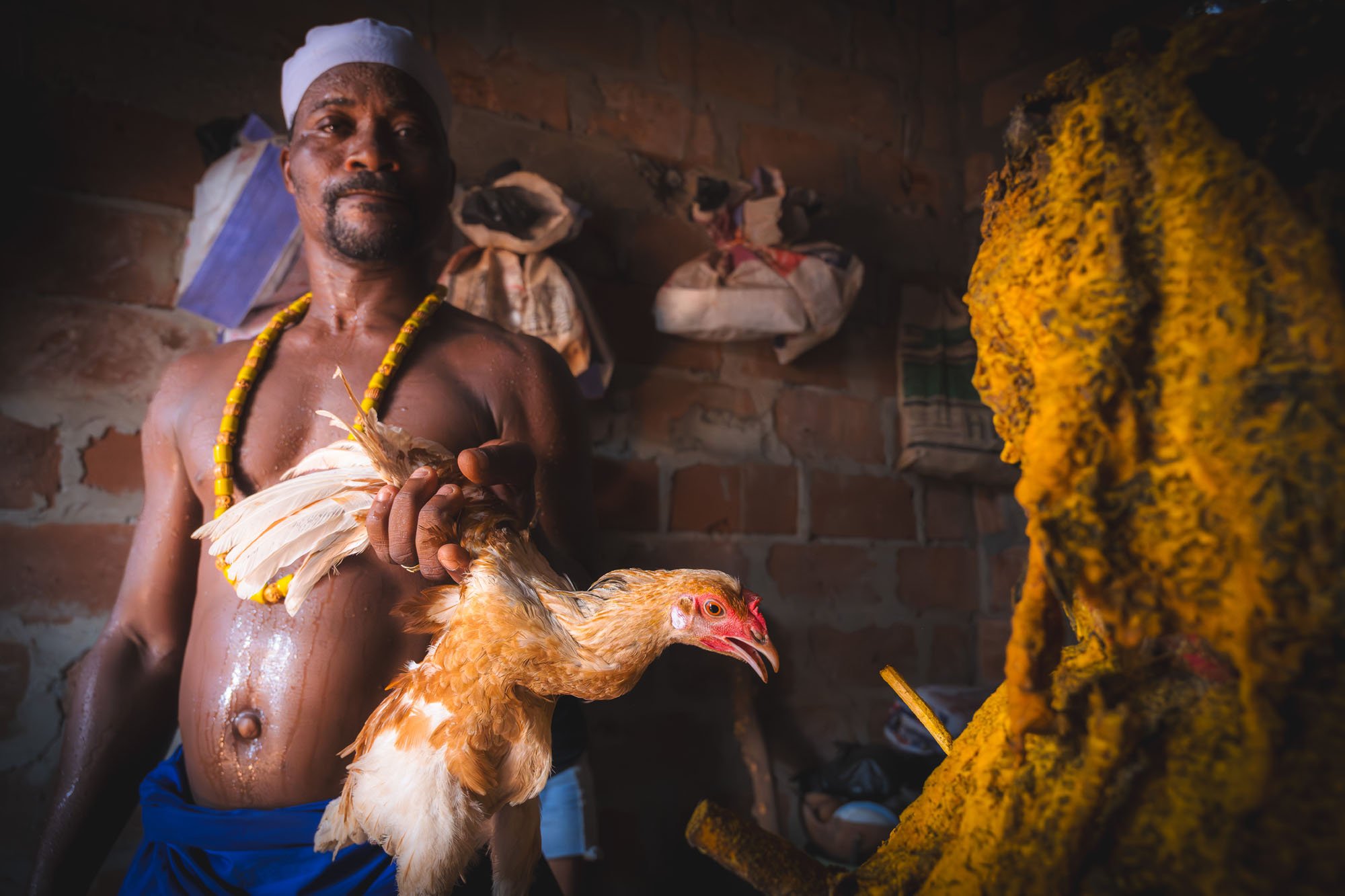
A Voodoo priest offers a sacrifice to Mami Wata, Ouidah, Benin
Let’s get one thing straight. The field is messy.
When I’m coaxing Sully, my ’97 Defender, through a washed-out track to photograph a remote landscape, there is dust, diesel fumes and sheer physical exhaustion. The magic hasn’t happened yet.
Wherever you take photographs I reckon the feeling is the same. In the moment, when you are searching for the shot - or even when you find the shot - its not clean and its not easy. It feels rushed. There is panic. You are juggling all the variables and trying to balance it all into a 3x2 2D rectangle.
We live in an era where we have the ability to take more photographs, to experiment in the field and to explore countless perspectives as we search for the 'perfect shot'. On the one hand this is a gift, on the other it is a bloated mess that makes ruthless curation more vital than ever.
Because the art of photography isn’t in the shot, it’s in the selection we make. Taking a photograph is just the first act of the art. Selection is where the real magic happens.
👉 Download my FREE Visual Blueprints here
to learn the Signals that make great photographs.
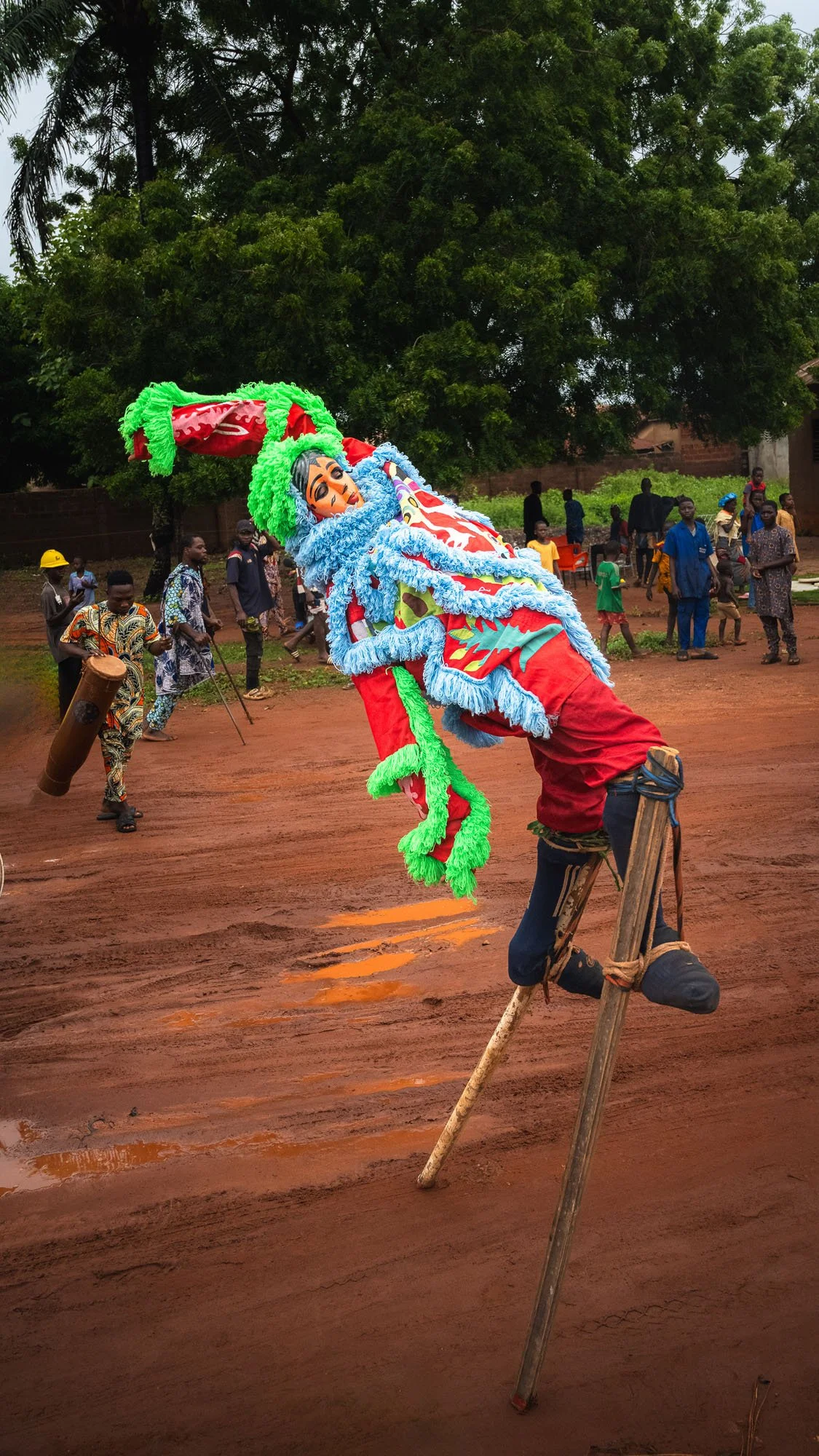
A Moko Jumbie towers over the crowd warding off negative energy during a funeral, Abomey, Benin
The Sentimental Umbilical Cord
I don’t believe the hardest part of photography is technical. I think it is the psychological struggle to be objective in our work.
Because you no doubt suffered for the frame. You put in time and effort, travelled miles and battled through weather to get it. As a result your brain whispers that your photograph is a masterpiece because the memory of taking it was intense. In psychology, we call this Effort Justification.
Here is the brutal truth: your viewer doesn’t have your memories. They don't feel the heat or the exhaustion. They only have the pixels.
To cross that divide you have to sever the cord. You have to kill the memory of the shooter so the editor can live. If you don't, your image will likely force your viewer to sift through the noise to find a meaning. And after many years shooting, that often doesn’t work.
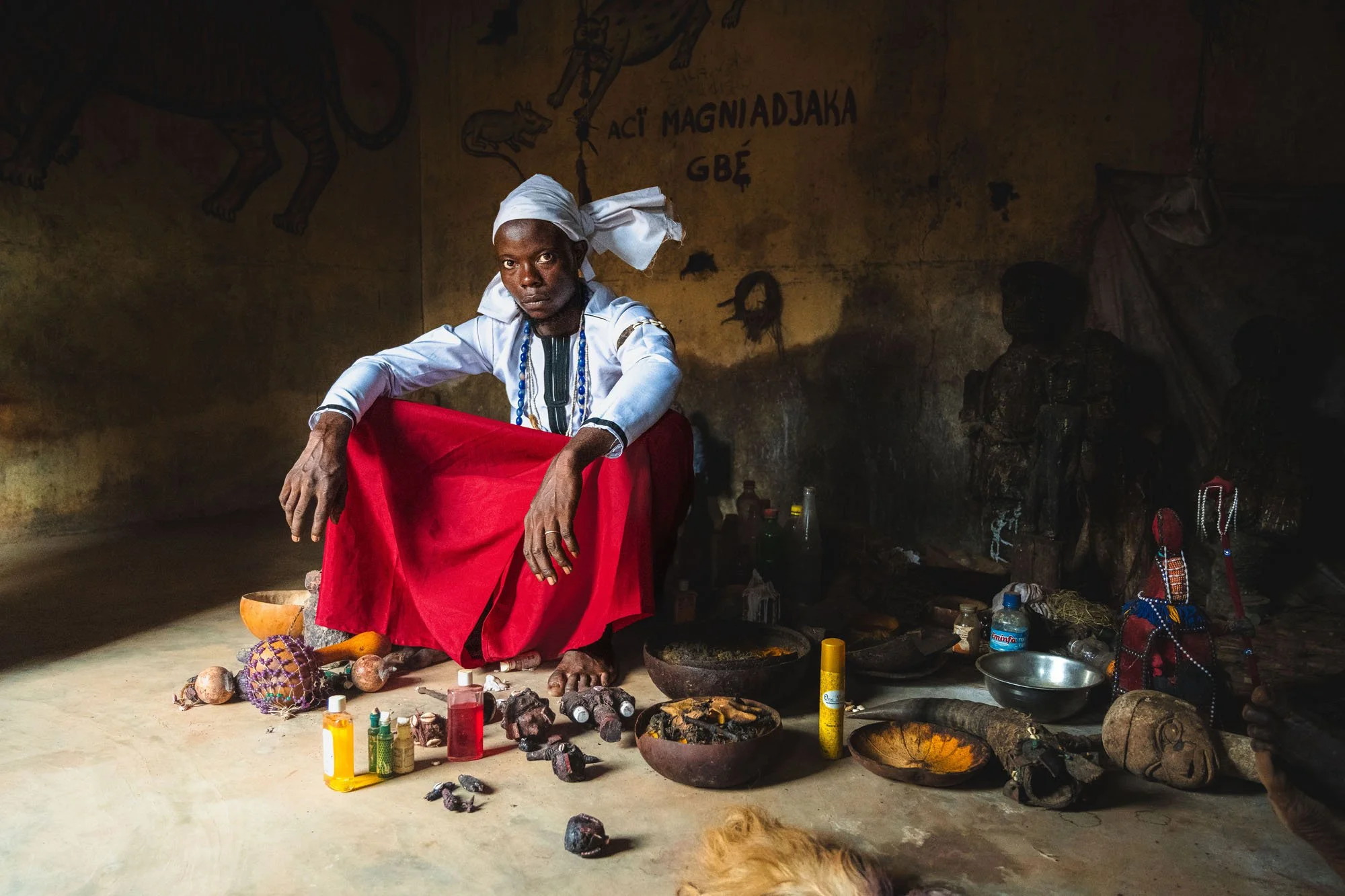
A Voodoo priest centres himself in his shrine ahead of a ritual, Abomey, Benin
“Throw away the bread so you’re left with the crumbs”
Culling is the moment you understand what your image is actually able to stand for.
I remember staring at my monitor after a gruelling stint shooting Voodoo ceremonies in Benin. I’d been in the field for days, my senses were frayed from the overload—dust kicked up by erratic dancing, suffocating heat, unpredictable movement and sheer physical exhaustion. I had fired off hundreds of frames a day just trying to survive the environment.
Sitting there, staring at the noise, I realised taking the photograph isn't the art. The art is the curation. Perhaps a better way to look at it is that photography is actually a ‘game-of-two-halves’, and too many of us forget the power of that second half.
There is an art to sifting through hundreds of messy frames to find the one image that contains the signal you want the work to be about. You are hunting for the frame that says enough, whilst leaving just enough unsaid. You aren't there to hand-feed the viewer an answer; you are there to find the visual breadcrumbs required to trigger the viewer's engagement.
It’s a workflow I’ve refined over the years…

A moment of solace with two Mami Wata Acolytes, Ouidah, Benin
The 3-Step Cull
To beat the paralysis of the edit suite, we have to hack our own biology. Here is how I filter my work:
The Cooling-Off Period: Never cull the same day you shoot. Give your brain twenty-four hours to settle. You need to look at the work as a stranger would, not as the person who felt the wind on their face.
Positive Selection: Most people look for what to 'Reject' (Negative Selection). This is exhausting. Instead, perform a rapid first pass looking only for what to 'Keep'. Any reason is fine (in focus, interesting gesture, whatever). The brain is faster at recognising a 'Match' to a desired pattern than evaluating a mistake; so this should feel instinctive, it should flow.
3. The Breadcrumb Test: This is where you take your time. Before the final cut, ask yourself: Does this frame leave a breadcrumb, or is it just pretty? Kill the safe, pretty shots. Leave the grit. Leave the unanswered questions.
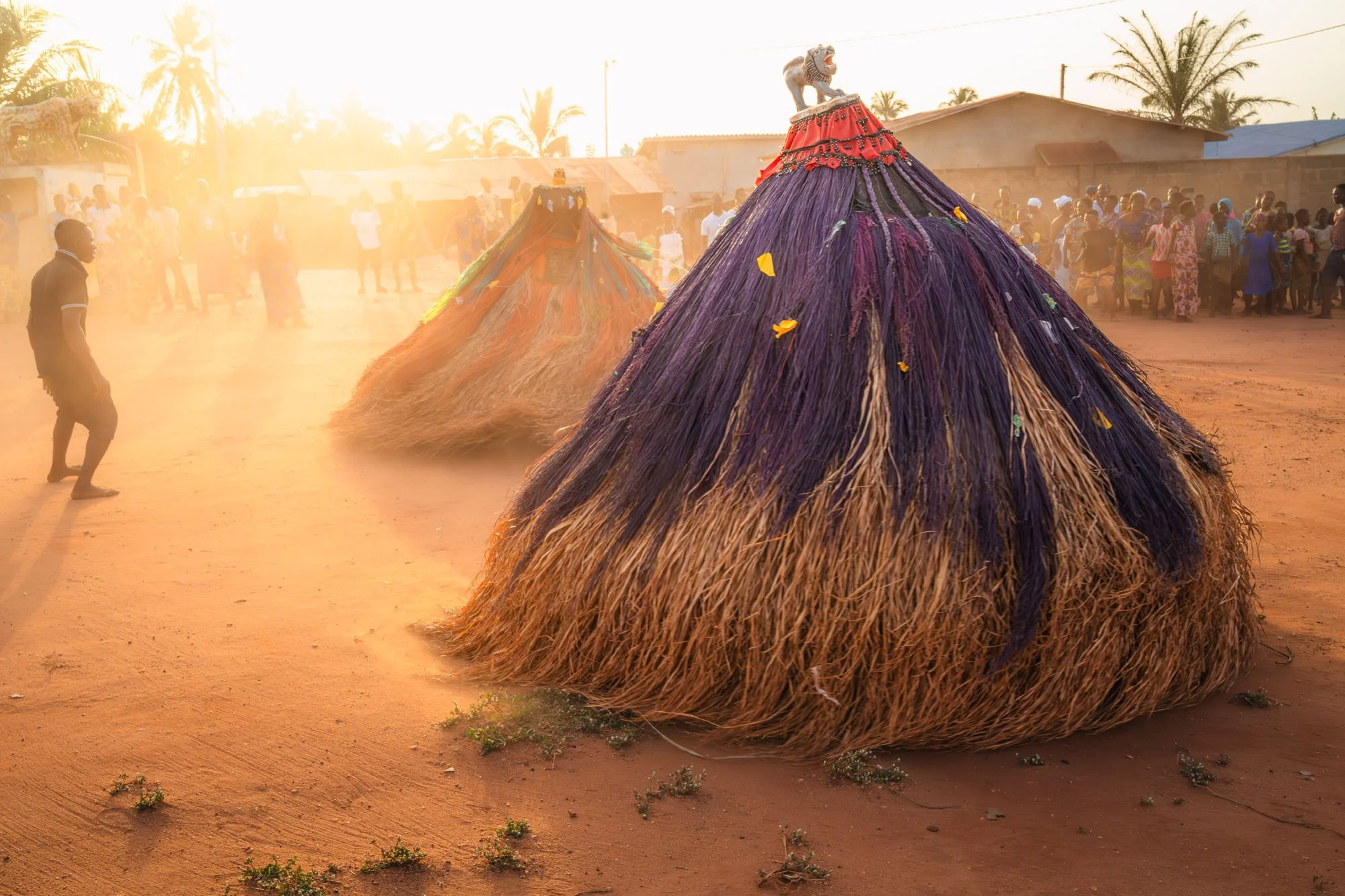
Zangbeto spirits move through the village at sunset, Ouidah, Benin
The "So What"
Don’t think the magic will happen when the shutter clicks. It often doesn’t.
When I sit down, hands washed of the Defender grease and field dirt, I’m not ‘just organising files’, I am partaking in the second act of creation. Because, let’s face it, photography isn’t defined by how many frames you shoot, it’s defined by your courage to destroy them.
So, the next time you open that grid, look with intentionality, isolate the visual intelligence from the chaos and ruthlessly destroy so only the strong survive.
And remember. Curation is creation.
If you enjoyed this article, you’ll likely find my free photography blueprints useful.
I’ve mapped out of the 3 psychological triggers that underpin great photography
👉 Download my FREE Visual Intelligence Blueprints here.
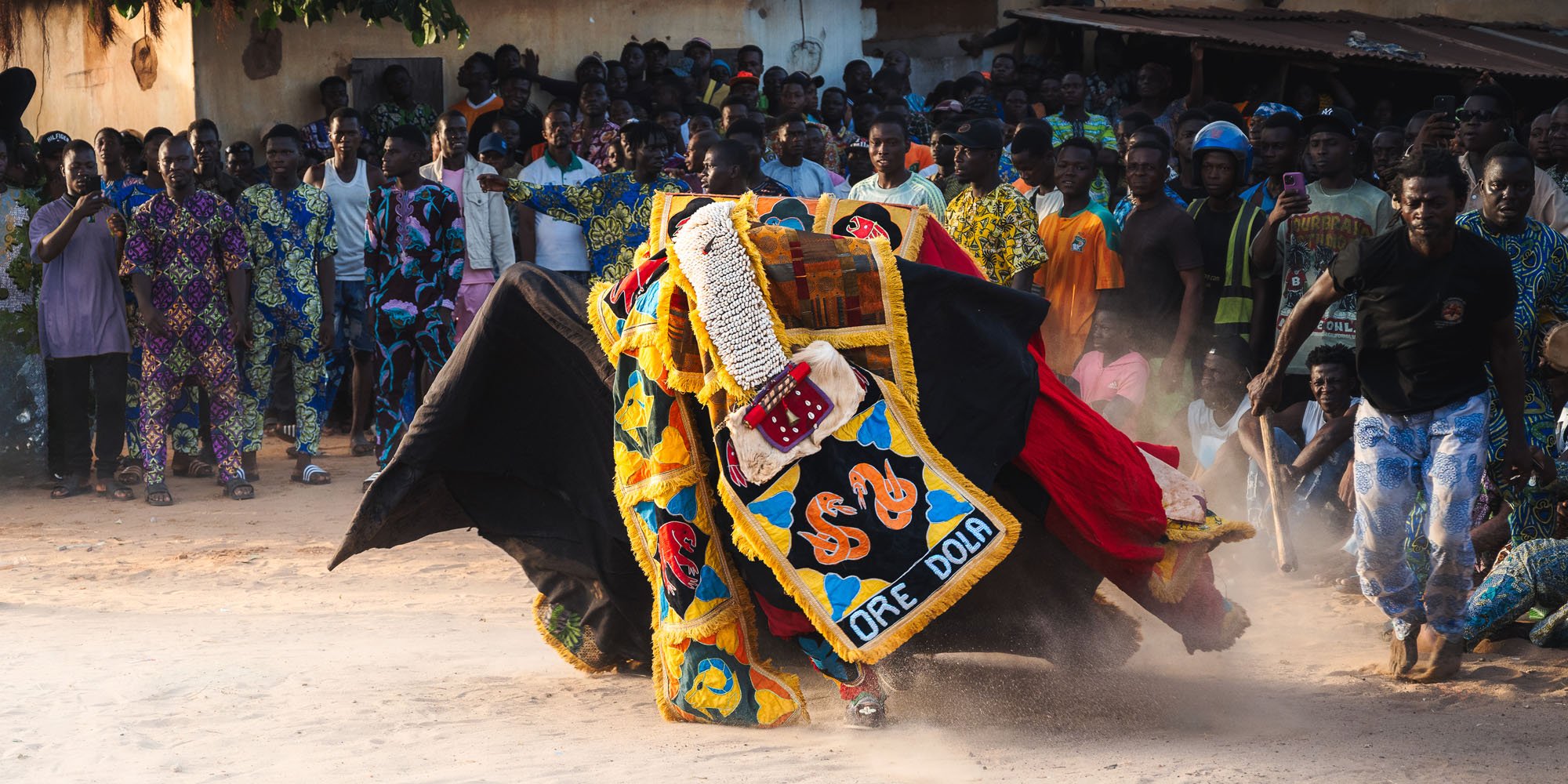
An Egungun spirit charges through the gathered crowds, Ouidah, Benin