
Think of Photographs like visual breadcrumbs
Why leaving subtle visual clues makes a photograph more rewarding.

The ultimate breadcrumb — it promises a destination it doesn't show
Most photographers are taught to be directors.
We are told to light the subject, centre the action and make the ‘story’ as clear as possible.
We treat the viewer like a passenger on a guided tour, pointing out every landmark to ensure they ‘get it’.
But as a photographer and psychology nerd whose travelled all over the world, I’ve found that the human brain doesn’t actually want to be a passenger.
It wants to be a hunter.
In my previous fieldnotes, I’ve discussed why leaving a photo ‘unfinished’ is powerful.
But if silence is the void, then Visual Breadcrumbs are the elegant whisper.
By seeding a frame with subtle, intentional clues, you aren’t telling the viewer what to think; you are giving them the evidence to build their truth themselves.
👉 Master Visual Breadcrumbs using seven psychological triggers.
Upgrade your visual intelligence here: The Signal in the Frame.

Light contrast hides detail making what’s visible more valuable
The Seeking System: The Biological Hunt
The human brain is fundamentally a ‘Seeking System.’ We are hardwired to forage — not just for food, but for information.
When your eye lands on a photograph that is too literal or fully explained, the seeking system shuts down. The ‘foraging’ is over before it began.
However, when you leave a trail of breadcrumbs — a discarded object in the foreground, a distant shadow, a door left slightly ajar — you trigger a dopaminergic response.
The viewer’s brain isn’t just looking; it is hunting for coherence.
Neuroimaging shows that the act of ‘seeking’ an answer activates the same area of the brain that processes rewards. The brain actually finds the search for meaning as pleasurable as the discovery of it.
By explaining your photo, you are robbing your viewer of their dopamine hit.

Triggers Schemas we all recognise - ‘long day’, ‘knackered’, ‘hate my job’!
The Generation Effect: Labour Leads to Memory
Why do some images stick in our minds for decades while others vanish the moment we scroll past?
The answer lies in the Generation Effect.
Cognitive psychology proves that information is significantly better remembered if it is generated by our own minds rather than simply received.
When a viewer has to connect the dots in your frame — mentally linking a footprint in the sand to a distant dust cloud on the horizon — they are putting in ‘cognitive labour.’
In landmark studies on memory, participants who generated their own associations for a stimulus showed up to a 40% increase in recall compared to those who were simply given the information.
Because they helped ‘generate’ the story, they feel a sense of ownership over the narrative. In their mind, it isn’t ‘someone’s photo’; it is their discovery.
I’ve developed The Signal in the Frame to provide practical ways in which to achieve this in your own work.

Anthropomorphised, backlit Macaque forces the viewer to participate in emotional depiction
Amodal Completion: The Whisper in the Frame
The most powerful tool in the camera bag isn’t a long lens; it is Amodal Completion. This is the brain’s drive to ‘fill in’ the missing parts of a whole.
If I show you a photo of a man’s hand gripping a steering wheel, your brain doesn’t see a ‘disembodied hand.’ It ‘sees’ the man, the Land Rover, and the thousand miles of dirt behind him. The ‘whisper’ of the hand is more evocative than a wide shot of the whole vehicle because the version your brain ‘fills in’ is tailored to your own imagination.
By only showing the fragment — the breadcrumb — you are allowing the viewer to paint the rest of the canvas with their own history and motives.

Triggers Amodal Completion — the brain 'sees' part of a journey and ‘completes’ the rest
The “So What” for the Observer
Photographers fear being misunderstood or simply missed! We risk over-explaining because we want to be certain to ‘get the view’ and for that viewer to ‘get it.’
But true impact lives in uncertainty.
The next time you find yourself in front of a scene that feels ‘too obvious,’ move.
Reframe.
Hide something.
Leave a single breadcrumb instead of the whole loaf.
Your job isn’t to provide the answers; it’s to provide the clues. A trail of breadcrumbs to capture the soul.
Cliff is a Visual Ethnographer using psychology to capture the unvarnished reality of the human condition. If you are ready to stop documenting what things look like and start capturing what they really mean, get the Signal in the Frame blueprint. Join the expedition on YouTube here.
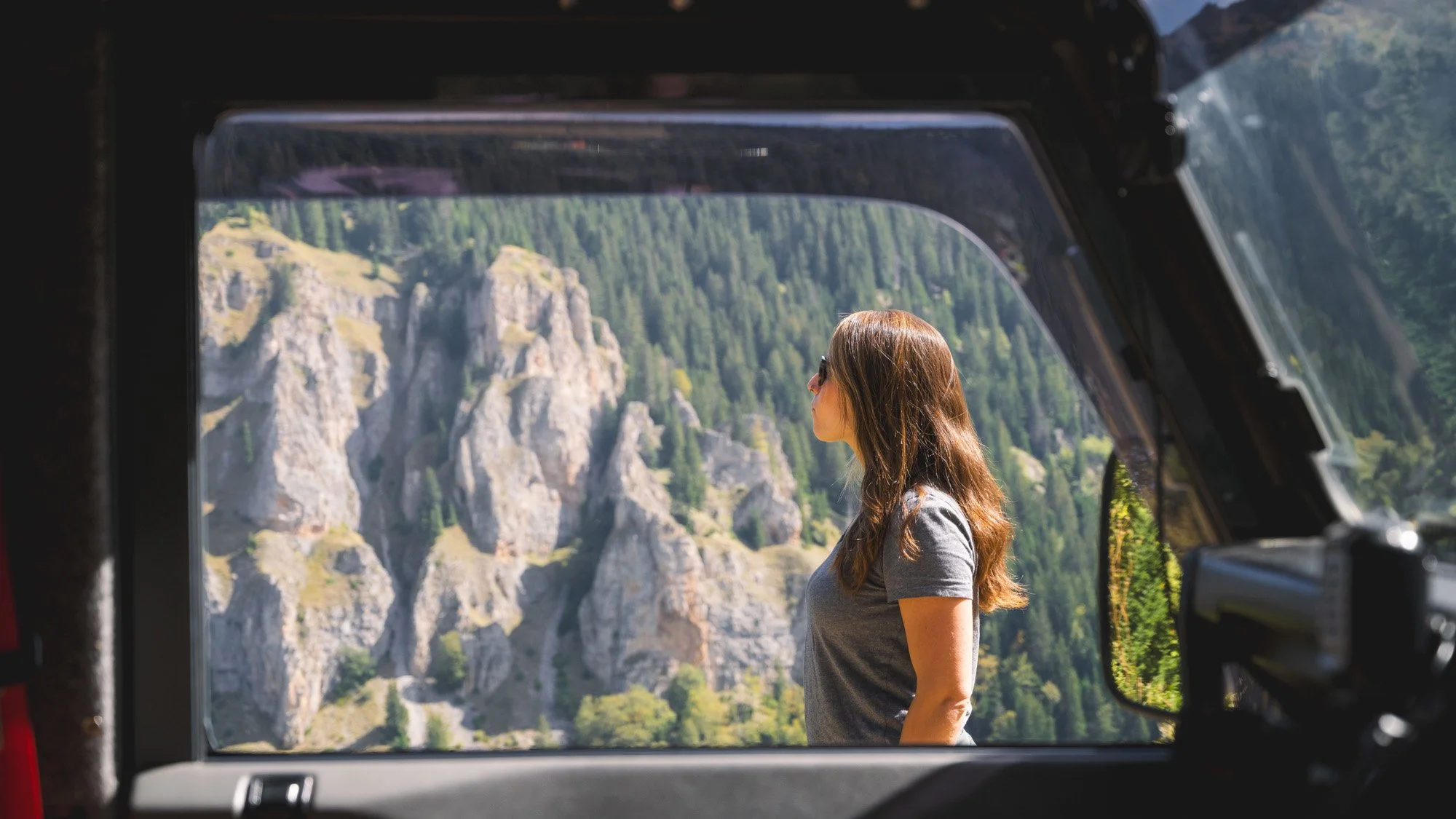
Off camera gaze forces the viewer to generate the missing focal point