
What crossing Africa in a 30-year-old Land Rover taught me about the "Psychologically Rich Life”.
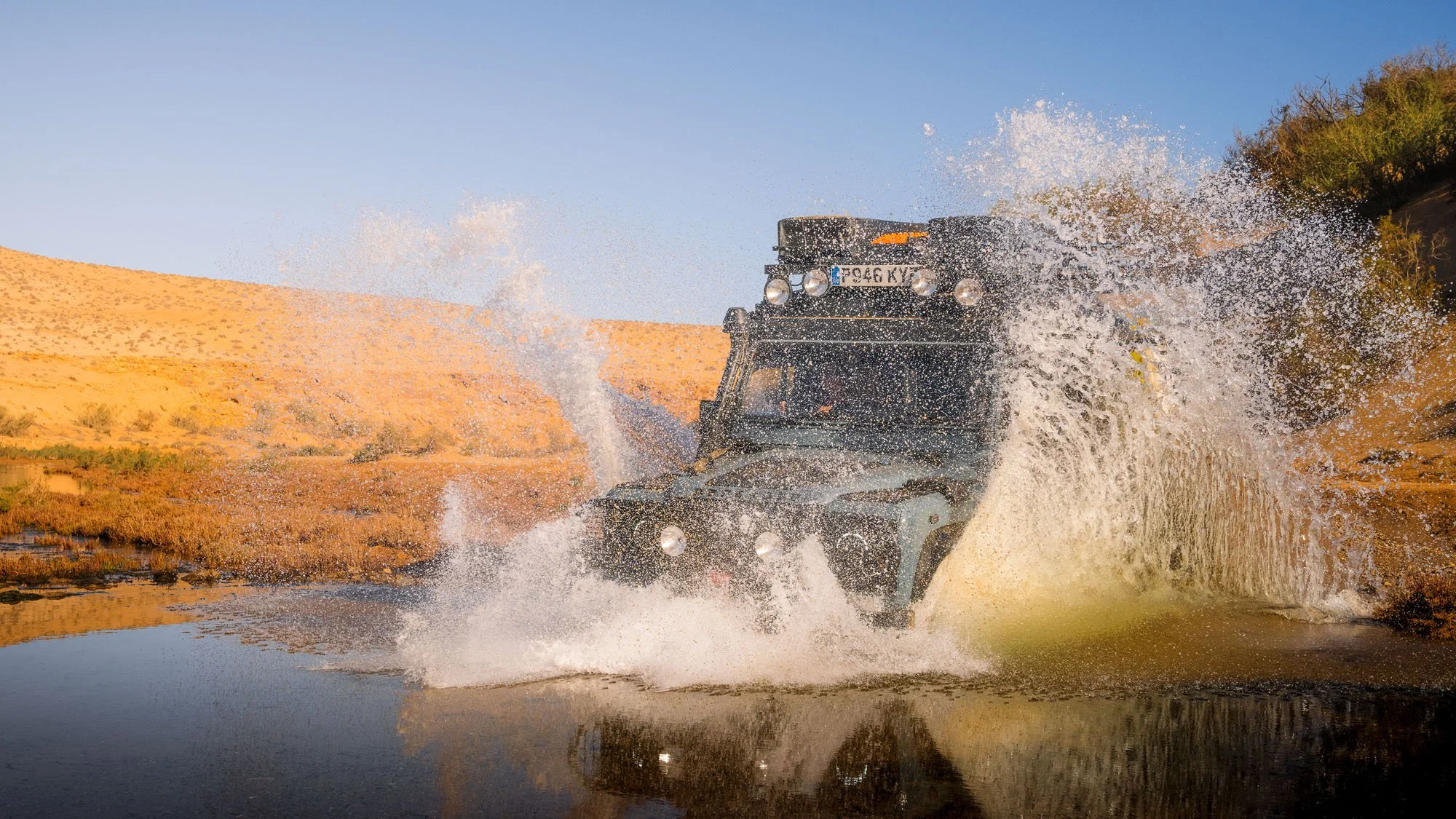
Morocco. Real travel doesn't ask for an itinerary—it asks for momentum in the face of the unpredictable.
Somewhere in the expanse of the Western Sahara, forty miles from the nearest human track, Sully—my Land Rover Defender 110—ground to a sudden, silent halt.
The silence that followed was absolute. No cell signal. No passing trucks. Just a shimmering 45-degree horizon of baked sand, the smell of cooked transmission fluid, and the ticking of hot metal in the afternoon sun.
By every conventional definition of travel, this was a disaster. It was stressful, brutally hot and mechanically precarious. Yet standing next to the dunes with a wrench in hand and a knot of adrenaline in my gut, I felt an undeniable surge.
Ask yourself an honest question: When you look back on your travels five or ten years ago, what actually surfaces in your memory?
It’s almost never the flawless afternoon spent lying by a pristine pool.
It’s the time you missed the last train in rural Italy and had to navigate a local market with hand gestures.
It’s the sudden thunderstorm that flattened your tent on a Scottish hillside.
It’s a breakdown on a Southern Türkiye coastal track.
I have spent years overlanding continents in a thirty-year-old 4x4. I’ve slept to the sound of lions circling the roof tent in the Kalahari, cleared red dust from my intake on the corrugated tracks of West Africa, and negotiated remote tracks that didn’t exist on any conventional map.
And after twenty years of studying human psychology, I’ve realised - and lived - the fact that human brains are not wired for seamless ease.
We don’t evolve in the padded comfort of an itinerary; we come alive in the unpredictable friction of the unknown.
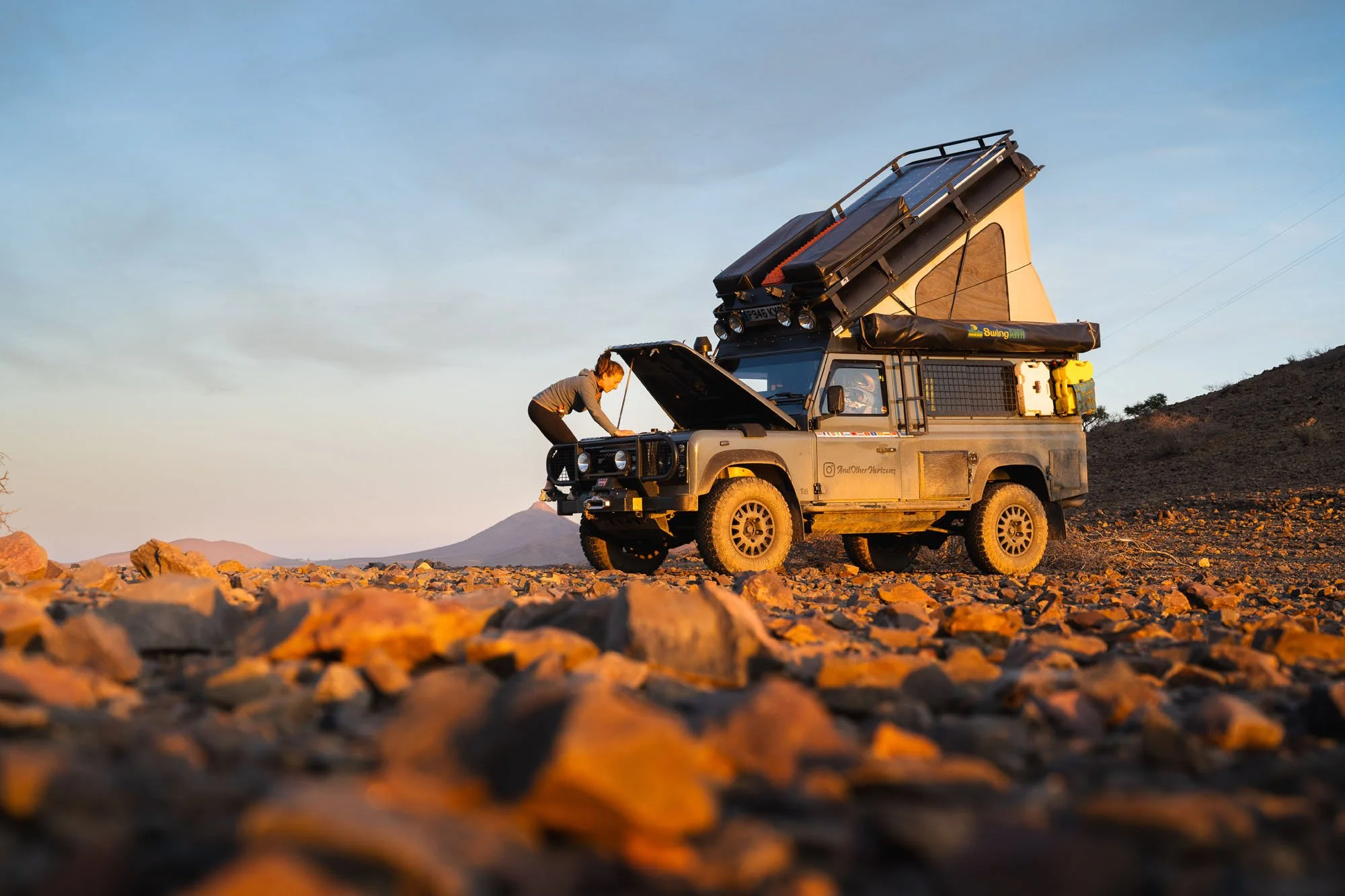
The Anti-Atlas, Morocco. Breakdowns aren't interruptions to the journey; they are the exact moments your brain wakes up from autopilot.
Beyond Happiness: The "Psychologically Rich Life"
To understand why our minds hold onto misadventures while erasing luxury holidays, you have to look at how behavioural science defines a life well-lived.
For decades, academic literature recognised two paths to well-being:
Hedonic well-being: A happy life defined by comfort, positive emotions, stability and pleasure.
Eudaimonic well-being: A meaningful life defined by purpose, moral clarity and contribution.
If travel is purely an exercise in hedonic pleasure, true adventure is irrational. It demands physical exhaustion, mental toil, emotional vulnerability and chronic uncertainty.
Yet we crave it. Why?
Breakthrough research published in the Psychological Review established a crucial third path to human flourishing: The Psychologically Rich Life.
It is not defined by comfort or moral virtue. It is characterised by novelty, complexity and perspective-shifting experiences.
The research shows that when our plans disintegrate and we are forced to adapt to unfamiliar environments, our brains abandon auto pilot and a cognitive restructuring occurs - a fundamental expansion of our mental framework.
What does this mean?
When your vehicle breaks down in the African bush, you aren't just enduring an inconvenience; your brain is actively breaking out of habituation.
Adventure is the fastest catalyst for psychological richness.
It trades the gentle numbness of safety for the lasting currency of an interesting life.
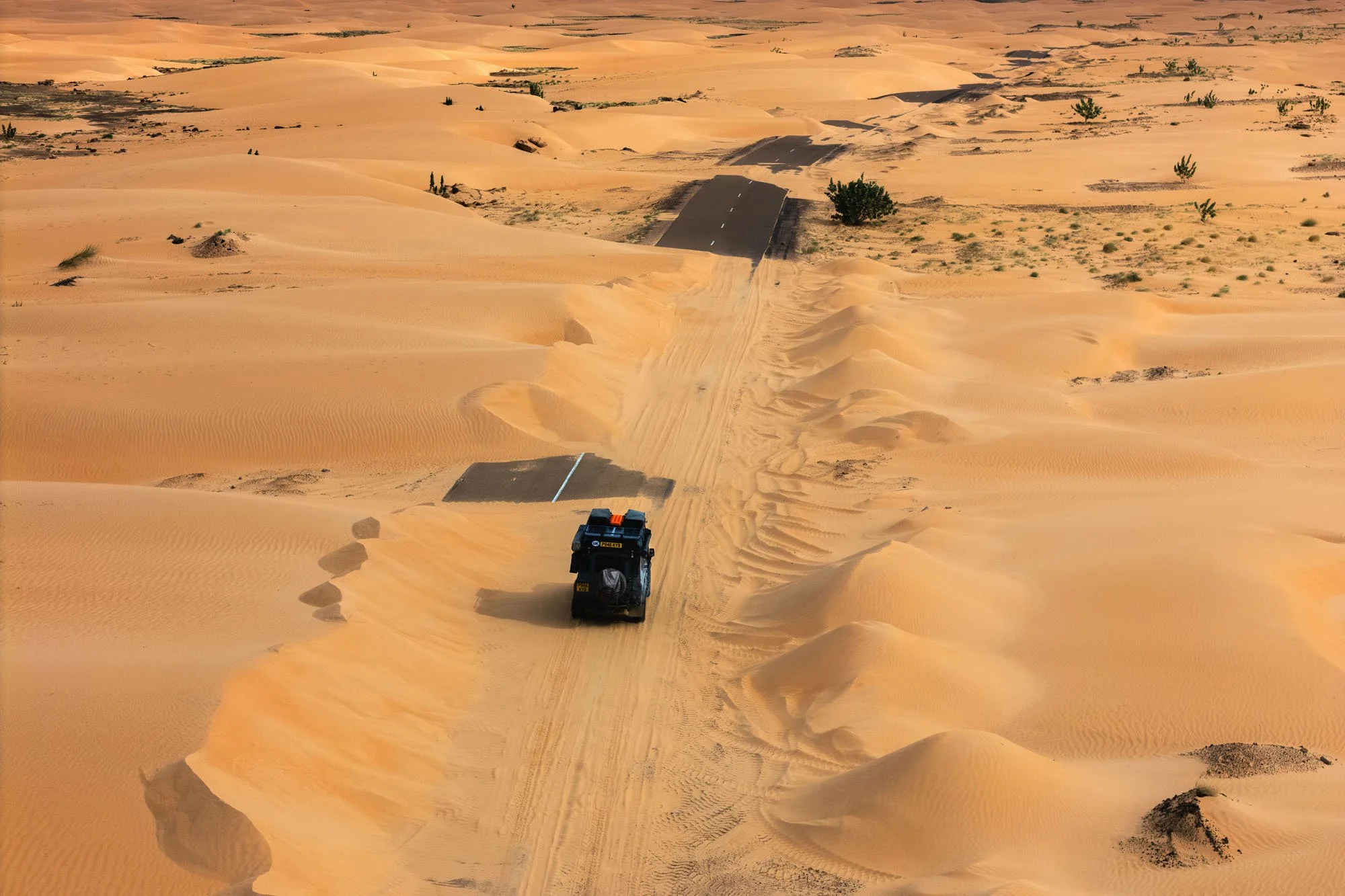
Mauritania. I reckon adventure begins the moment the pavement disappears.
The Myth of the "Epic" Expedition
Once you recognise that our minds thrive on psychological richness, the next question is obvious:
Do you have to risk your life in the wilderness to get it?
Adventure can certainly feel like the exclusive reserve of extreme mountaineers on Himalayan ridges or polar explorers hauling sleds across Antarctic ice.
But I believe that the reality is different.
And Matt Pycroft, host of The Adventure Podcast, who literally spends his career interviewing world-class explorers states this as the core message of his show:
“Adventure is a mindset, not an activity. You can find it in your backyard.”
True adventure doesn't require extreme geography. As climbing legend Yvon Chouinard famously pointed out, real adventure only begins when things stop going according to plan (And if your days are anything like mine, that happens pretty frequently!)
On The Adventure Podcast, explorers frequently point to author Sebastian Junger’s three non-negotiable psychological needs for human contentment: competence, connection and authenticity.
Modern domestic life has quietly engineered those needs out of our days.
We outsource our competence to apps;
our connection to social media algorithms and;
our authenticity to workplace performance.
When you step off the tarmac—whether that means crossing the vast savannahs of Africa or taking an unmarked dirt road an hour from your hometown—those three needs instantly snap into focus.
You have to solve the mechanical problem yourself (competence).
You have to ask a local villager for advice or water (connection).
And you have zero capacity to fake a persona when you are covered in red dust, exhausted, and genuinely uncertain of what’s around the next bend (authenticity).
Adventure is simply the willingness to step into an environment where the outcome is not certain.
But that’s just one of the reason’s I love adventure. It also helps me to see better.
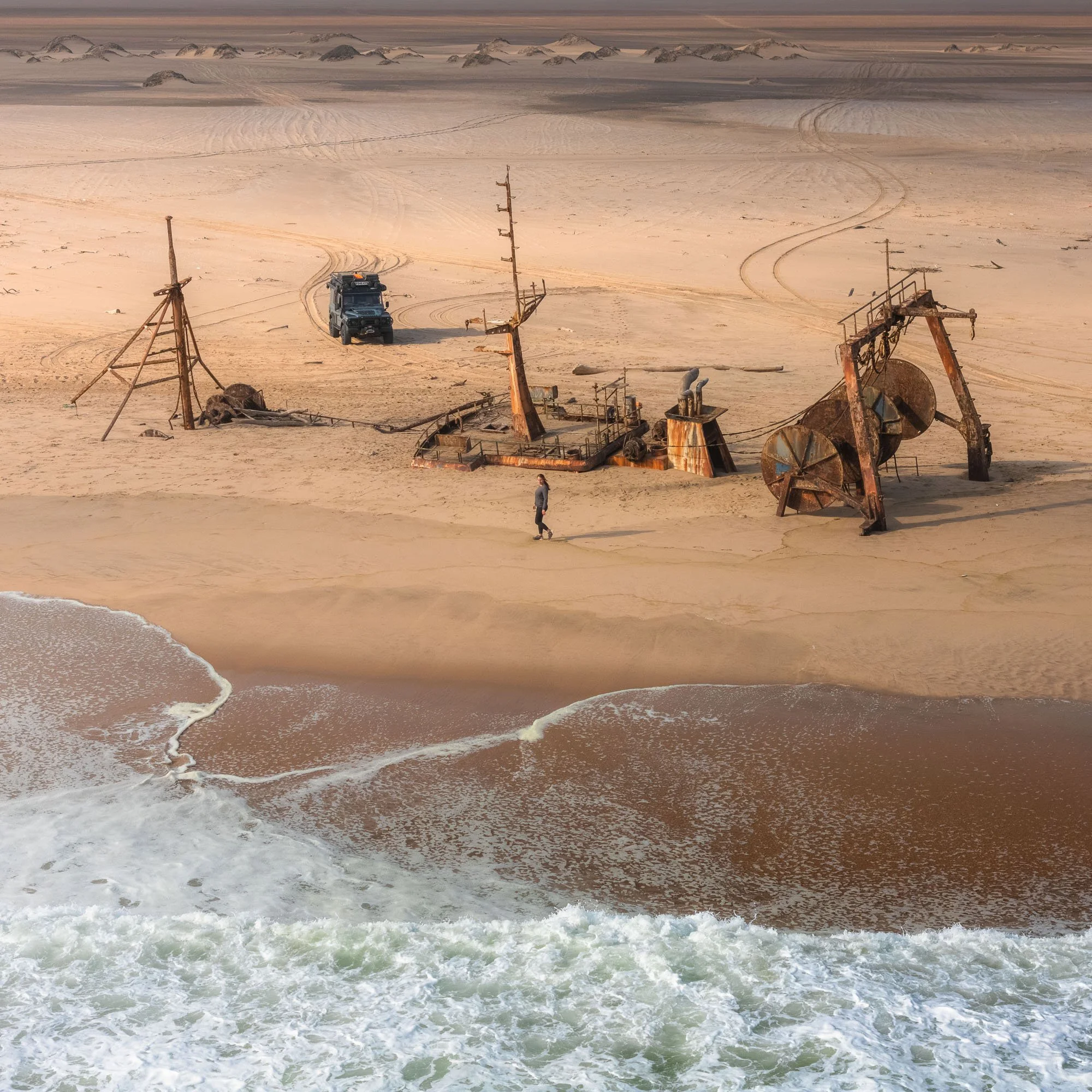
Angola. Stripped of familiar reference points, your visual cortex stops using cognitive shortcuts and starts truly seeing.
Uncertainty Rewires How We See
This psychological shift completely transforms the way we perceive the world.
In everyday life, our eyes are lazy. The human brain is driven by efficiency. When it moves through familiar routines, it uses cognitive shortcuts called schemas. It glances at a familiar street, tags it, and shuts down deep visual processing to conserve calories.
We look at everything, but we see almost nothing.
Adventure shatters that habituation.
When you drive into a new environment—where the light hits dry acacia trees at a brutal low angle, where the scale of a salt pan swallows the horizon, where an unfamiliar culture operates on rules you don't yet understand—your visual cortex lights up.
You are forced into acute observation.
It’s why I always keep a camera on the seat beside me in Sully.
Out on adventure, the camera becomes an instrument of deliberate attention. It forces me to stop rushing, to read the subtle shifts in the environment, and observe the relationships between elements—the tension of a approaching storm over the plains, the fleeting gesture of an elder, the sheer fragility of a solitary vehicle against an ancient landscape.
I don't carry a camera to prove I was there. I carry it to force myself to pay attention whilst I am.
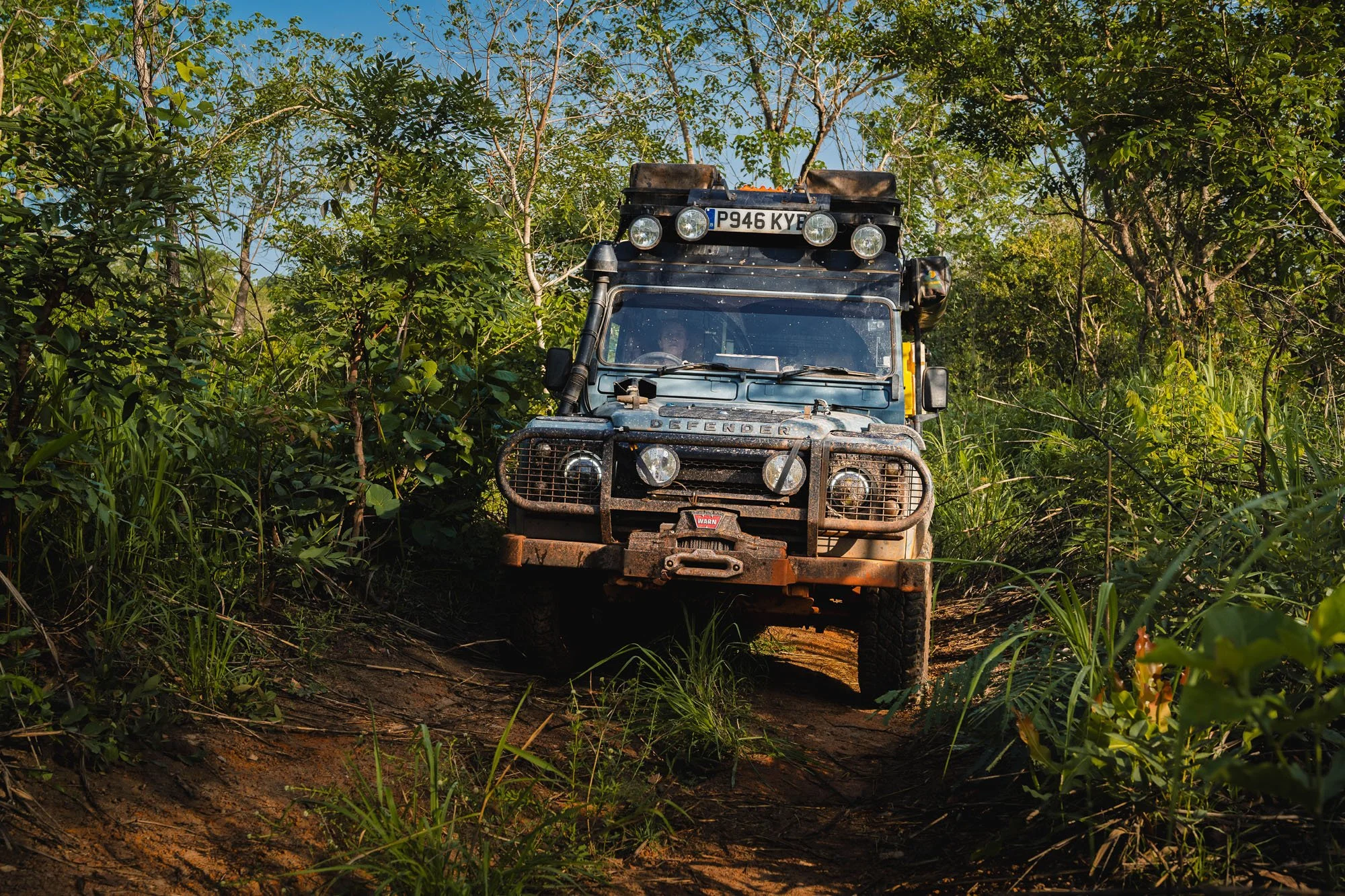
Guinea. Deep in the green corridor, the camera acts as an anchor—forcing you to slow down and observe the subtle tensions of an unfamiliar world.
Trading Certainty for Presence
You don’t need a custom-built Defender, an expedition budget, or a trans-African route to tap into this state of mind.
You simply need to embrace uncertainty.
On your next trip, resist the temptation to plan every single hour. Turn off the turn-by-turn navigation. Take the unmarked track. Put yourself in spaces where you don’t speak the language and situations where you are no longer the person in control.
Welcome the dirt on your hands, the dust on your lens, and the healthy knot of doubt in your gut.
Because the moment certainty ends, adventure begins. And out in the unknown, you won’t just discover new places—you’ll finally start to see them.
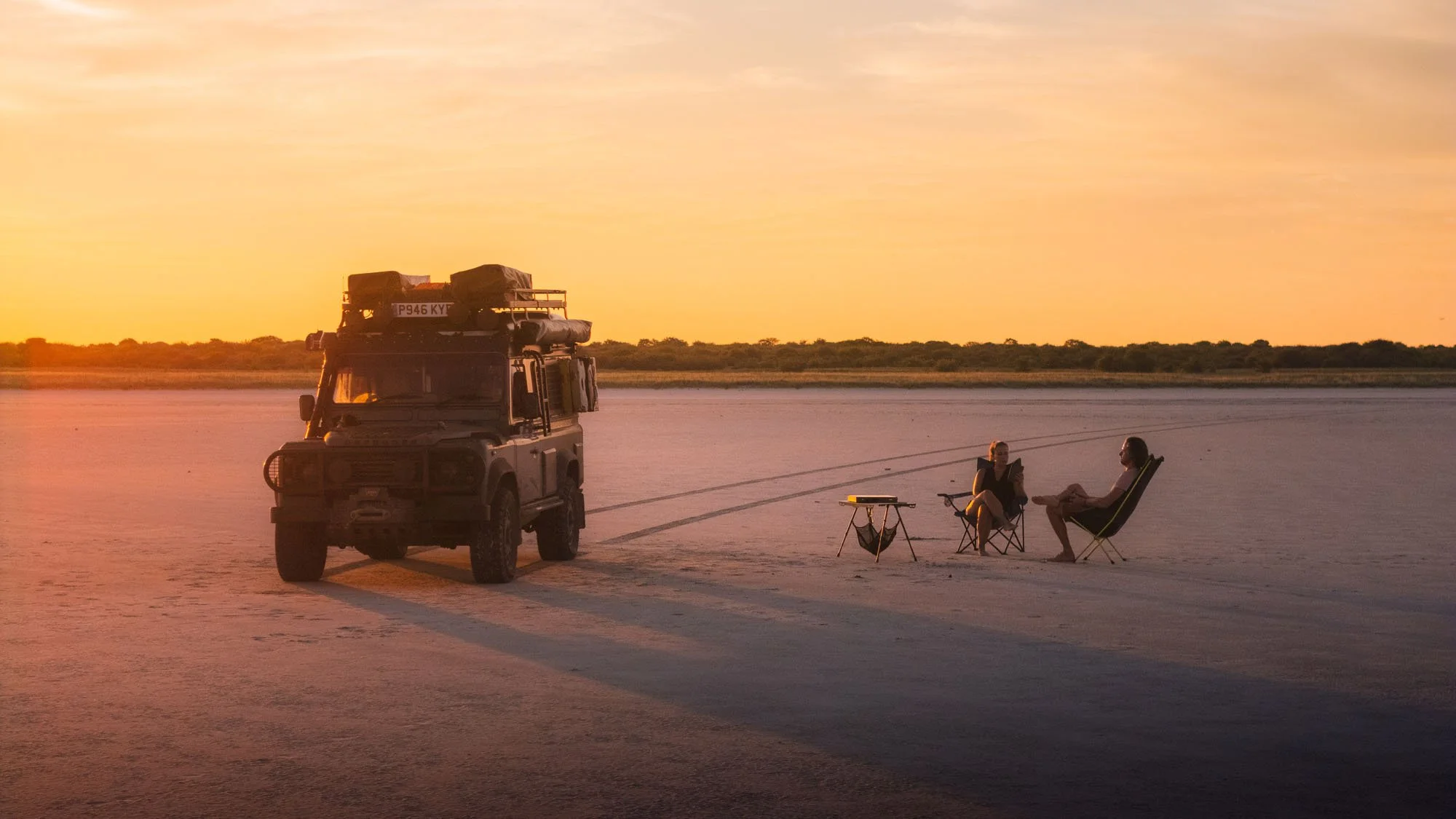
Makgadikgadi Pans, Botswana. When you trade the predictability of comfort for presence, this quiet stillness is the currency you earn.
Train Your Eye
Meaningful travel and powerful photography aren't about the destinations you reach; they are about how deeply your brain learns to observe them.
If you want to move past sterile snapshots and understand the visual psychology behind how we interpret the world...

Angola. Adventure isn’t about conquering geography; it’s about the perspective you gain when you leave certainty behind.