
Why Great Photographers Feel Like Frauds
Behavioural science proves imposter syndrome isn't a weakness—it’s your sharpest visual tool.
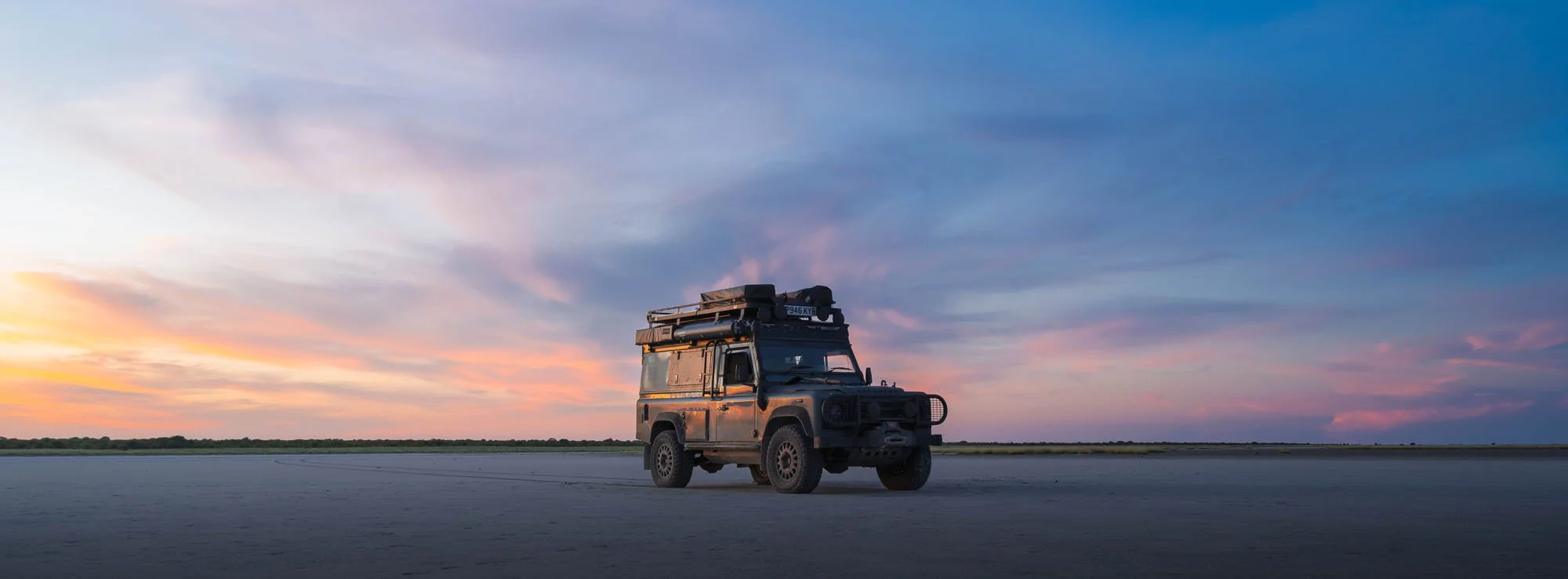
Sully on the Makgadikgadi Pans, Botswana. The quiet moments before the light breaks are where doubt hits hardest—and matters most.
I’m sitting in the cab of Sully, my Land Rover Defender.
My hands are thick with engine oil and a fine, relentless dust.
Through the cracked windshield, an incredible scene is unfolding over the Makgadikgadi salt pans in the fading light. And all I can think is:
“I can’t capture this.”
I’ve been photographing for decades. I’ve researched how human perception works. I’ve chased light across continents.
And yet, sitting here in the expanse, the doubt feels as loud as ever.
We’re fed a daily diet of YouTube "banger-after-banger" vlogs and instagram feeds of an unending stream of incredible images.
The implicit message is toxic but clear: if you’re a “real photographer”, you walk into a scene, conquer the light, and nail the frame without hesitation.
That’s garbage.
In the real world, the light is chaotic, the environment doesn't care about your portfolio and actually, feeling the pressure of ‘can you do this’ is creative rocket fuel.
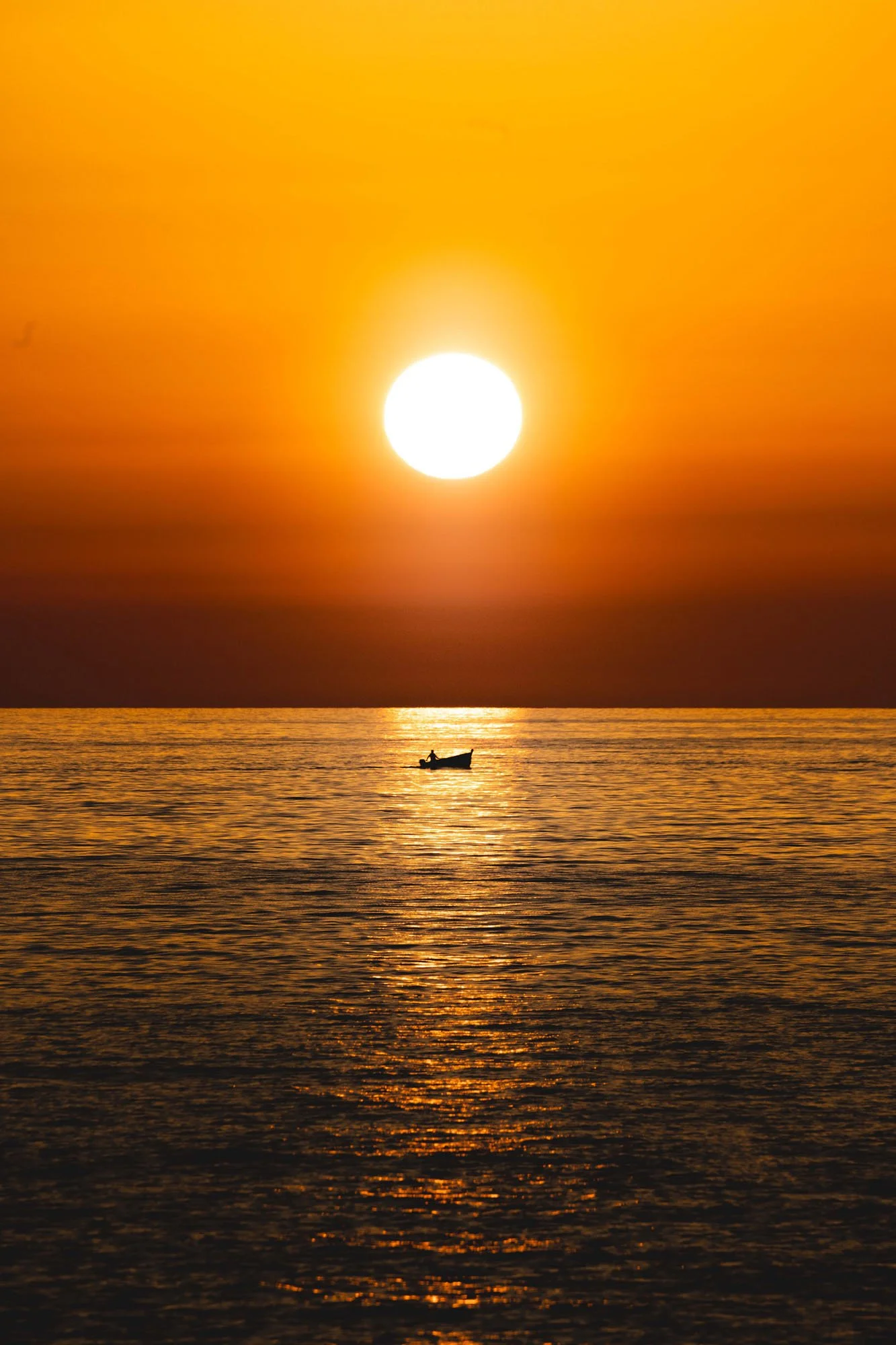
A lone boat off the Italian coast. The industry sells the illusion of perfect execution, but the reality of chasing light is always uncertain.
The "Taste vs. Skill" Gap
When you feel like a fraud behind the lens, you assume you lack talent.
But what if that feeling isn't a symptom of failure?
What if it’s proof of visual intelligence?
Broadcaster Ira Glass nailed this with a concept called the "Taste vs. Skill Gap". It perfectly explains the friction photographers face.
You get into photography because you have exceptional taste. You know what a great image looks like. You appreciate the emotional weight of composition.
The problem is that for a long time, your technical ability can't keep pace with your eye.
Your cognitive understanding of a great image is running miles ahead of your physical ability to execute it.
When you feel imposter syndrome, you’re feeling the friction of that gap. If you thought every image you shot was brilliant, you’d be so blind to the nuances of the craft that you wouldn’t even recognise your own shortcomings (that’s the Dunning-Kruger effect).
So trust me, doubt isn't your enemy.
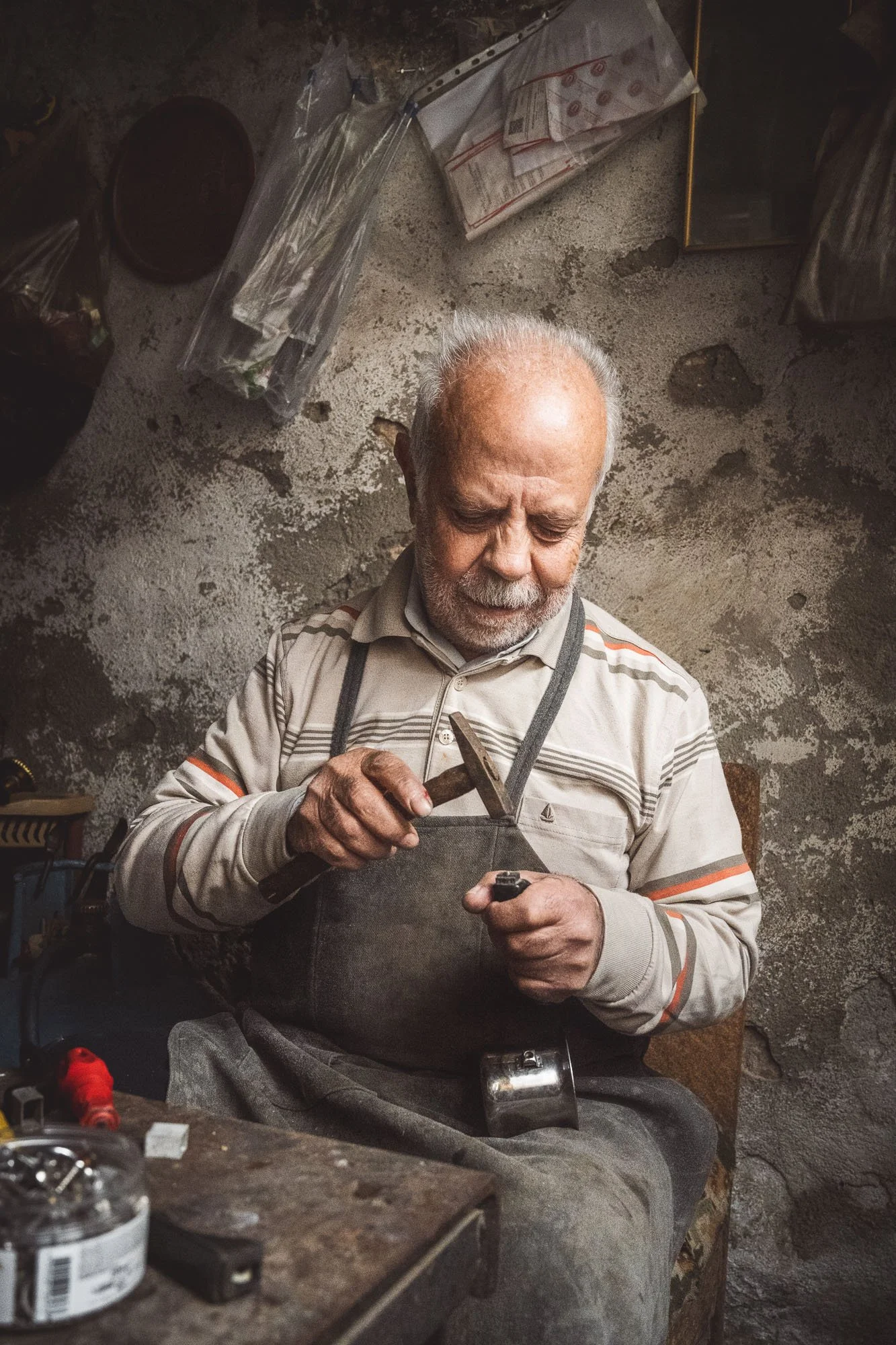
A coppersmith in Mardin, Turkiye. True mastery relies on the friction of trying to close the gap between taste and skill.
The Science of Self-Doubt
We’re conditioned to view imposter syndrome as a weakness; something you cure with hollow "fake it till you make it" mantras. But recent behavioural science has flipped this assumption.
Groundbreaking research from the MIT (and Dr. Basima Tewfik), proves that experiencing imposter thoughts doesn't decrease your competence.
In fact, it actively makes you better.
Why? Because when you feel like an imposter, you unconsciously compensate by becoming highly "other-oriented."
You start paying closer attention.
You make better eye contact.
You read subtle emotional cues.
You listen more deeply.

A Mami Wata acolyte. If you walk into a portrait session bursting with ego, you miss the person entirely. Humility builds the bridge.
Think about what that means for a portrait photographer. If you walk into a session bursting with unearned ego, whatever happens, it’s about you. But if you enter with the quiet humility of self-doubt, you focus entirely on your subject.
The American Psychological Association notes that while these feelings cause internal stress, the drive to compensate for perceived inadequacy forces you to prepare more rigorously and connect more deeply.
So a bit of doubt can actually help build genuine rapport.
It’s the exact mechanism that makes your subject trust you enough to drop their guard and give you something real and unfiltered.
The Striver’s Paradox
Harvard behavioural scientist Arthur C. Brooks argues that imposter syndrome is actually the hallmark of a "striver."
In his work on happiness and human behaviour, Brooks points out a brilliant irony: The only people who never feel like imposters are usually actual imposters. They never question if they deserve their success because they’re utterly obsessed with themselves.
If you’re behind the viewfinder questioning whether you’re good enough to do a scene justice, Brooks would tell you, “your radar is working perfectly”.
Your doubt means you’re a healthy, self-aware artist pushing the edges of your capability.
You’re supposed to feel out of your depth.
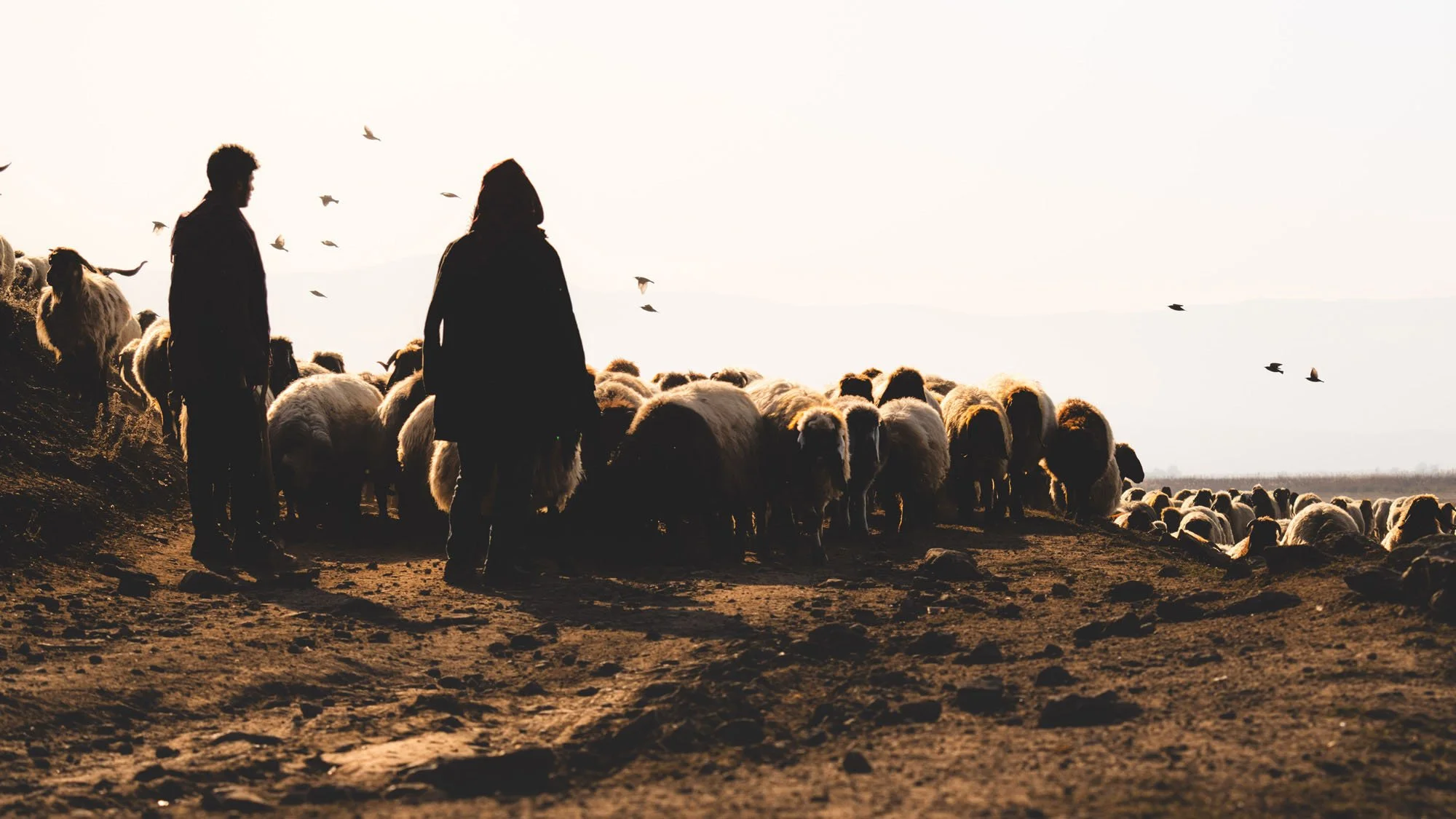
Shepherds navigating the dust in Turkiye. The chaos of the environment doesn't care about your portfolio. You don't master a scene; you submit to it.
Feeling ‘the imposter’ has become my compass
When I’m staring down a shepherd and his herd moving through the dust in Türkiye, or watching the last sliver of sun drop behind a ridge in Africa I rely on my doubt.
It forces me to wait another ten minutes just in case the light breaks.
It demands that I move my feet, change my angle, and look at the scene differently.
It means I tune in to the moment and the people more deeply.
The photographers who fail aren't the ones who feel like frauds. They’re the ones who think they have nothing left to learn.
So, normalise the pit in your stomach when everything is changing rapidly around you.
Your doubt means you care.
Your doubt means you’re paying attention.
And a photographer who is truly paying attention is a dangerous, brilliant thing.
See Through the Noise
Photography isn't about the gear you hold; it's about the mind you bring to the viewfinder.
My resources distill twenty years of psychology and field experience into a system that brings deeper meaning to your frame.
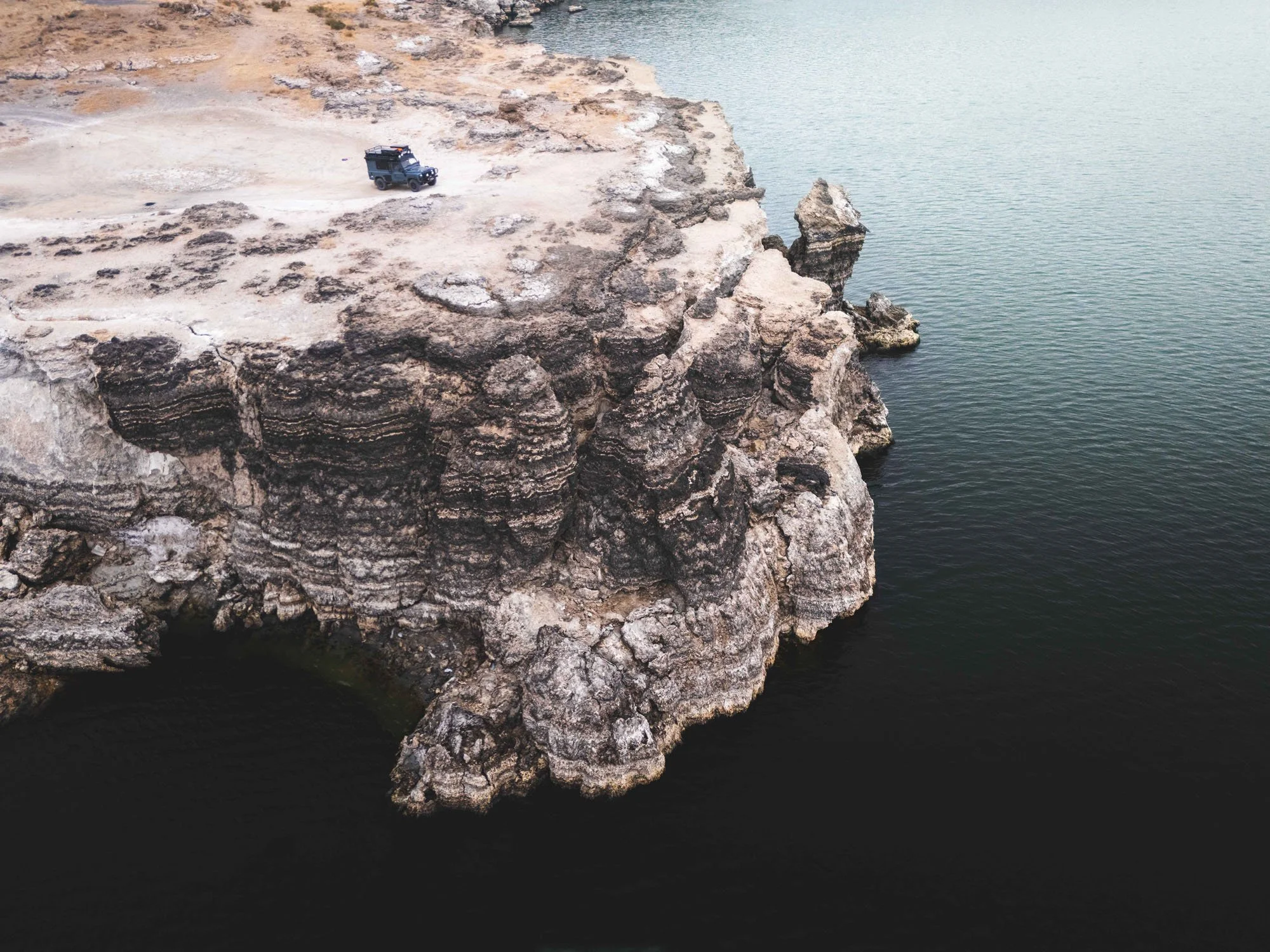
Pushing the edges of the map. If you aren't out in the field questioning whether you are good enough to capture the scene, you aren't paying attention.