
Why Your Best Photos Are Unfinished
Behavioural science proves the most rewarding photographs are not the ones you think they are.
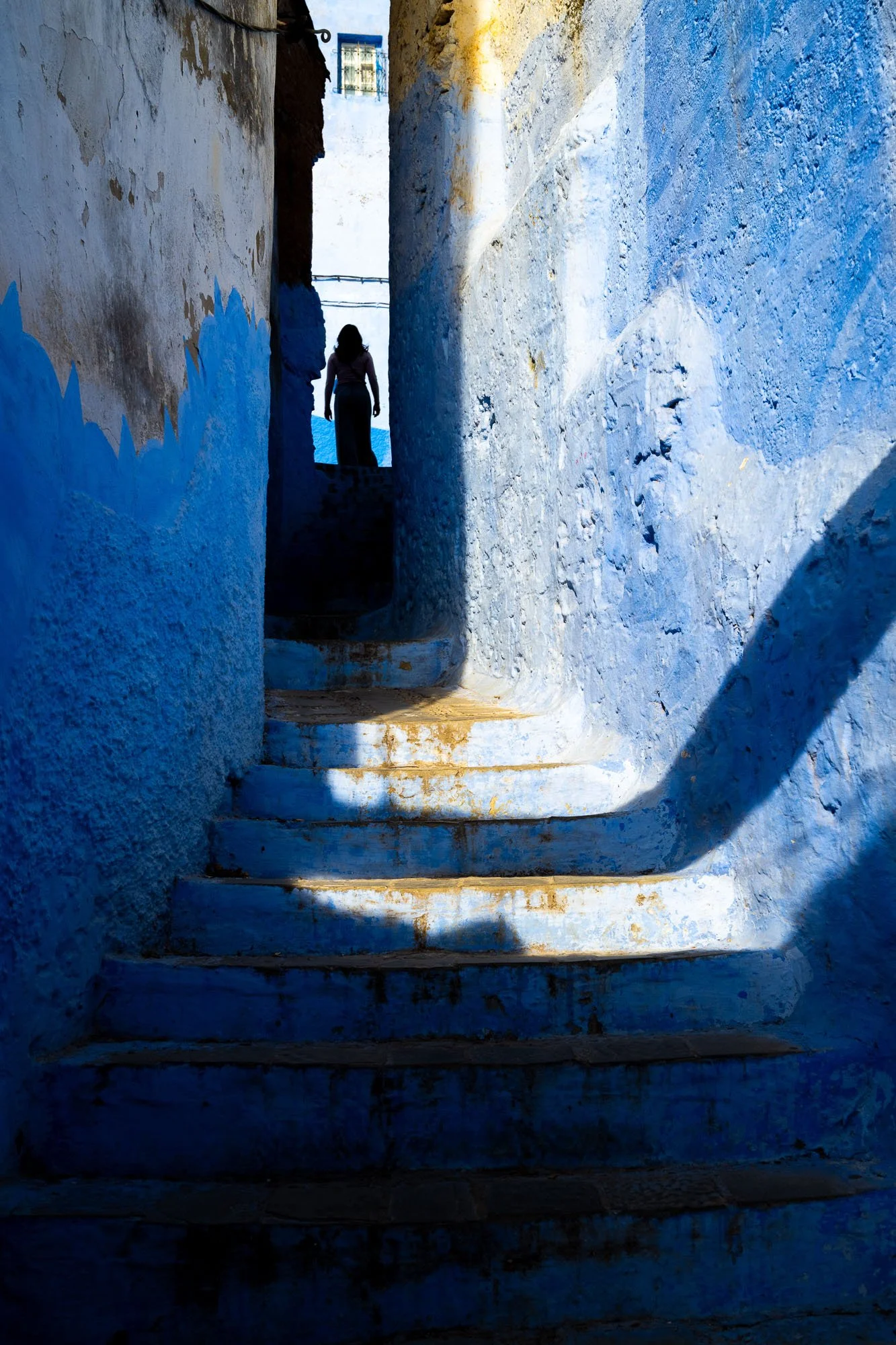
Chefchaouen, Morocco. Impact isn't found in what you pack into the frame, but in the meaningful space you leave for the viewer to explore
In music, the most profound moment isn't the crescendo.
It’s the silence between the notes.
It’s that fraction of a second where the air vibrates with what was just played and what is about to happen.
Photography is no different.
I’m standing in a narrow, blue-washed alleyway in Chefchaouen, Morocco. The light is cutting a violent, diagonal line across the ancient stone steps. At the far end of the tunnel, a silhouette is moving through a pool of brilliant cobalt stone, while the rest of the frame is swallowed by an uncompromising shadow.
The instinct of almost every photographer is to "fix" the shadow. We are told to lift the blacks.
But by trying to show everything, we end up revealing nothing. We kill the mystery.
The Generosity of the Gap
In psychology, there is a concept called Amodal Completion. It is the biological process by which the brain perceives a whole object even when parts of it are hidden or absent.
When you leave a "gap"—a face obscured by a hood, a body swallowed by shadow, or a path that disappears behind a dune—you aren't being lazy.
You are being neurologically generous.
You are providing the viewer with the raw materials to build the image themselves.
The Dopamine of Closure
Why does this work?
Because the human brain is a predictive engine that is hardwired to seek resolution.
This is governed by the Gestalt Law of Closure. When the eye encounters an incomplete shape or an unresolved visual puzzle, the brain doesn't just sit there.
It actively "closes" the loop.
A recent 2026 study in i-Perception explored the "Illusion of Absence" in photography.
The research proved that when viewers are presented with images that withhold key information, they experience a specific neurological reward—a "dopamine hit"—the moment they mentally complete the scene.
By leaving a gap, you are engineering a biological "Aha!" for your viewer.
You are transforming them from a passenger into a participant.
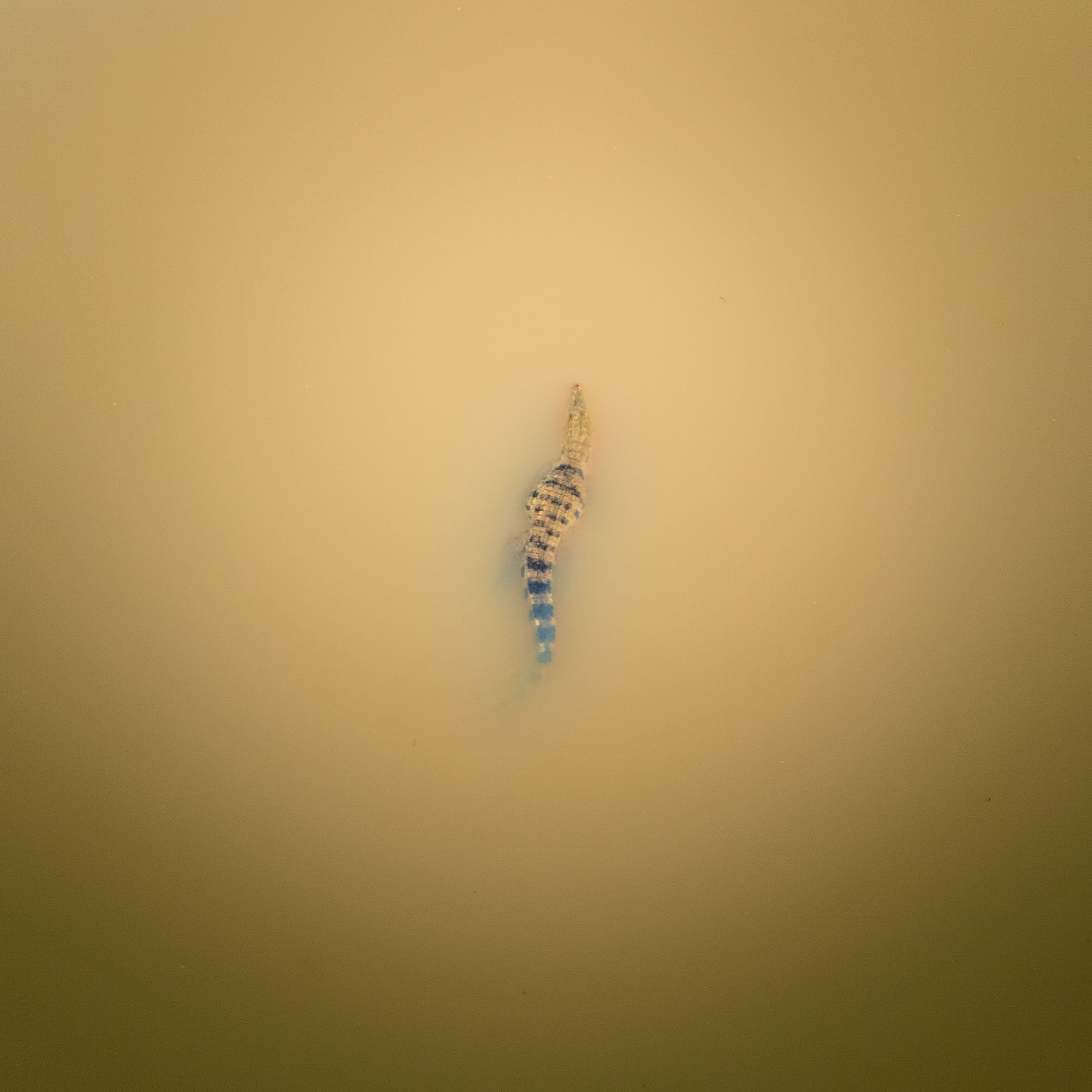
Mauritania. The empty water isn't just background. It is a psychological weight that forces the eye to lock onto the isolation of the crocodile
Meaningful Space vs. Empty Pixels
There is a vital distinction between "negative space" and "Meaningful Space." Negative space is a formal photography tool. Meaningful Space is an interval charged with tension.
Take this frame of a Saharan crocodile in a muddy Mauritanian guelta. The vast majority of the frame is nothing but opaque, brown water. If you were trying to ‘tell a story’ with your frame you might crop this tight to show the texture of the scales and the glint in the eye.
But the signal here isn't the crocodile; it's the isolation.
By leaving a massive sea of meaningful space around the animal, I am forcing the viewer's brain to process the scale of its environment. The absence of other detail gives the subject more meaning and leaves the viewer asking more questions.
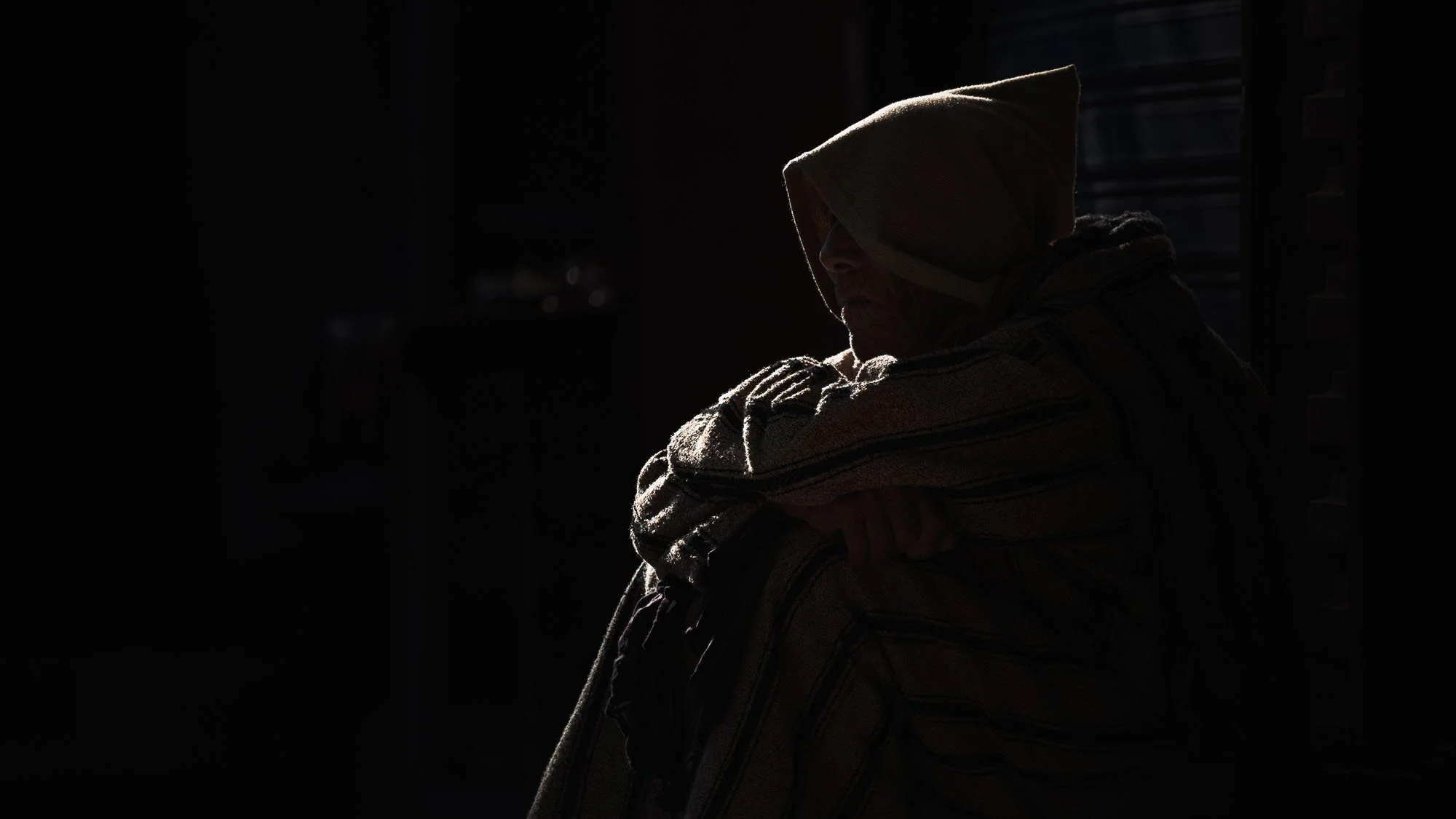
Morocco. Use shadow as a structural element. By withholding the identity, you force the viewer's brain to apply the Law of Closure
Engineering Absence in the Field
How do we practically apply these science-backed thoughts around the power of absence when we’re behind the viewfinder?
1. Use Shadow as a Wall
Stop trying to "save" your shadows.
Use them as barriers.
In this shot of a cowled man in a Moroccan doorway, the shadow isn't just an absence of light; it’s structural. By letting the darkness swallow his features, I am leaving a narrative gap.
The viewer's brain has to work to "complete" the person, making the final image far more memorable than a perfectly lit portrait.
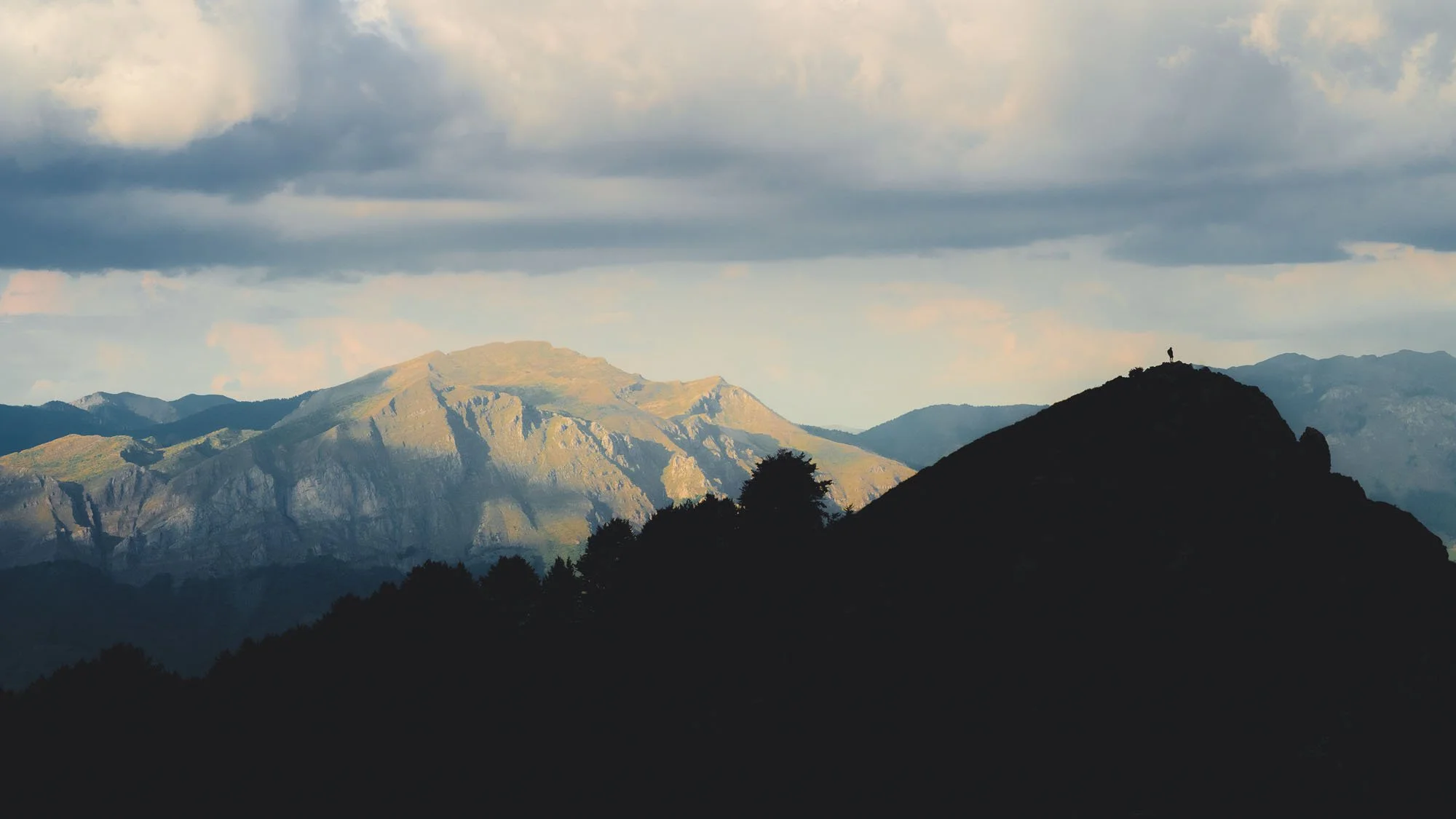
Vosunica, Montenegro. By letting the ridge line vanish into a flat silhouette, we force the viewer’s brain to mentally 'draw' the mountain, making the scale feel infinite
2. The Continuity of the Edge
Look at the silhouette of the ridge in this frame from Montenegro . There is a massive section of the mountain where the detail simply vanishes into a flat, black void.
Because the brain can see the start of the ridge on the left and the end on the right, it uses the Law of Closure to bridge the gap.
The viewer's mind "paints" the rest of the mountain in.
This is far more powerful than showing the rock and the mountain. You are forcing them to imagine the scale of the entire range.
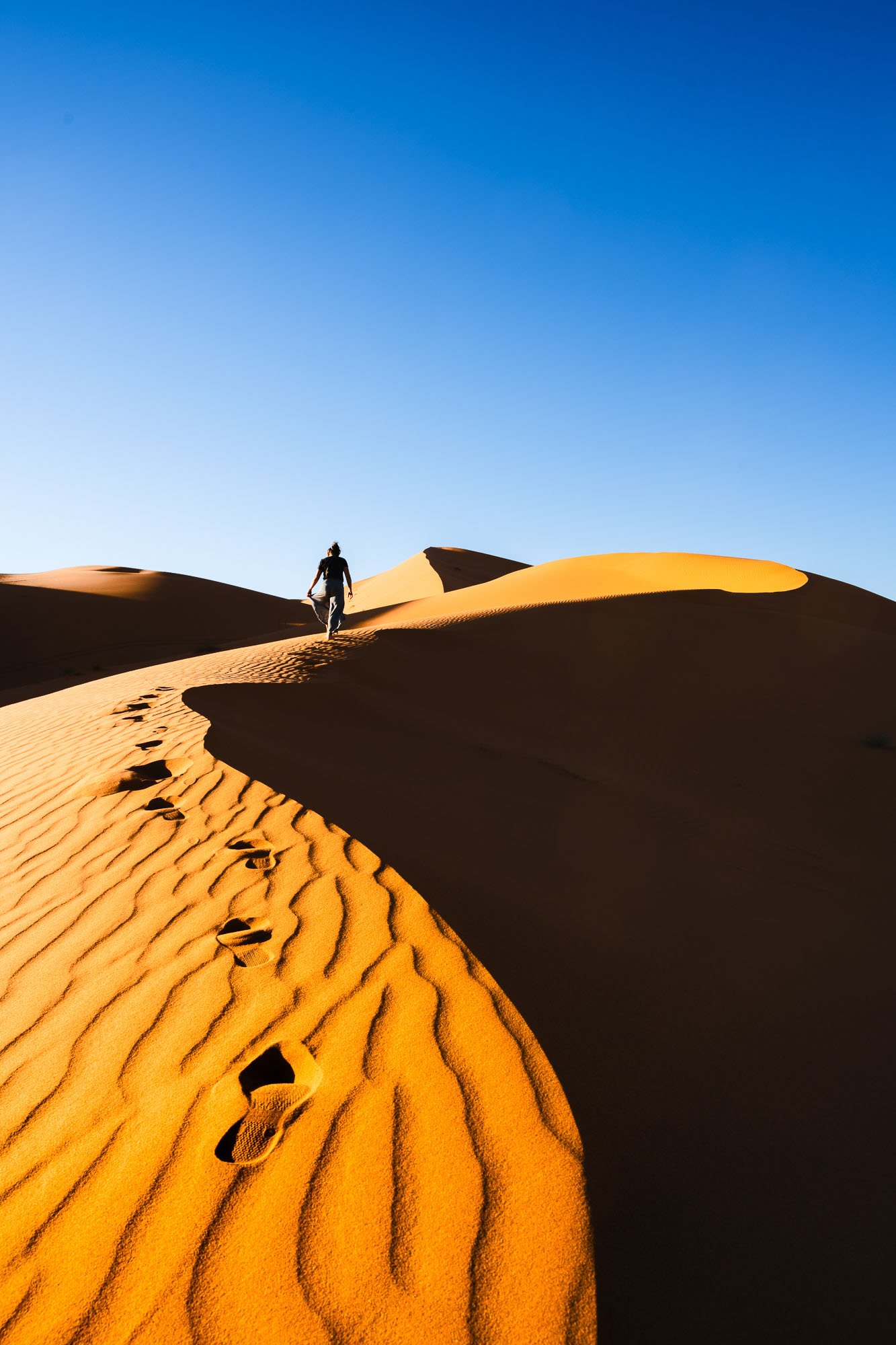
Merzouga, Morocco. Footprints are visual breadcrumbs. They prove a reality existed while withholding the destination
3. The Breadcrumb Trail
Visual breadcrumbs—like footprints in a dune or a single light in a dark valley—are the ultimate tool for amodal completion, especially when they are coupled with dark shadows.
They prove a presence and they open a question that for the viewer to answer.
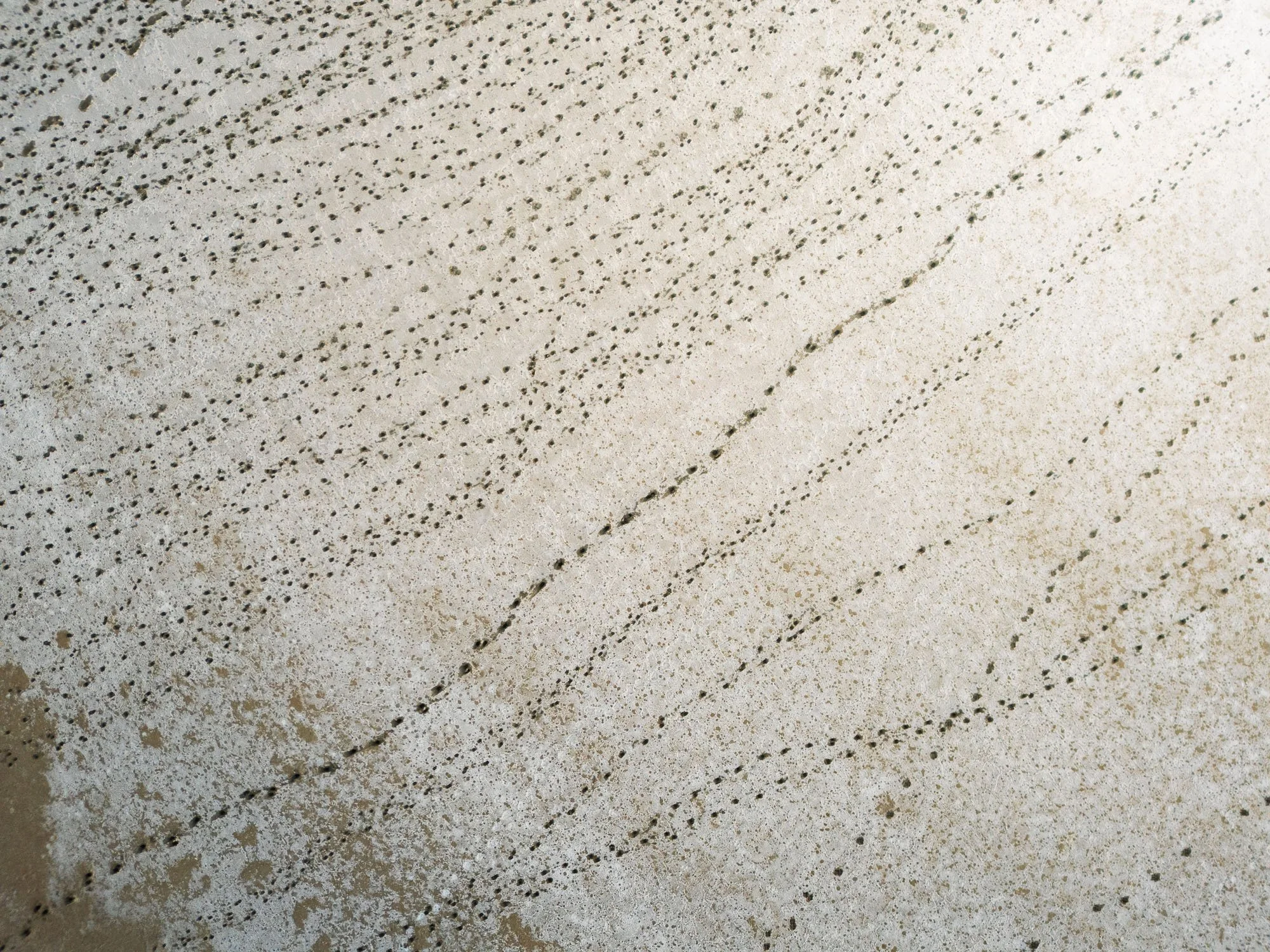
Lake Tuz, Turkey. A picture full of ‘silence’ can actually ask more questions than a picture full of ‘noise’
The Signal of Silence
Stop trying to be a narrator.
Start being an architect of absence.
When you have the courage to leave the frame unfinished, you finally give the viewer the one thing they actually want from art: the satisfaction of finding the signal themselves.
If you are tired of taking "complete" photos that get ignored and want to learn the triggers that speak to human psychology, perhaps my field notes can help. 👉 Download my FREE Visual Intelligence Blueprints here.

Fes, Morocco. Perceptual complexity. Even in a dense scene, the deep shadows create a grid of 'gaps' for the brain to navigate. Don't lift the blacks—protect the mystery