
The Hardest Lesson in Portraiture: Learning NOT to Feel
We are taught great portraits require deep emotional empathy. The hard lesson I learned? Feeling too much destroys your image.
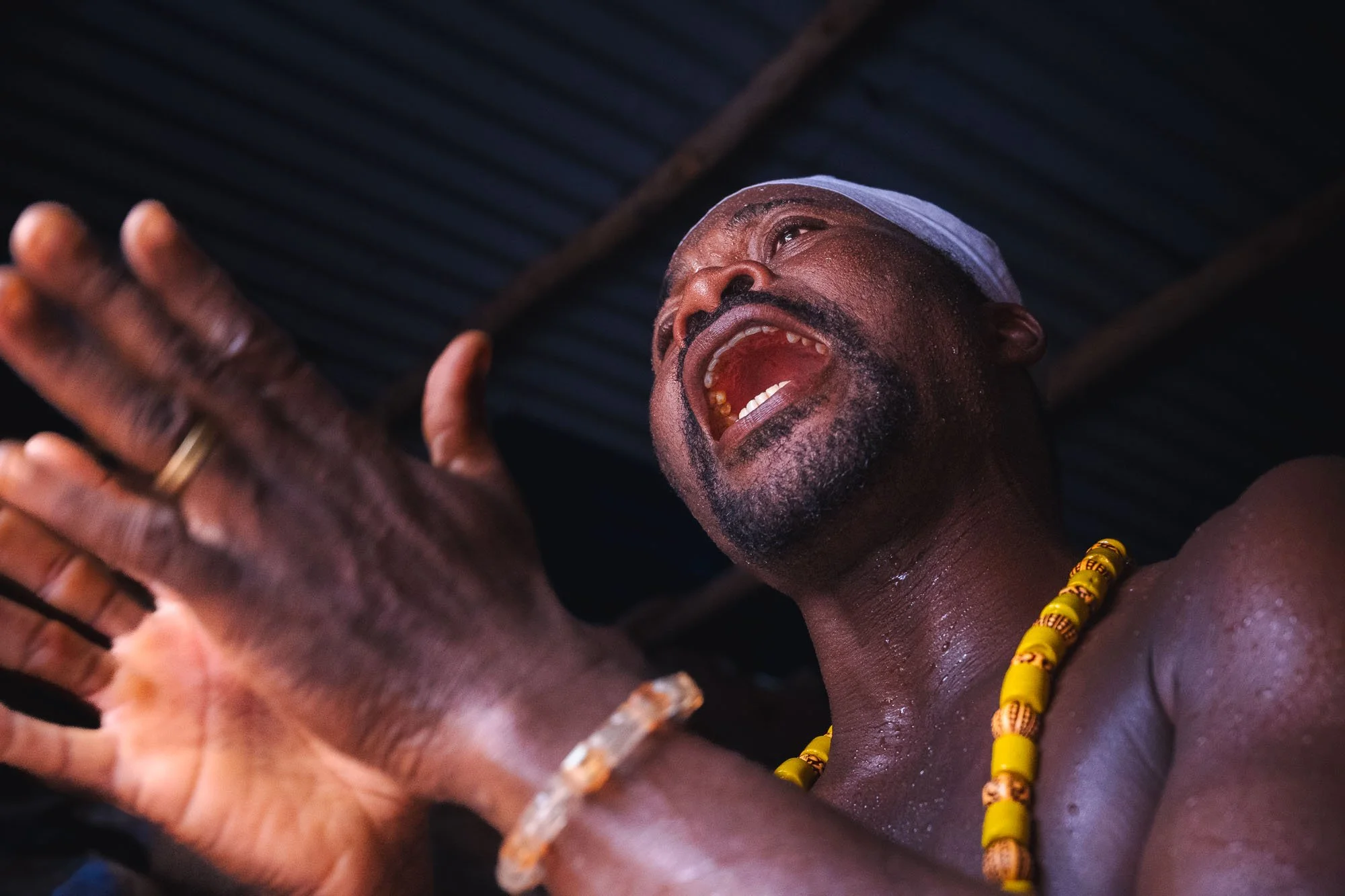
Ouidah, Benin. Getting swept up in the emotional chaos of the room makes it nearly impossible to curate the visual signal.
The air inside the corrugated iron structure was stifling, thick with the smell of sweat, damp earth, and Florida Water perfume.
It was a Mami Wata ceremony in West Africa.
The heat was an oppressive physical weight.
In front of me, a priest was deep in trance, shouting, his chest heaving, his hands locked in a frantic rhythm.
For a long time, I believed that to take a meaningful portrait in a moment like this, I had to completely immerse myself in it. I thought my job was to 'feel' what the subject was feeling—to absorb the energy of the room.
But as I raised the camera, my hands were shaking. By trying to feel the frantic, disorienting trance of the priest I was losing my objectivity; my framing was becoming reactionary and panicked.
It was a hard realisation: getting swept up in the emotion of a scene doesn't make you a better photographer. It actually blinds you.
The Two Faces of Empathy
When we struggle to take portraits that feel authentic, it usually comes down to a psychological ‘failure’.
To understand why "shooting with empathy" is a trap, we need to understand what it is and how it is defined. Empathy is not a single, warm-and-fuzzy emotion. Psychology actually divides it into two: Affective Empathy and Cognitive Empathy.
Affective Empathy is the biological reflex to mirror what another person is feeling. If they are anxious, your heart rate spikes. If they are grieving, you feel a deep, heavy sadness. This is the type of empathy photography advice seems so adamant to encourage photographers to internalise. To feel-what-your-subject-is-feeling.
In his book Against Empathy, Yale psychologist Paul Bloom explores how Affective Empathy can actually be a terrible guide for human behaviour. Because it is so overwhelming, it is inherently biased and narrow. When you share someone else's emotional pain or chaos, your judgment clouds. You stop observing and start reacting.
I realise now that when I got carried away by affective empathy, I was allowing my subject’s emotional state lead me away from more powerful & poignant images.
The Clarity of Distance
What we actually need when we’re out there—when we raise our cameras to strangers in far away places—is Cognitive Empathy.
According to foundational psychological research, Cognitive Empathy is the ability to understand another person’s perspective, read their context, and identify their mental state without being ‘infected’ with their emotional energy.
It is the capacity for profound understanding combined with a respectful, objective distance.

Lares, Peru. Cognitive empathy is the ability to hold a piercing, silent gaze without projecting your own narrative onto it.
When you sit across from a stranger in the Andes or the Atlas Mountains, Cognitive Empathy is what allows you to see the visual breadcrumbs. You notice the tension in their jaw, the defensive crossing of their arms, or the weary slump of their shoulders. You understand what those signals mean, and you respect their physical space, but you do not internalise their fatigue.
This distance is what gives you the ability to step back, manage your exposure, analyse the negative space, and find the precise visual trigger that will create a powerful photograph.
Translating Observation into the Frame
Applying this in the field completely changed how I approach a portrait. It requires ensuring some distance between the photographer-and-the-subject and focusing on behavioural evidence.

Abomey, Benin. You do not need to "feel" the religion to understand the weight of the environment.
1. Be objective
When you enter a complex space—like the shrine of a Voodoo priest—your instinct is to absorb the heavy, intimidating atmosphere. I try to shut that down.
I use Cognitive Empathy to read the room as an extension of the subject’s psychology. The bottles, the skulls, the writing on the wall—these aren't just props; they are visual breadcrumbs.
By being a ruthless observer you see the subject embedded within their own ‘messy’ reality. If you try to 'feel' the religion, you’ll instinctively try to explain it. You’ll end up saying too much to the viewer instead of leaving questions unanswered to draw them deeper.
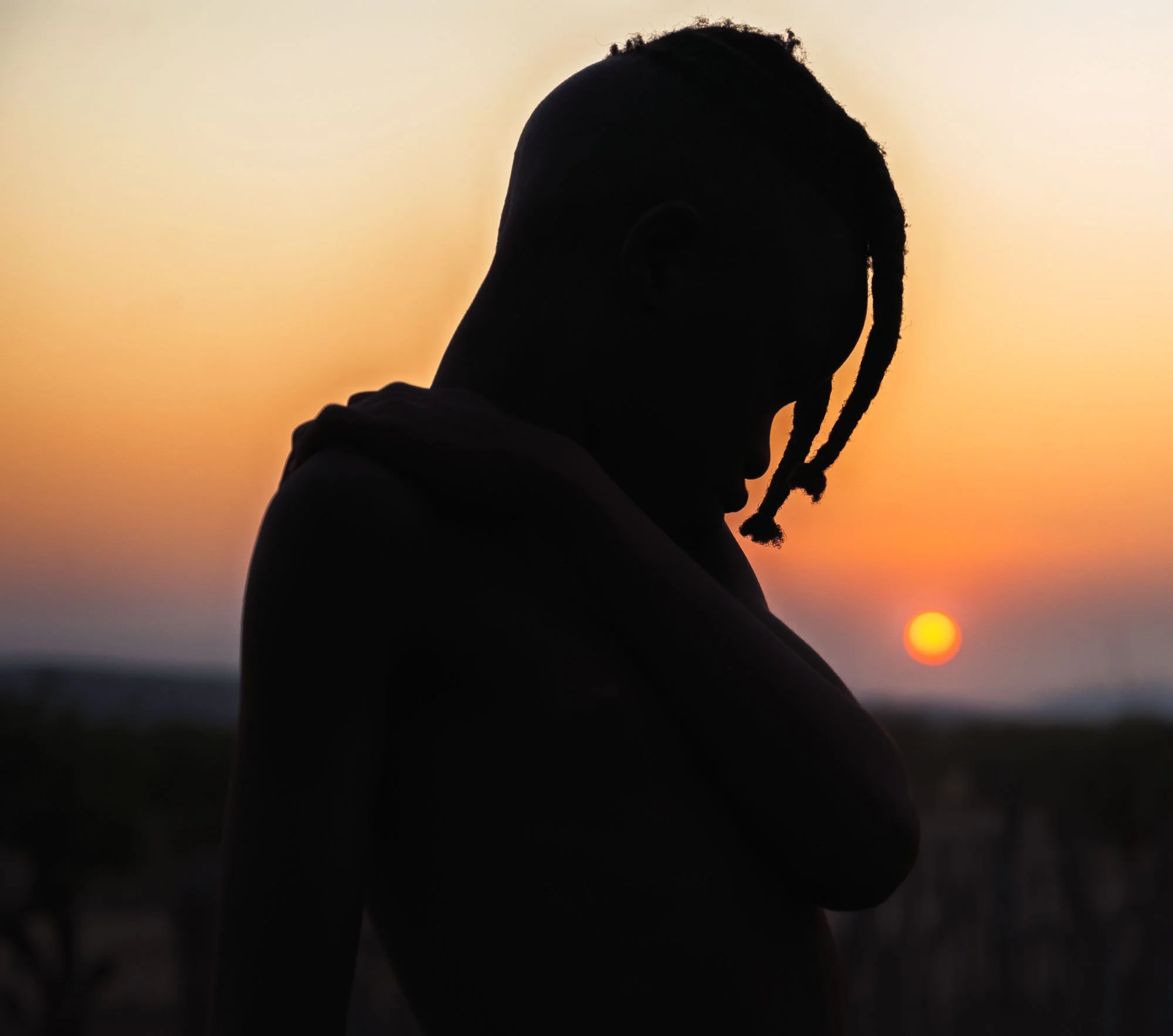
Kaokoland, Namibia. Affective empathy can lead to pity or romanticism. Cognitive empathy strips away the ego and focuses on the pure visual signal.
2. Let Go of cliches
When photographing indigenous or remote communities, I used to fall into the trap of trying to capture cliches. By understanding the difference between affective and cognitive empathy - and conciously focusing on the latter - you can strip away your own cultural baggage.
You stop trying to make the subject look heroic or sad to satisfy your own emotions, and you start using shadow, silhouette and posture to transmit their reality.
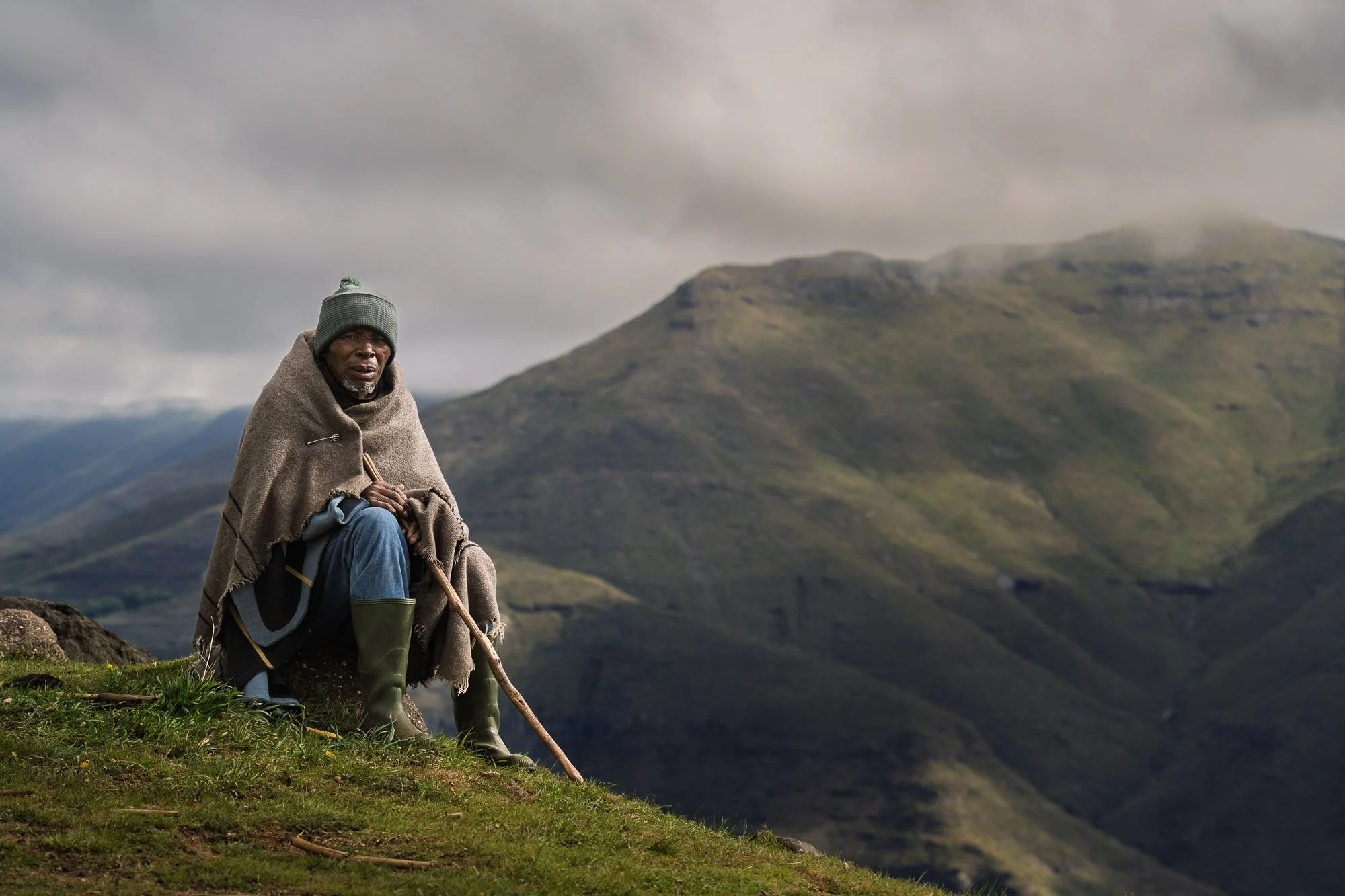
Lesotho. Cognitive empathy means understanding the brutal cold of the mountains without letting your own shivering dictate the crop.
3. Observe the Friction
When you are freezing on the high passes of Lesotho, your body is begging you to hurry. Your affective empathy tells you the farmer in front of you is also freezing, and that urgency makes you rush the shot, crop too tight or a million other things that reflect your emotions.
Cognitive empathy allowed me to look at the thick wool blanket and the heavy boots, understand that this man’s entire existence is defined by his resilience to this landscape, and deliberately frame him small against the massive, overwhelming weight of the mountains.

Oudane, Mauritania. When we stop projecting our own emotions, we give the subject the space to transmit their own reality.
My Piece of Advice
Trying to feel what your subjects are feeling is, in many ways, misleading. We do not share their history, their environment or their burdens. Trying to absorb their emotion clouds your judgement.
Step back.
Read the non-verbal cues.
Understand their context with clarity, and let that objective truth do the work.
Put the camera down. Listen to them talk. But do it to understand their context, not to absorb their energy.
The best portraits are born from the space you leave between your emotions and their reality. When we finally stop projecting our own emotions - or running away with our subject’s - we give the space to transmit the most authentic of signals in our work.
If you are looking to strip away the clichés and learn how to use psychology to capture striking photographs, perhaps my field notes can help. 👉 Download my FREE Visual Intelligence Blueprints today.
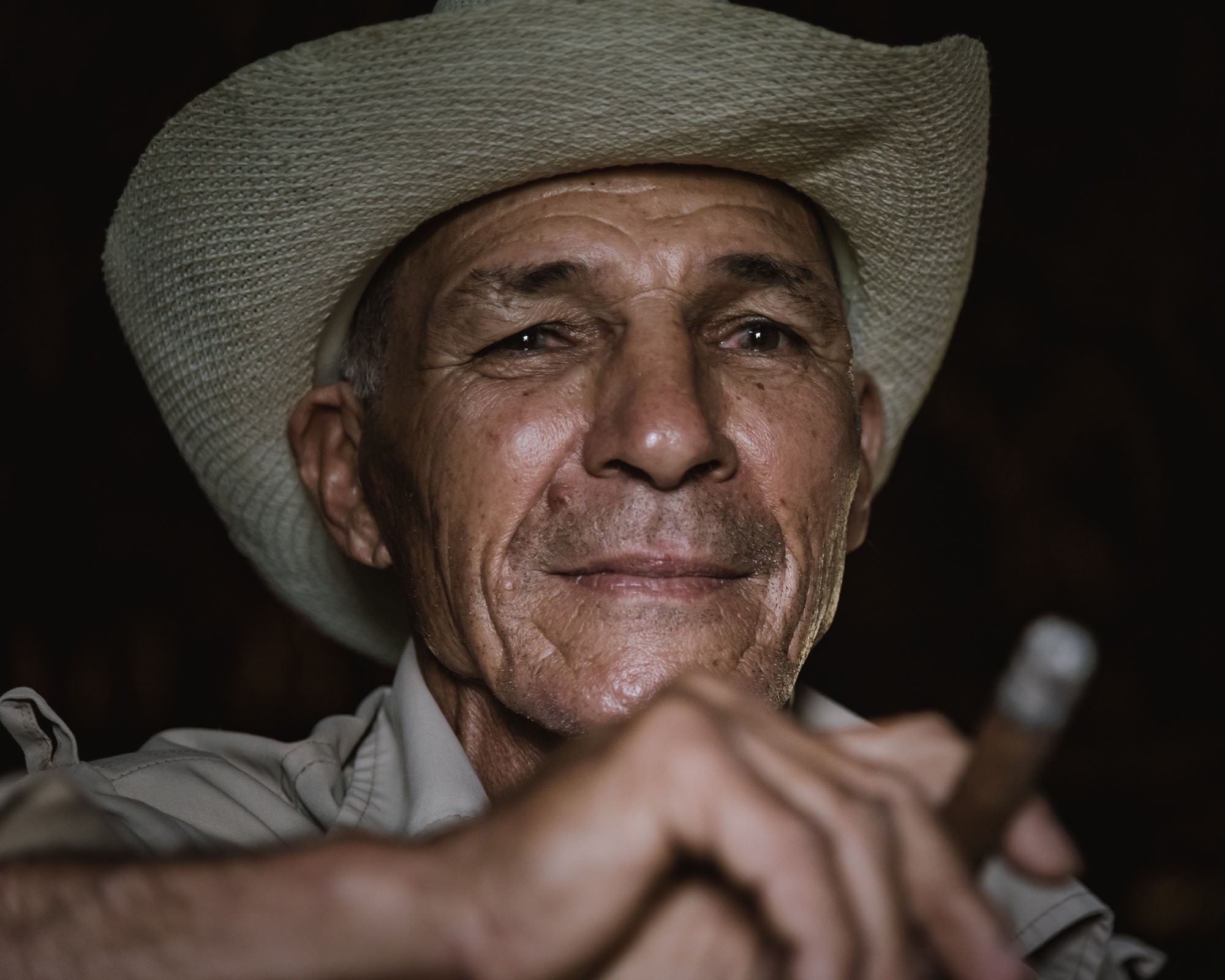
Viñales, Cuba. Cognitive empathy is reading the quiet history in a face without needing to romanticize it.