
Inside the 2026 Comedy Wildlife Photography Awards: The cognitive science of why humour is conservation’s most powerful weapon.
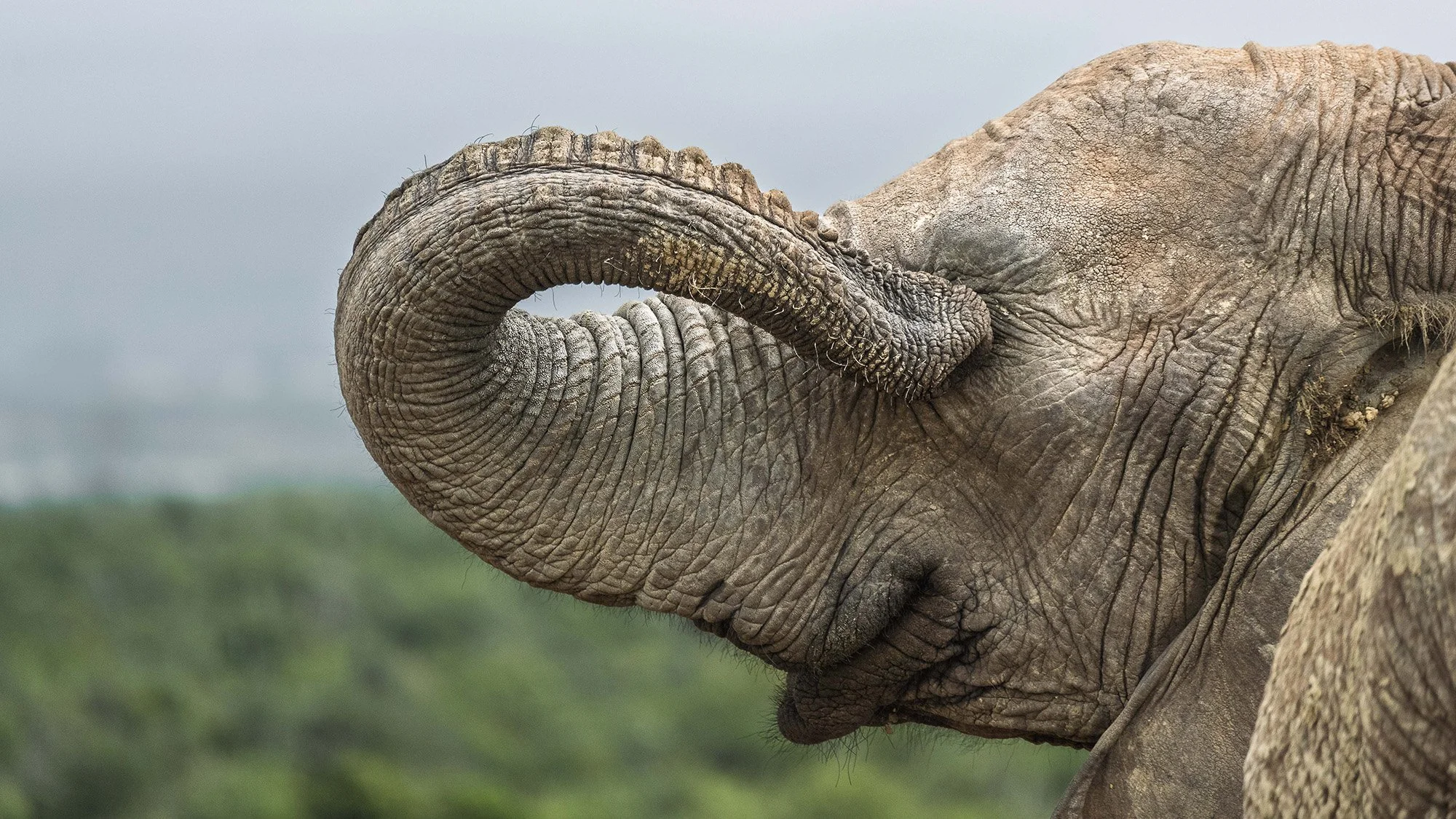
"If I can't see you, you can't see me." Finalist in the 2026 Comedy Wildlife Photography Awards. A five-ton juvenile executing peak toddler logic | Photo by Cliff Fawcett
Today, the finalists for the 2026 Comedy Wildlife Photography Awards were officially unveiled to the world. And as an adventure photographer who usually spends his time digging a Land Rover out of African sand or navigating remote border crossings, I am thrilled—and humbled—to share that my image of a juvenile elephant has been shortlisted.
The shot happened at a waterhole in Addo National Park, South Africa.
By every traditional rule of wildlife photography, my lens should have been pointed at the herd’s matriarch. She was colossal, ancient, and in the changeable conditions, sporadically bathed in beautiful Savannah light. A telephoto aimed at her weathered tusks would have produced a classic, award-worthy portrait.
I ignored her.
My camera was glued to a single, goofy youngster standing in the mud, swinging his trunk around with reckless, uncoordinated abandon.
I kept the frame tight and waited. I didn't plan for what happened next, but the moment he whipped his trunk around and slapped it directly across his own eyes, it was instant, unmistakable toddler logic:
If I can’t see you, you can’t see me.
The second the frame popped onto my screen, I started laughing in the front seat of the Defender. I knew immediately it belonged in the Comedy Wildlife Awards.
The False Religion of Seriousness
The photography industry takes itself seriously.
Wildlife photography is perhaps the guiltiest offender. It is obsessed with epic drama: lions must look lethal, eagles must look noble, and nature must be presented as an unending, dramatic symphony.
That drama is real. But it is only half the story.
The secret of the natural world is that animals spend a fair bit of time being clumsy, awkward, confused and thoroughly absurd. Young predators misjudge jumps. Birds crash-land. Enormous beasts get startled by their own shadows.
Yet traditional photography culture often ignores these moments. Photographers hunt exclusively for the "epic noun" and become blind to the unscripted visual joke at their feet.
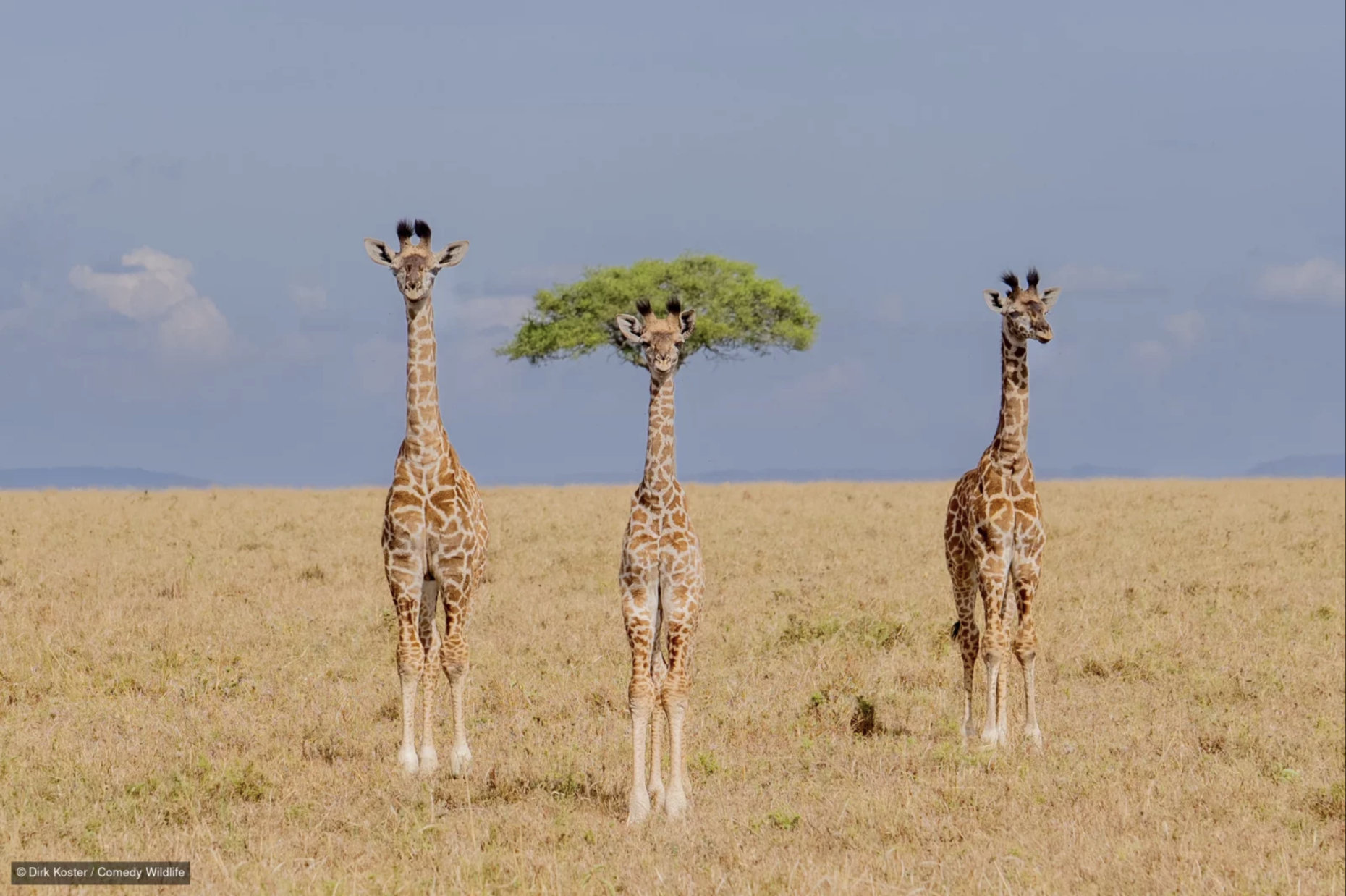
The Different One | Photo by Dirk Koster
The Cognitive Science of the Laugh
Why does an elephant blindfolding itself make people laugh irrespective of culture or language?
In psychology, it is explained by Benign Violation Theory.
In research published in Psychological Science, Dr. A. McGraw and C. Warren demonstrated that humour occurs at the intersection of two conditions:
A Violation: Something contradicts mental model of how the world "ought" to be.
Benign Context: The violation is recognised as safe, harmless and playful.
When you look at an African elephant, your brain’s predictive model expects power and primal intelligence. Slapping its trunk over its face violates that dignified expectation—it is absurd. But because the juvenile is clearly safe and playing, the violation is benign.
Cognitive scientists have taken this further, arguing that humour is the brain's internal reward system (a hit of dopamine) for detecting and resolving an error in its own mental models.
A comedic photograph is literally an optical joke told in 1/500th of a second.
It presents a setup and a punchline in a single frame.
If I can’t see you | Photo by Cliff Fawcett
Why Comedy is Conservation’s Best Weapon
This cognitive reality is the exact reason why the Comedy Wildlife Photography Awards have become a global phenomenon.
Founded by photographers Paul Joynson-Hicks and Tom Sullam, the competition was born with a brilliant, subversive mission: to drive meaningful wildlife conservation through positive, joyful engagement rather than guilt.
For decades, traditional conservation media relied on tragedy: starving polar bears, poached rhinos, and burnt forests. While those stories are vital, research shows that constant exposure to tragedy triggers compassion fatigue. It makes people feel helpless, overwhelmed, and emotionally numb.
Majesty, on the other hand, creates distance—we admire the noble beast, but we remain detached from it.
It is humour that does what we need: it builds kinship.
When we see an animal behaving like a stubborn toddler, an embarrassed teenager, or an exhausted parent, we recognise ourselves in them. Humour collapses the species barrier.
You cannot protect what you do not love, and you cannot love what you feel detached from.
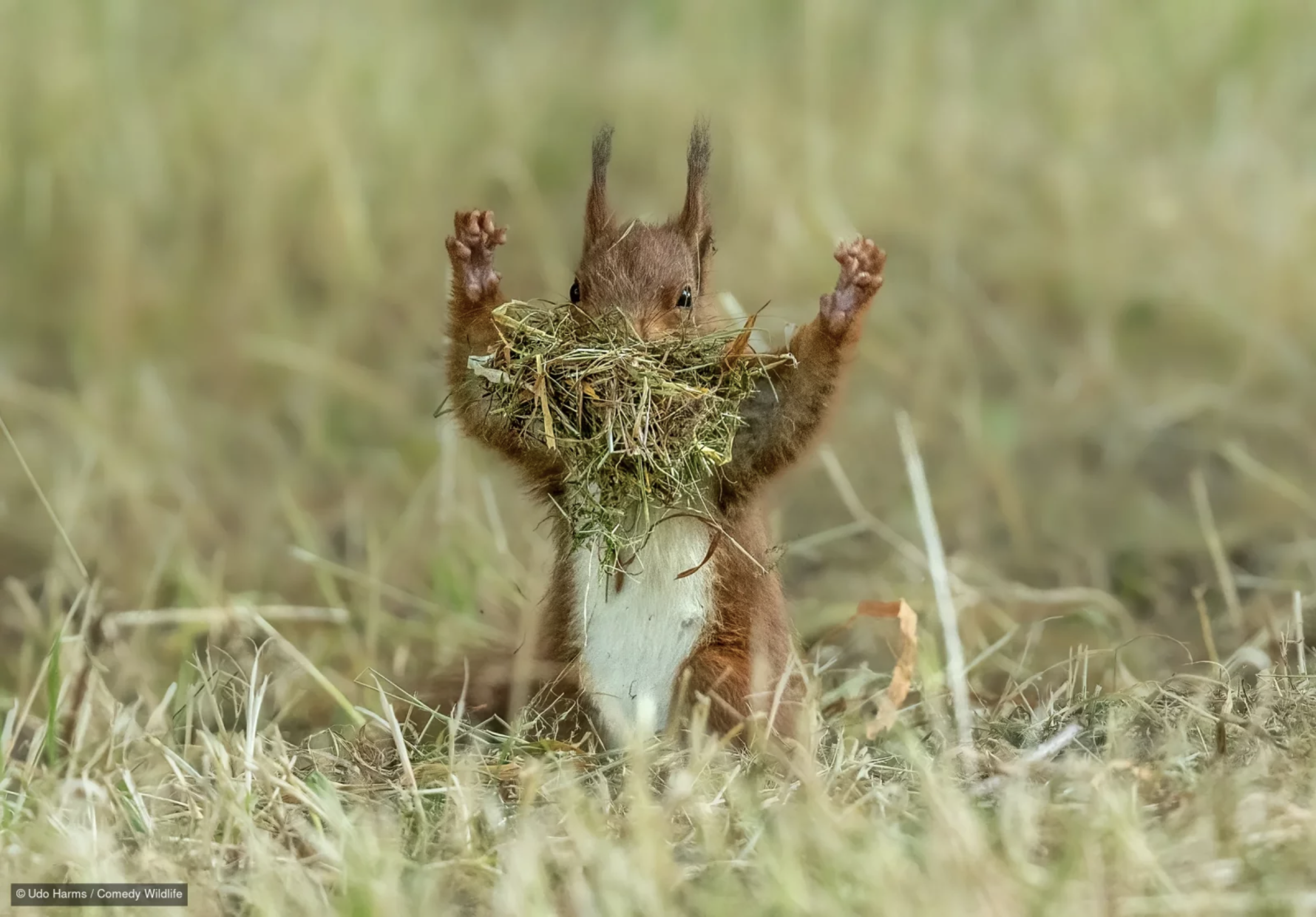
Little Godzilla | Photo by Udo Harms
So What: How to Capture Humour in the Wild
Capturing comedic timing in the field is infinitely harder than capturing a majestic portrait. You cannot pose an animal, and you cannot predict absurdity with a checklist.
If you want to train your eye to find the punchline, I recommend these three field rules:
Watch for the Clown: When you encounter a herd or a troop, don’t fixate on the dominant alpha. Look for the individual on the periphery who is distracted, clumsy or young. That is where behavioural glitches occur.
Commit to the Awkward: Most photographers stop shooting the moment an animal stops doing something "dramatic." The funniest frames happen in the aftermath—the post-shake grimace, the awkward scratch or the split-second hesitation after an animal makes a mistake.
Keep the Framing Tight: In comedy, timing is everything, but framing is the delivery. If your shot is too wide, the subtlety of the expression or gesture gets lost in the noise. Crop out the clutter so the visual punchline lands.
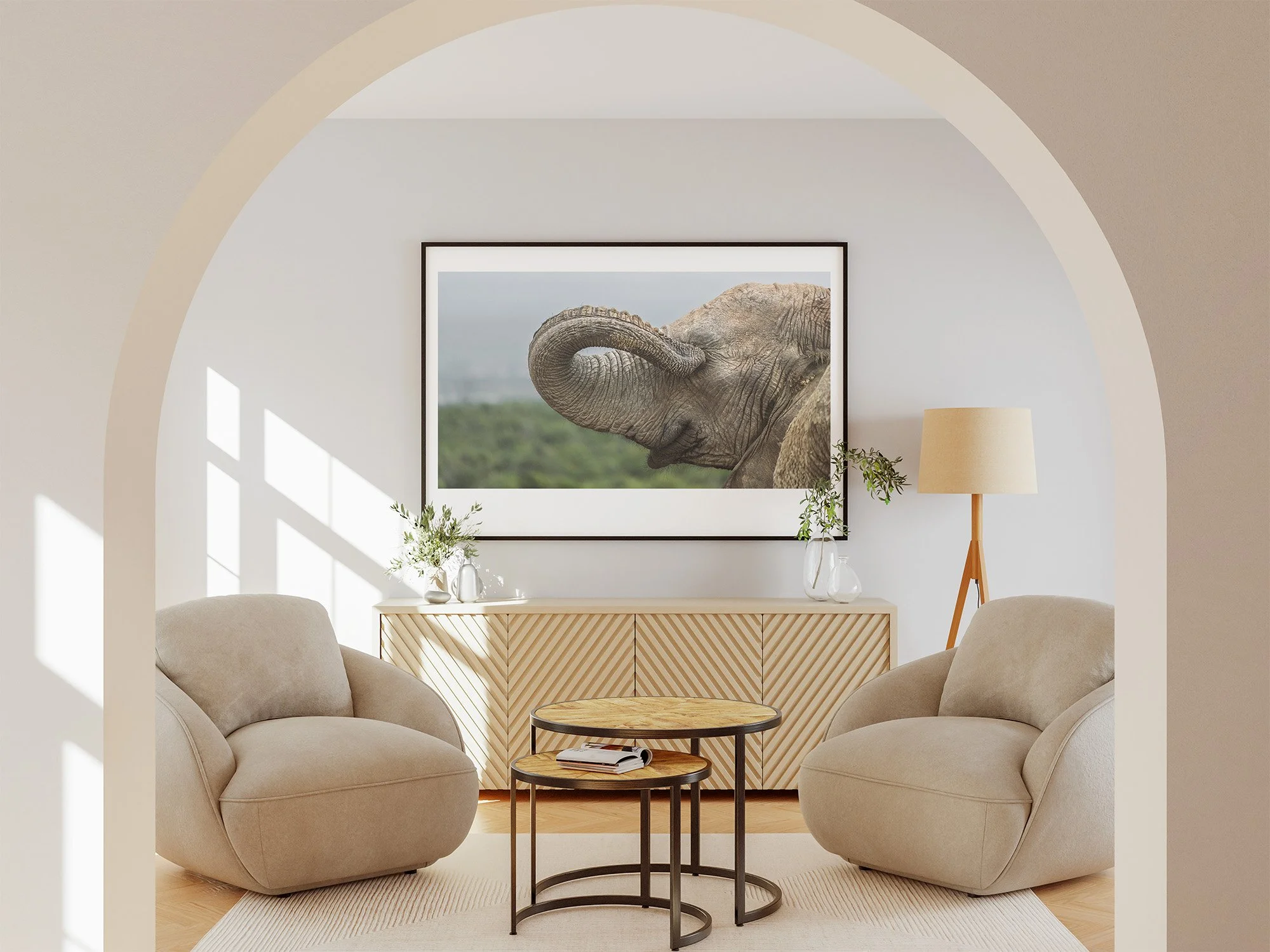
If I Can’t See You" · Official 2026 Finalist Selection · Fine Art Print Available Now
Take the punchline home
Most wildlife photography hung on living room walls demands reverence: a snarling predator or an austere portrait of an endangered icon. They are magnificent, but they are heavy.
Sometimes the frame we need in our homes is the one that breaks seriousness.
To mark the finalist announcement, If I Can’t See You is now available as an open-edition, museum-grade fine art print.
Vote in the 2026 People’s Choice Award
The complete collection of 2026 finalists is now live, showcasing some of the most extraordinary, hilarious and heartwarming wildlife photography on the planet.
Public voting is officially open for the People’s Choice Award. If this five-ton juvenile made you smile, I’d be honored to have your vote! Every vote helps shine a global spotlight on the vital conservation projects supported by the competition.
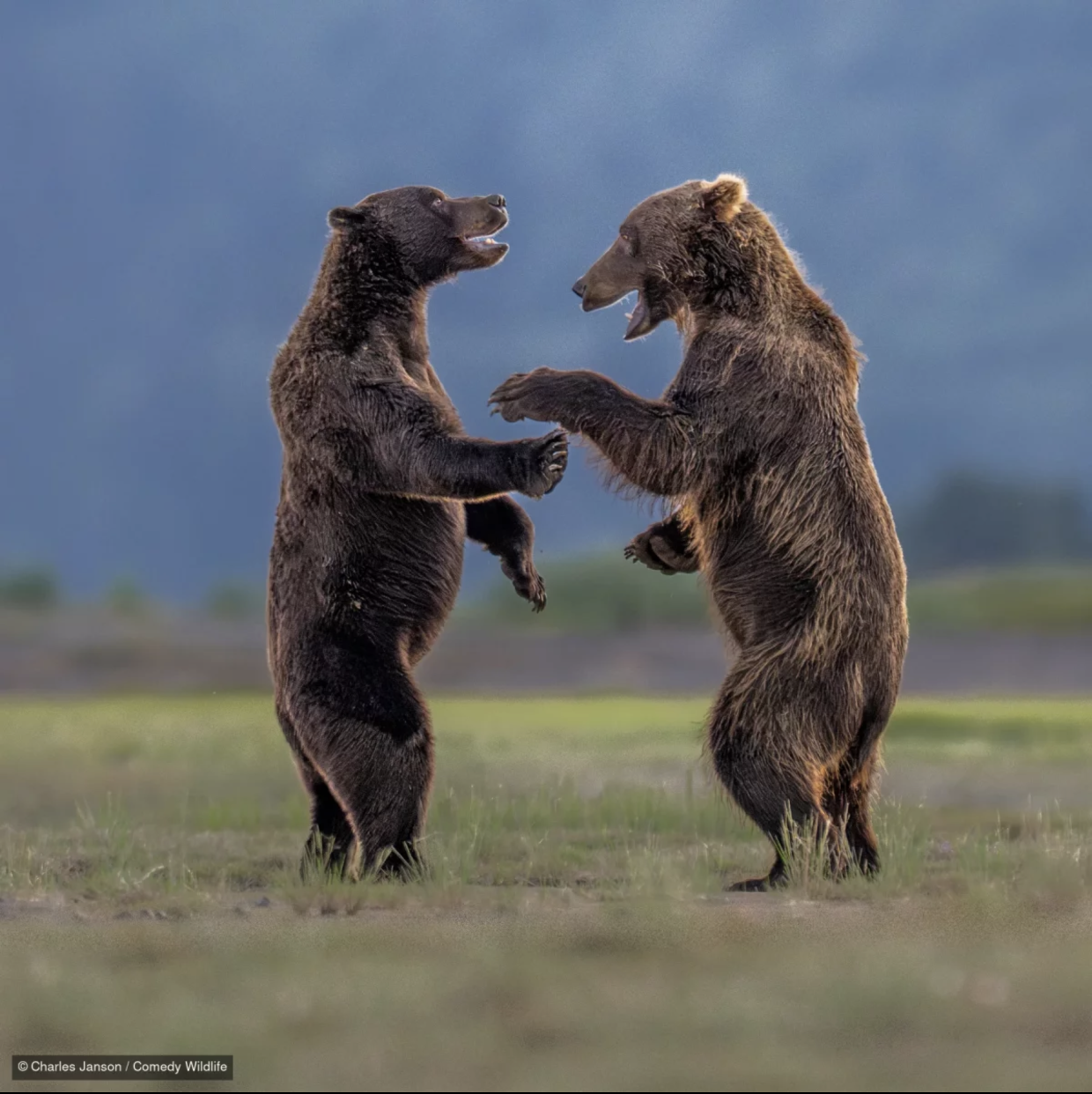
Bears sharing a joke | Photo by Charles Janson