
You don’t have a talent problem. You don’t have a gear problem. You have three psychological blind spots.
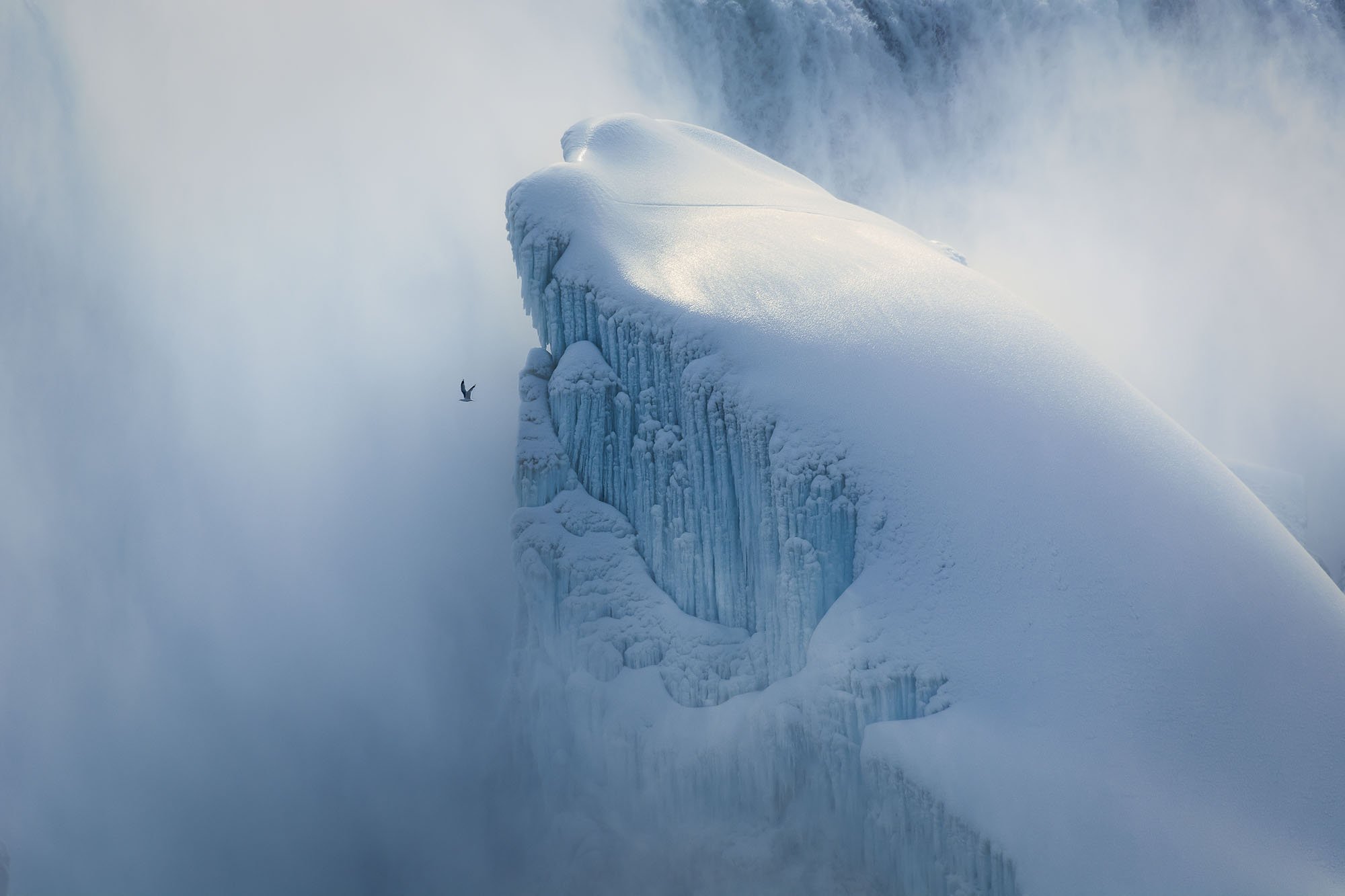
Niagara Falls in deep winter. The antidote to the cliché. Instead of shooting the tourist postcard, true visual intelligence hunts for scale, isolation, and form.
Every passionate photographer eventually hits the same wall.
You’ve moved past the beginner phase. You understand the exposure triangle, you know how to get crisp focus, you’ve bought a couple of decent prime lenses, and you know your way around Lightroom.
By every technical measure, your photos are "good".
And yet, when you look at them, you feel disappointed.
They have no pulse.
They don’t move anyone.
They don’t provoke questions.
They are pictures people scroll past without a second thought.
This is the point where most photographers get stuck for years—and where many quit entirely.
They assume the plateau is an equipment problem. They convince themselves that what they really need is a sharper lens, a camera body with more megapixels, or an expensive flight to an exotic location.
After twenty years of studying psychology and overlanding all over the world, I can tell you the blunt truth:
You cannot buy your way out of this problem.
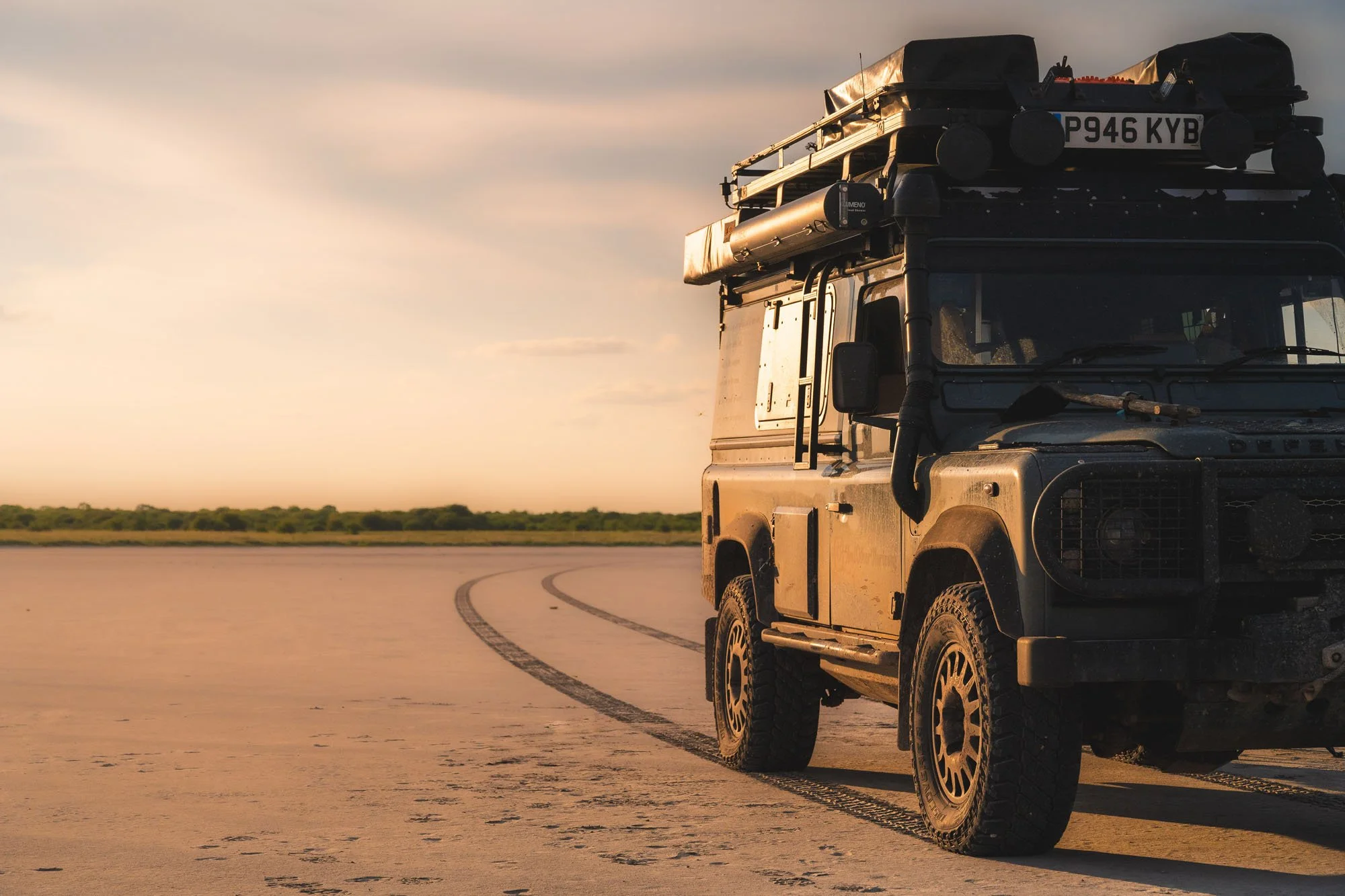
Makgadikgadi Pans, Botswana. A camera sensor records geography; only your perception gives that space an emotional pulse.
A camera is just an unthinking box of silicon and glass. It has no taste, no courage, and no vision. It simply records where you point your attention.
If your photos feel lifeless, it isn’t because your camera is failing you; it is because your brain is falling into three psychological traps.
Want to find out how to break them?
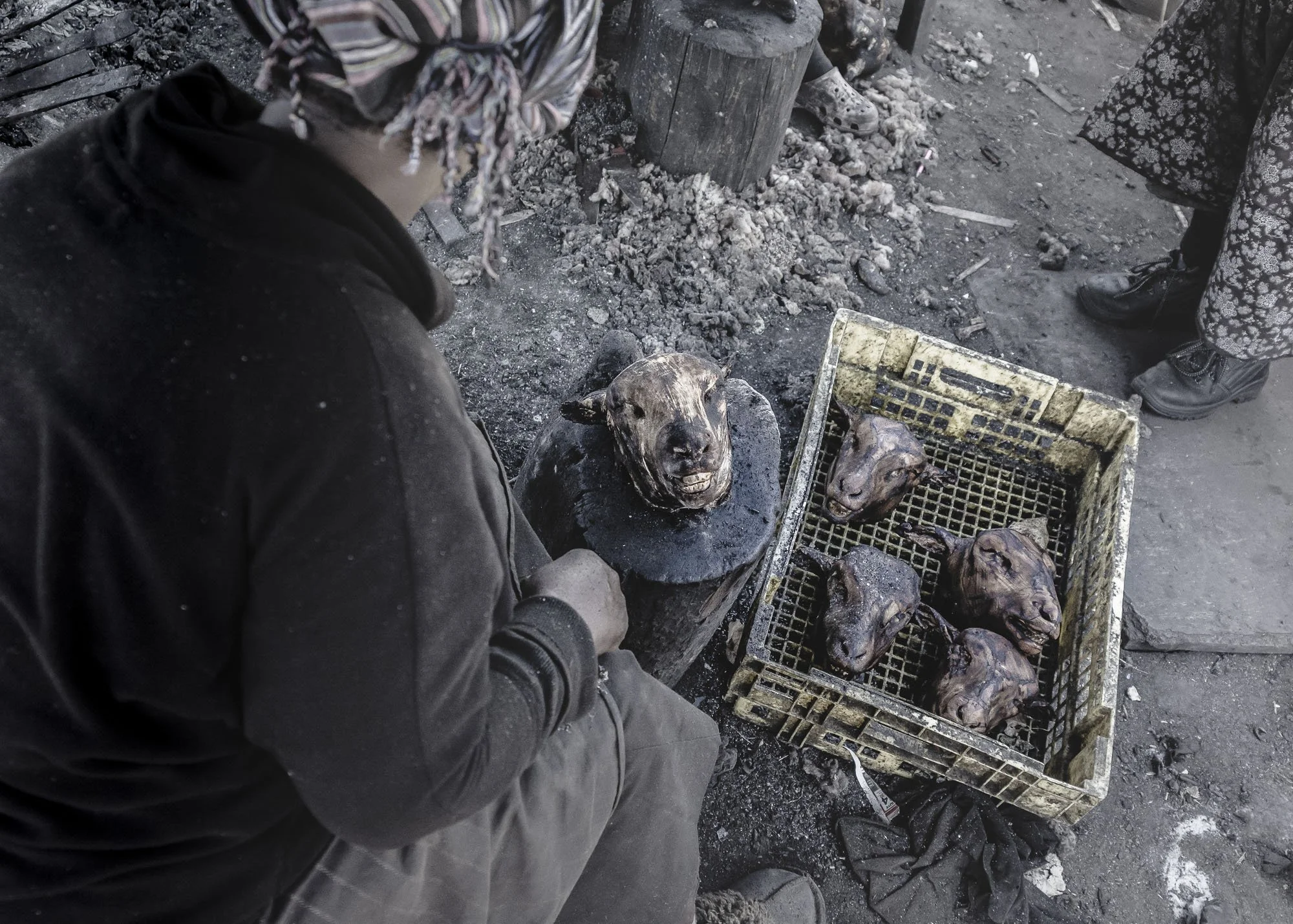
Langa Township, South Africa. Original vision requires stepping outside the sanitised aesthetic of social media and looking at the grit of reality.
Trap 1: The Copycat Eye
Most photographers believe they are developing their own artistic style. In reality, they are trying to copy what they’ve seen elsewhere.
Your brain is an incredible pattern-recognition machine. If you spend an hour a day scrolling through Instagram, Pinterest, or YouTube, your brain does what it was designed to do: it averages all those images together and builds an internal template of what an "acceptable photo" looks like.
Without realising it, your mind memorises a formula: crushed blacks, glowing orange-and-teal colours, a lone silhouette centred on a misty ridge…
When you step out into the real world with your camera, you aren't actually seeing what is in front of you.
Instead, your brain scans the environment looking for things that match the template you memorised. You don't photograph reality; you hunt for copies of other people's photos. You become trapped in visual inbreeding.
How to Fix It: You have to starve the template. Stop looking at contemporary photography feeds for inspiration. Go watch cinema from the 1960s. Visit an art gallery and study how Renaissance painters handled directional light. Read literature. Or better yet, spend an entire afternoon walking through your own neighbourhood without a camera, forcing yourself to look at the scenes you normally ignore. You cannot have an original voice if you are feeding on everyone else’s visual leftovers.
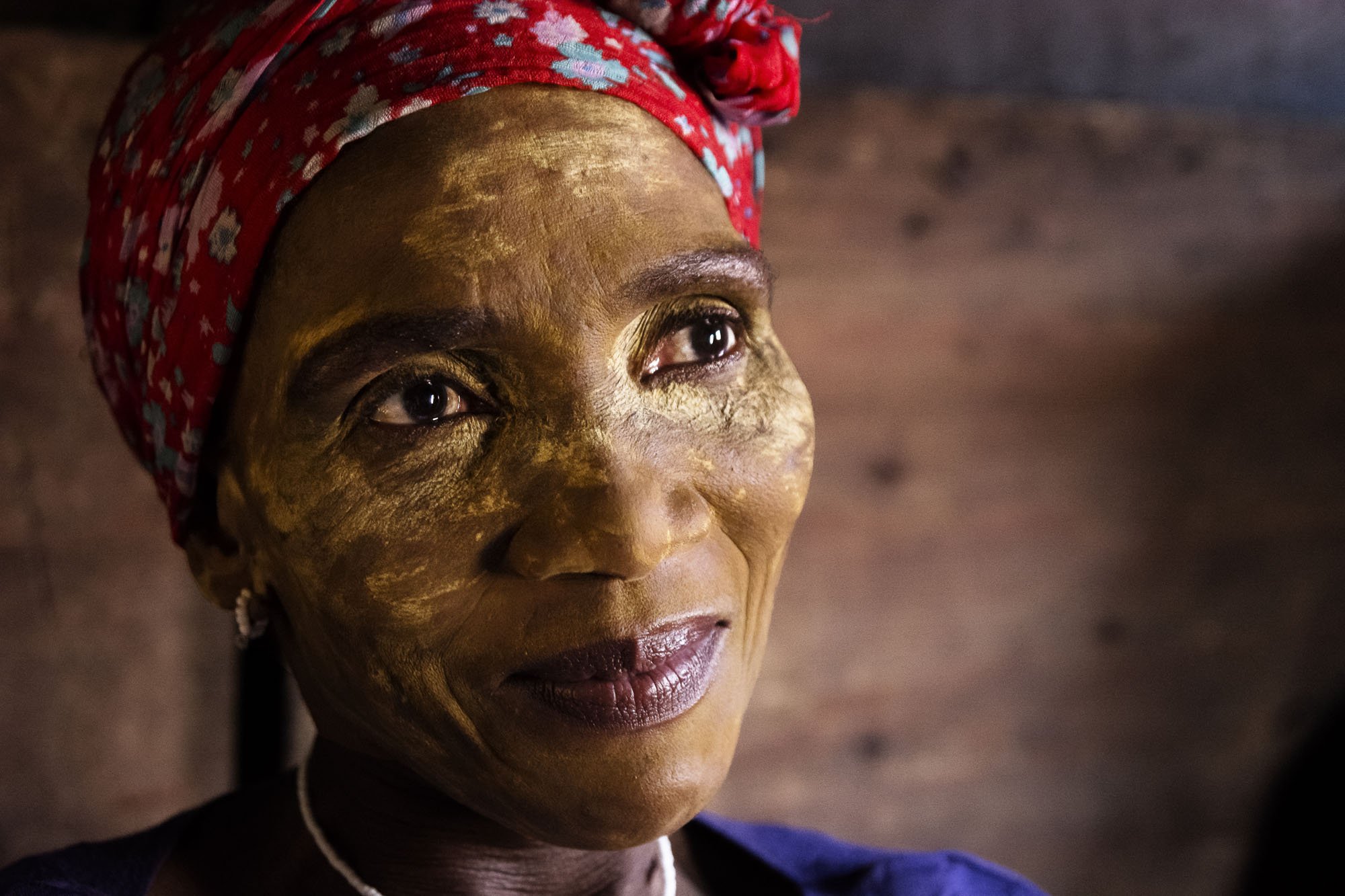
Langa Township, South Africa. You cannot capture a human’s truth from across the street with a telephoto lens. If you want a viewer to feel an image, you have to be willing to feel vulnerable.
Trap 2: Hiding Behind the Lens
Why do so many technically sharp portraits and street photos feel completely hollow? Because the photographer was terrified when they took them.
The legendary war photographer Robert Capa famously said: “If your pictures aren't good enough, you aren't close enough.” I think photographers assumed Capa was talking about physical distance.
I don’t think he was - well not only. He was really talking about emotional vulnerability.
A camera is the ultimate psychological shield. It allows you to enter a chaotic street market, an intimate ceremony, or an uncomfortable neighbourhood while pretending you aren't really there.
You screw on a long lens and "snipe" strangers from forty feet away. Why? Because walking up to a human being, looking them in the eyes, and dealing with the social awkwardness of being seen feels terrifying.
But your images suffer from that distance because there’s no adrenaline, no tension, and most importantly, no ability to build empathy.
How to Fix It: Put the zoom lens away. Force yourself to shoot with a wide, fixed focal length (like a 28mm or 35mm). This physically forces you to step inside the personal space of your subject. Accept the awkwardness. Say hello. Let them see you. The moment you are willing to feel vulnerable in the environment, that emotional tension bleeds directly through the glass and into the frame.
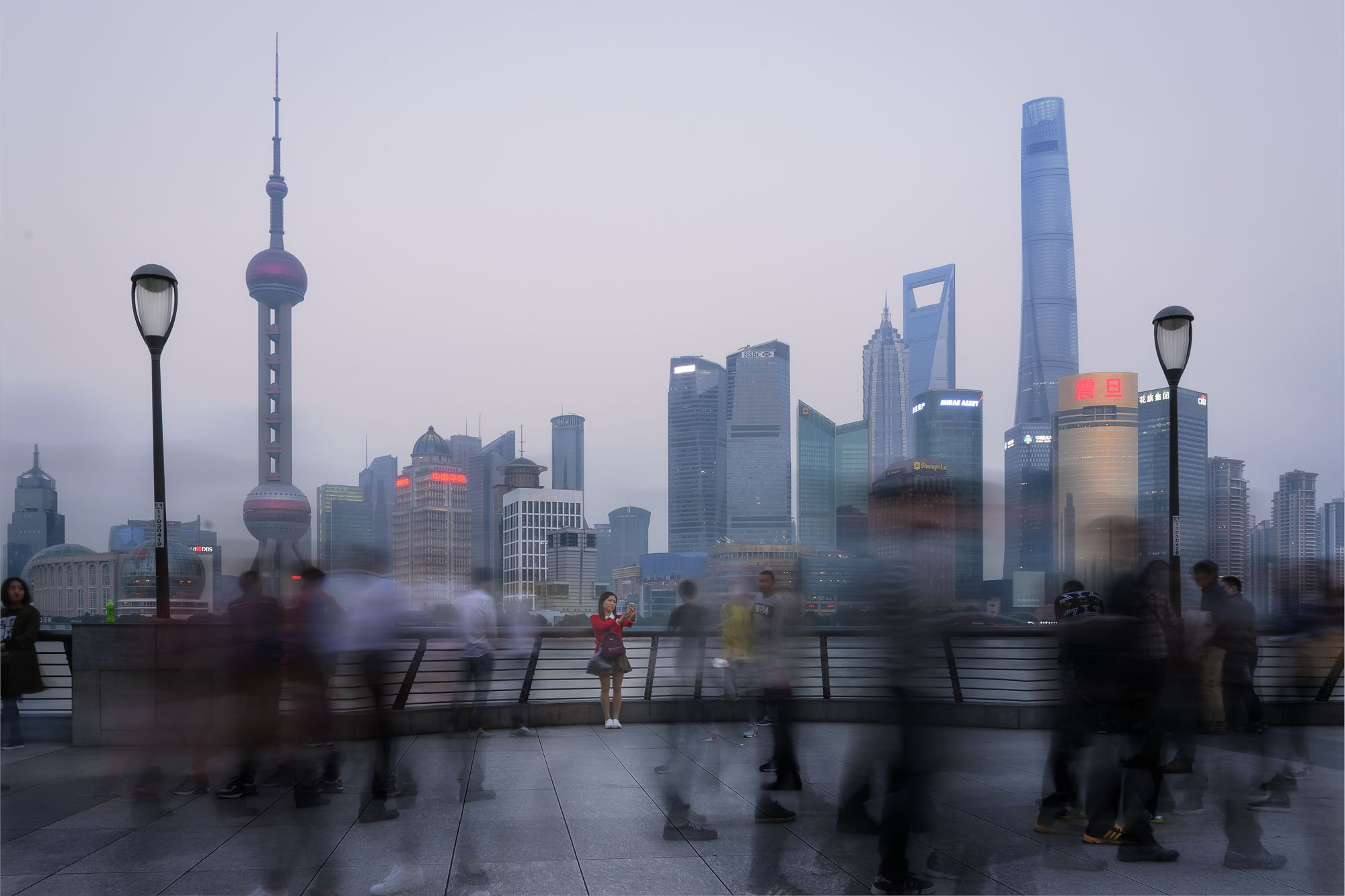
The Bund, Shanghai. Instead of snapping an immediate postcard of the skyscrapers, staying with the scene allowed the tension between moving velocity and human stillness to reach a decisive moment.
Trap 3: The Rush for Quick Answers
Watch an amateur photographer in the field: they arrive at a scene, feel a spike of disorientation, spot an obvious subject, snap the shot and walk away.
They think they are being fast and decisive. In reality, they are just running away from discomfort.
The human brain hates confusion. When you walk into a messy environment, not knowing what to photograph creates a subtle wave of anxiety. To relieve it, your brain rushes for the quickest, easiest answer: you find a pretty flower, a colourful sign, or an obvious landmark, click the shutter and leave.
You mistake relief for creative success.
Master photographers have an extraordinarily high tolerance for ambiguity. When they arrive at a chaotic scene, they just sit in the mess.
They don't raise the camera immediately. They let their initial, cheap ideas pass through their mind and discard them. They watch how people interact. They watch where the shadows are falling. They wait until the obvious answers burn away and the deeper, unscripted reality reveals itself.
How to Fix It: Practice the "Ten-Minute Rule". When you arrive at a scene that feels compelling, forbid yourself from raising the camera for the first ten minutes. Put your hands in your pockets. Look at what the light is doing. Watch the background. Let the superficial tourist shots die in your mind. Only when the scene stops feeling like a postcard and starts “feeling” do you take the camera out.
The Real Craft Isn't Photography. It's Seeing.
It’s easier than ever to buy an expensive camera, a sharp lens and a ticket to an exotic destination. Camera technology has been democratised.
What has not been democratised—and what no piece of camera gear will ever give you—is Visual Intelligence.
The disciplined ability to recognise when your brain is taking lazy shortcuts. The courage to put down the emotional shield, step into the friction of the world and sit with a scene until its true character emerges.

Buenos Aires, Argentina. When you stop shooting on autopilot, the mind learns to organise overwhelming environmental chaos into structured, emotional rhythm.
If you want to break through your creative plateau, stop shopping for new gear. Stop looking for magic presets.
Turn off the algorithmic copycat in your head. Put down the telephoto. Sit in the discomfort.
Because the moment you stop rushing to take photos, you will finally start learning how to see.
Upgrade Your Visual Intelligence
Mastering photography isn’t about memorising more camera settings; it’s about understanding the psychology of how the human brain sees.
If you are ready to build a reliable, instinctual framework for creating images people can truly feel, explore my work.
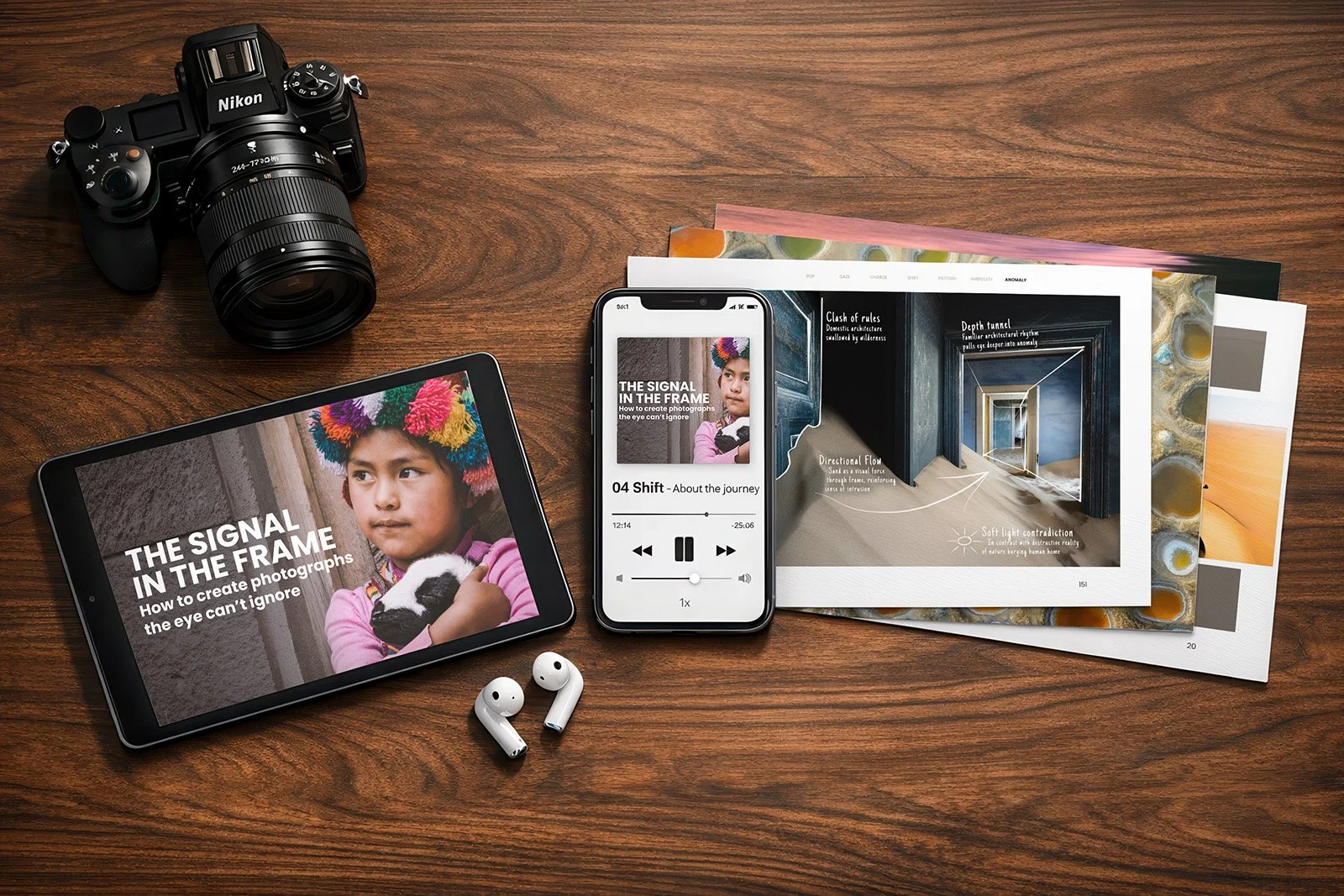
The Signal in the Frame is a science-backed operating manual designed to help you break through creative plateaus and create work people can truly feel.