
Everything You Know About Voodoo is a Lie
No dolls. No pins. No curses. What an overland journey into the sacred shrines of Benin revealed about the world’s most demonised faith.
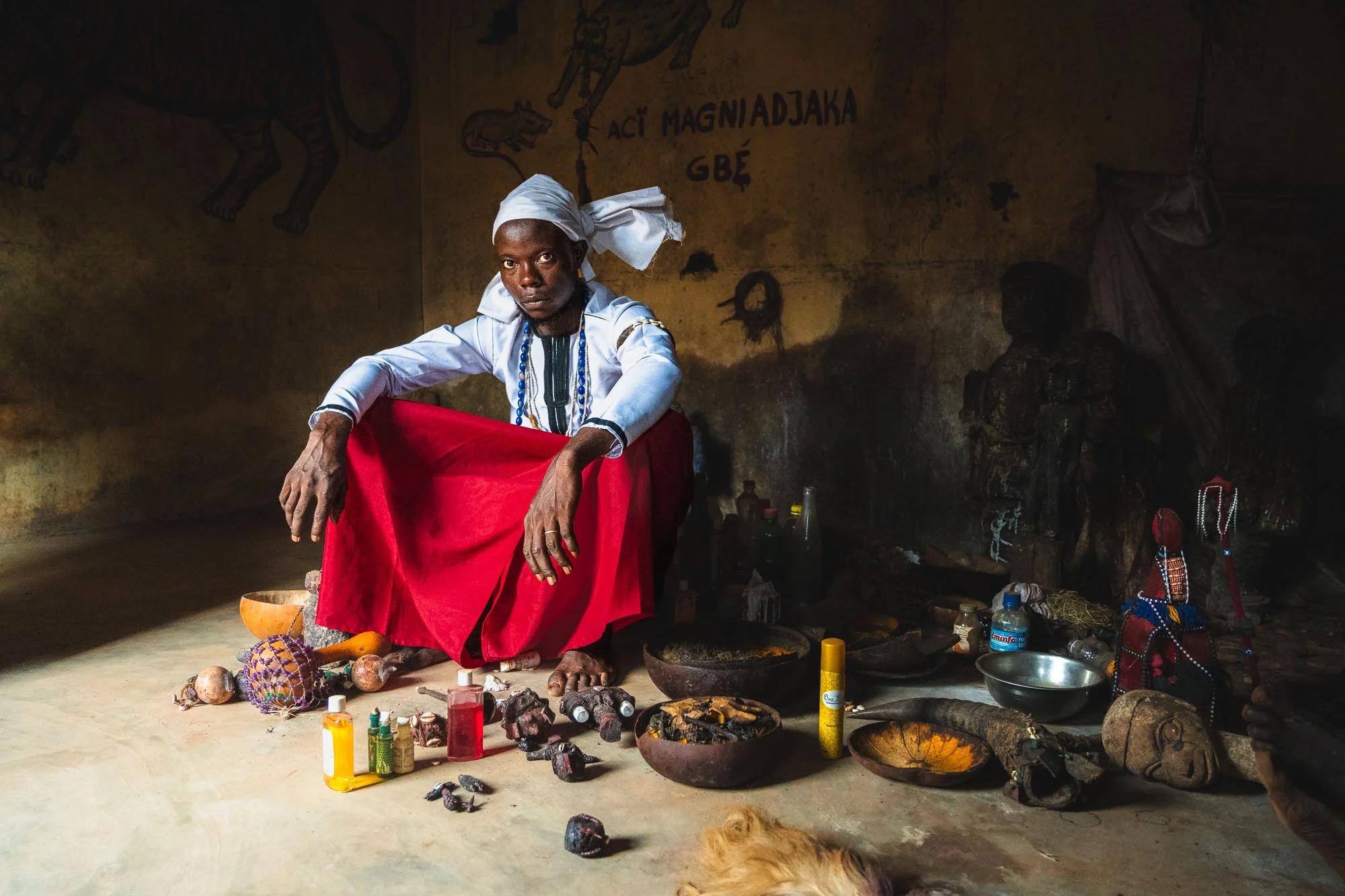
Ouidah, Benin. A high-ranking Vodun priest in his inner sanctum, surrounded by ancestral offerings. In Benin, the shrine is not a place of dark magic; it is a space of meditation, lineage, and balance.
Mention the word "Voodoo" in the West, and our collective subconscious defaults to a horror movie.
We envision wax dolls stuck with pins, demonic possessions, and curses whispered in the dark. Pop culture has spent a century turning an ancient, living world religion into a Halloween cartoon.
Part of this distortion comes from a fundamental confusion between Vodun and Hoodoo. While Hoodoo is a tradition of folk magic and herbal rootwork developed in the American Deep South, Benin is the historical cradle of Vodun—an ancient, formal world religion practiced openly by millions.
The Hollywood caricature of pins and hexes isn't African theology; it’s a sensationalised fiction. True Vodun is an official, constitutionally recognized state religion. It governs community justice, ecological harmony, and ancestor veneration.
All of this I was to discover as I ventured into Benin…
As the West African wet season started to strike, my thirty-year-old Land Rover Defender 110 was taking on the tracks between the coastal slave-trade port of Ouidah and the inland royal kingdom of Abomey. The humidity sat on my chest like a wet wool blanket, and the air smelt of woodsmoke and damp earth.
Over the weeks that followed, as I sat with priests, joined wild funeral processions, and stood inside suffocating shrines, I realised that our Western fear of Vodun is fundamentally rooted in a cultural misunderstanding.
In the modern West, we live in a culture of extraction. We take from the earth without asking, isolate ourselves from death and treat the natural world as a resource to exploit.
Vodun is the opposite: it is an ancient, unbroken contract of reciprocity.
Nothing in the spiritual world is free.
Every ritual, dance, and offering is a debt repaid or a relationship maintained between the living, the dead and the natural forces.
But to start to understand this, I had to venture further through the red tracks of West Africa and dismantle the myths of my Western upbringing, one-by-one.

Benin. Navigating the red clay at the edge of the wet season. To understand the spiritual heart of the country, you first have to survive the roads.
MYTH: Voodoo is Dark Magic, Hexes
and Malevolent Spirits
REALITY: Vodun is a Treaty with the
Natural World
In Western theology, the serpent is a symbol of deception, original sin and damnation. So when you hear that Ouidah has a Temple des Pythons your brain prepares for a scene from Indiana Jones.
Yet as I walked into the clay courtyard I found an atmosphere of quiet stillness. Hundreds of royal pythons curled placidly around roof beams, amidst stone altars and coiled in bunches across the stone floor all whilst local priests sat in quiet discussion.
In Vodun cosmology, the python (Dangbe) is not an agent of evil; it is a sacred totem of fertility, peace, and agricultural bounty. The serpent is part of the contract with the earth: respect the creatures that move through the soil, and the harvest will follow. Dangbe is the circle of life.
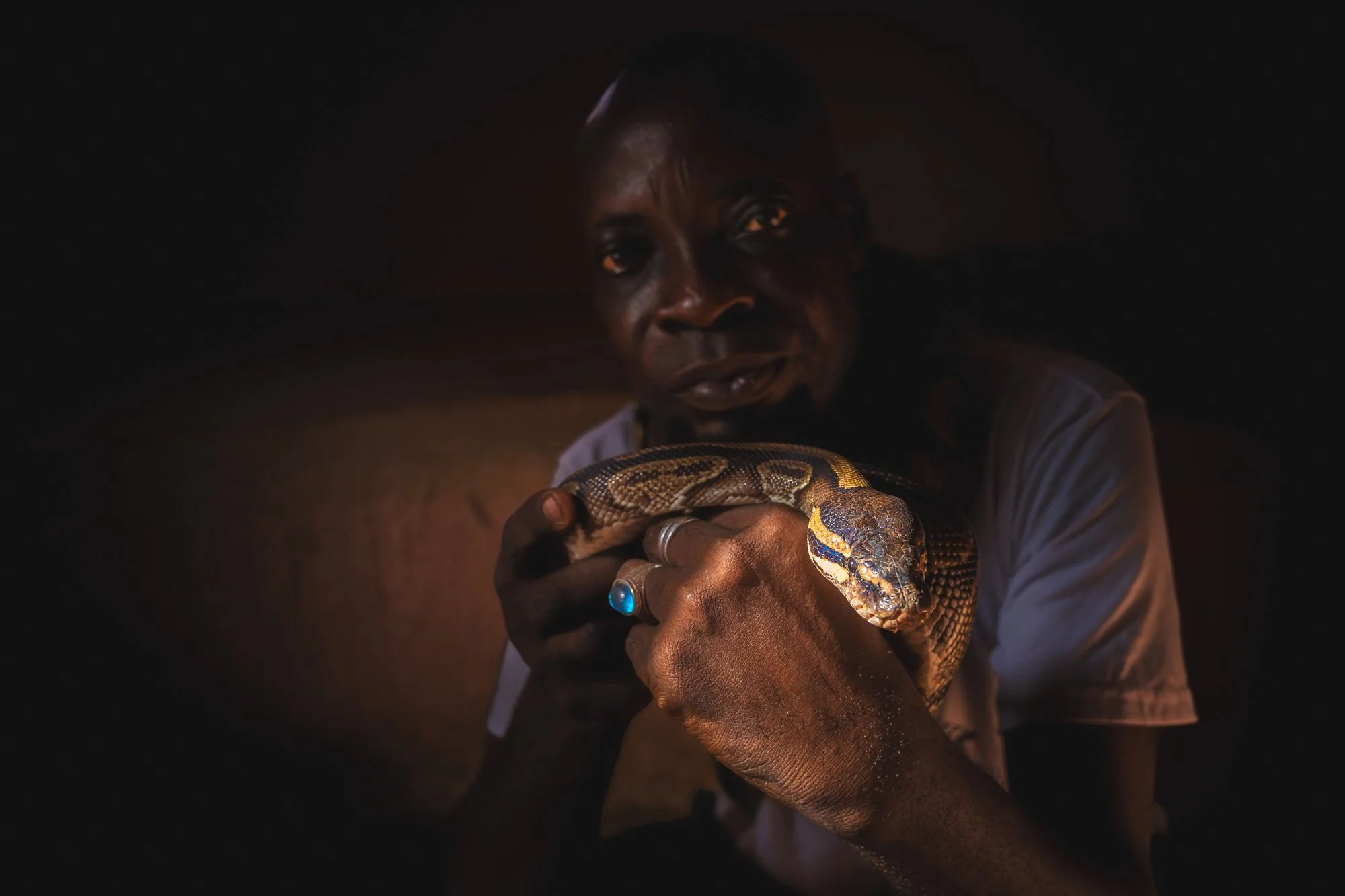
Ouidah, Benin. The sacred pythons of Dangbe. In Vodun, the serpent is a symbol of peace and regeneration, not original sin.
Through an elder, I was granted an audience with a Queen from the city of Savalou, alongside several high-ranking Vodun priests. We sat on low wooden stools, observing the protocol of presenting offerings: bottles of sodabi (a fiery palm liquor) and kola nuts.
The Queen, draped in brilliant woven cloth, listened with unhurried authority as the head priest poured clear liquor onto the clay to wake the ancestors.
"The white men who colonised us feared our rituals because they could not control them," the elder explained. "Vodun simply means 'spirit' or 'unseen force.' The ocean has a spirit. The earth under your feet has a spirit. Our work is about maintaining balance. When you forget to respect the forces that give you life, disaster follows."
There was no devil here. There was only an ancient cosmic and natural treaty.
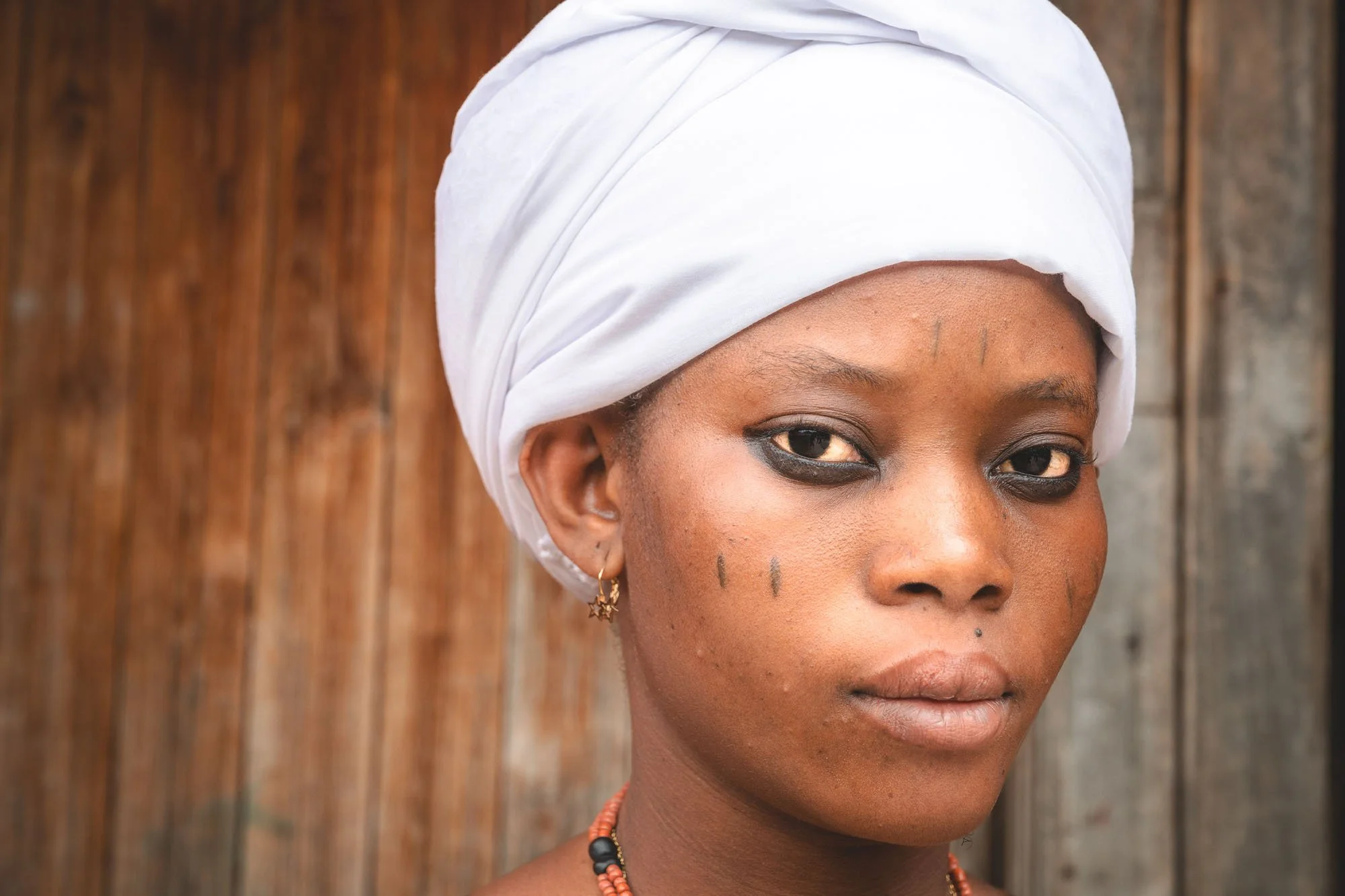
Savalou, Benin. Royalty and spiritual guardianship are deeply intertwined. Meeting the Queen was an incredible opportunity to listen and to learn.
MYTH: Voodoo Treats the Dead with Ghoulish Necromancy and Fear
REALITY: A Vodun Funeral is a Festival—Dancing the Dead Into the Ancestral Realm
Voodoo’s relationship with mortality has been broadcast as a macabre nightmare—zombies raised from graves, cemetery dust and dark necromancy.
In reality, I have never seen a culture celebrate life through death quite like the Beninese.
Navigating Sully through the city of Abomey, the tracks were suddenly blocked by hundreds of singing people. It was a funeral procession—and it looked like a street carnival.
Towering 6 feet above the crowd were the Moko Jumbies—dancers on soaring wooden stilts, draped in swirling, kaleidoscopic fabrics. They didn't mourn; they leaped, spun, and bent their bodies in impossible arcs, moving to the frantic pulse of djembe drums and iron bells.
The village wasn't paralysed by sadness. They were sweating, shouting, and laughing.
In Vodun, death is not an ending or an occult curse; it is a promotion. When an elder dies, they transition into the realm of the ancestors, where they become active guardians for the living. The Moko Jumbies represent the spiritual gatekeepers who straddle heaven and earth, protecting the departing soul on its journey.
This was the contract of lineage: You honour the dead with life, movement, and joy, and in return, the ancestors watch over the village. Grief wasn't suppressed; it was danced into the earth and turned into collective catharsis.
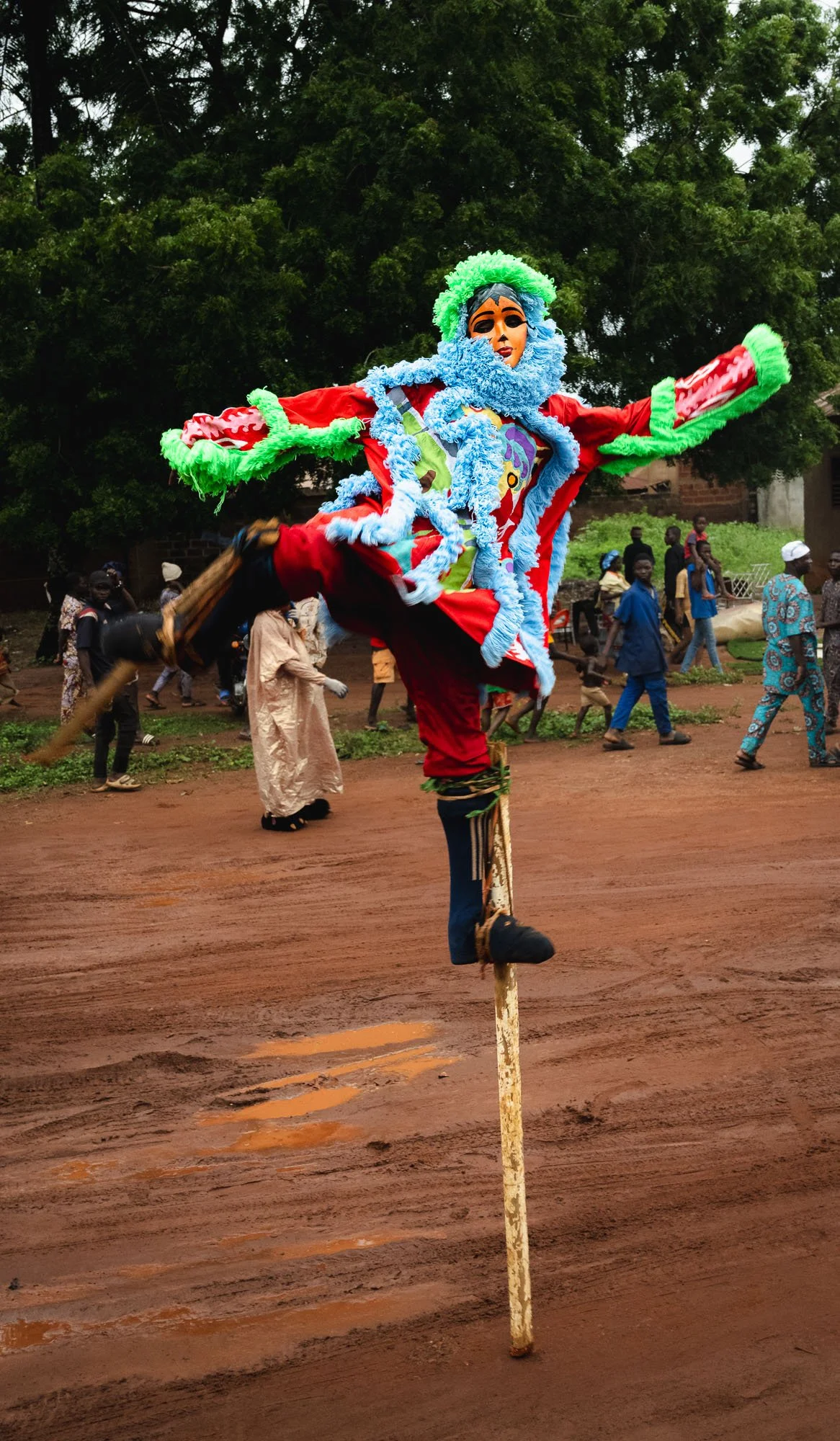
Abomey, Benin. The Moko Jumbies straddle the line between earth and heaven. At a Vodun funeral, grief is not hidden—it is celebrated on towering stilts.
MYTH: The Supernatural Terrorises
and Haunts the Living
REALITY: The Unseen World Protects
the Village
Western pop culture insists that ghosts and spirits exist to haunt, possess and terrorise.
In Benin, the unseen world is the local justice system.
In Ouidah, I stood in a packed square for an Egungun festival. The Egungun are the physical manifestation of ancestral spirits. Completely enveloped in heavy, kaleidoscopic garments of velvet, cowrie shells, mirrors, and silk, these figures charge through the crowd accompanied by minders wielding hardwood sticks and whips.
The energy was electric and chaotic. When the Egungun lunged, hundreds of people fled in mock terror, only to dissolve into howling laughter seconds later. The ancestors weren't distant, malevolent ghosts; they were right there in the dust, breathing, running and demanding respect.
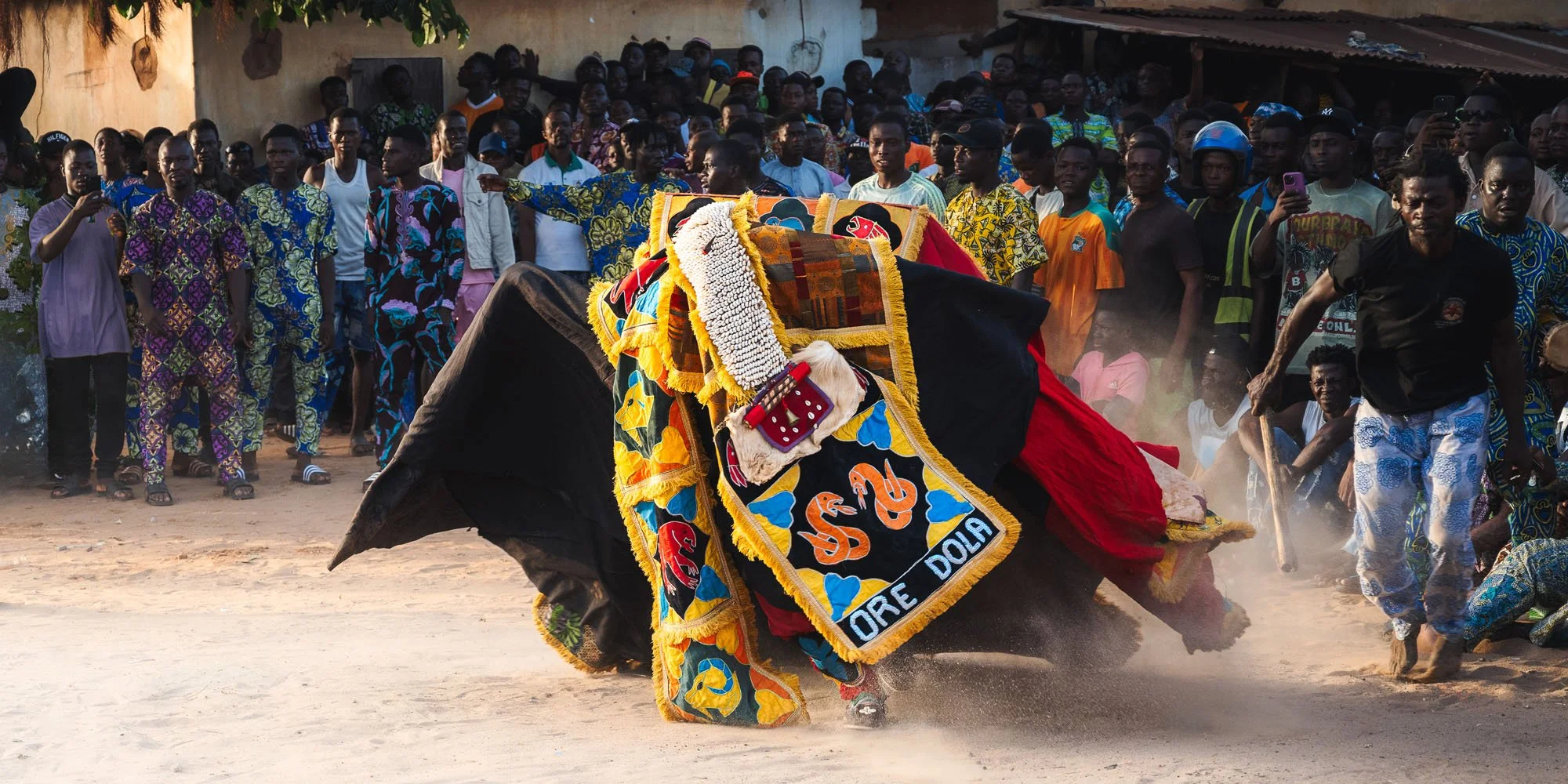
Ouidah, Benin. The Egungun is not a costume; it is the physical presence of an ancestor, commanding absolute respect in the dust.
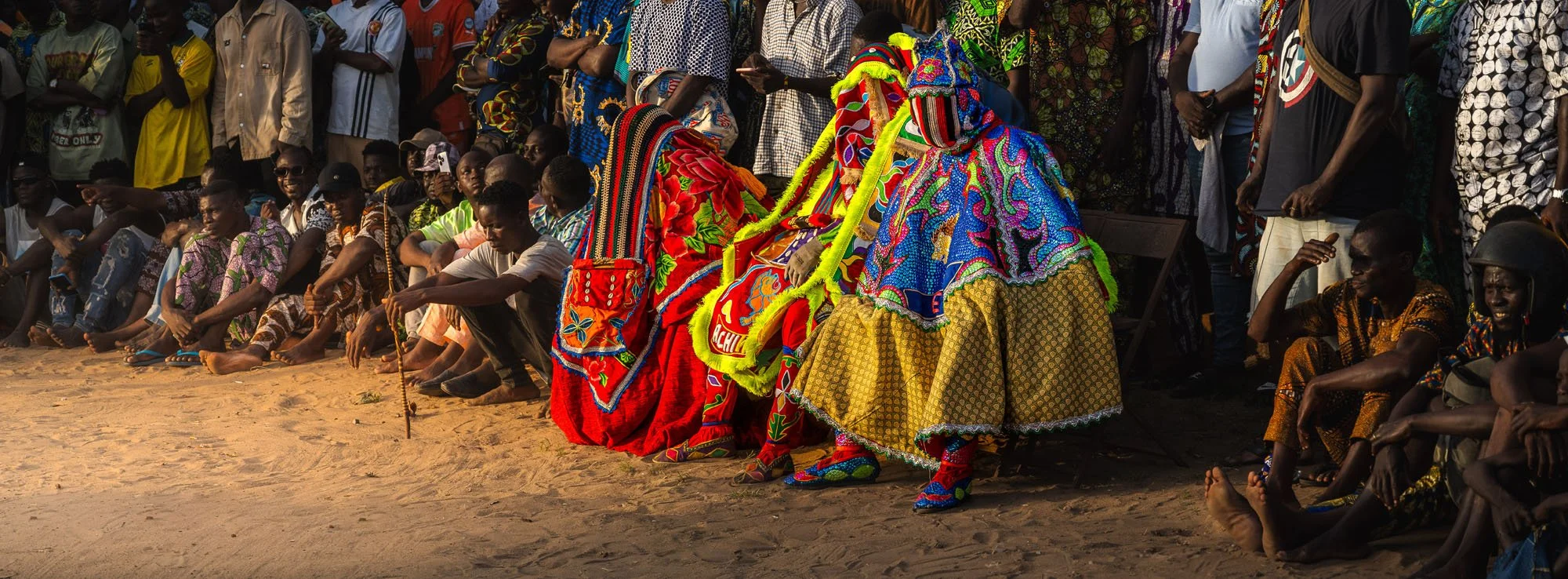
The stillness between the storms. Egungun spirits resting amidst village elders in Ouidah. Even at rest, the entities are treated with profound reverence.
Later that evening, on the nearby banks of Lake Ahémé, this spiritual civic order manifested in yet another way: the Zangbeto.
These are the traditional "Guardians of the Night." Long before municipal police forces existed, these entities patrolled the villages after dark, catching thieves, settling disputes, and protecting the community.
Visually, a Zangbeto is a giant, conical haystack woven from dried, brightly dyed straw.
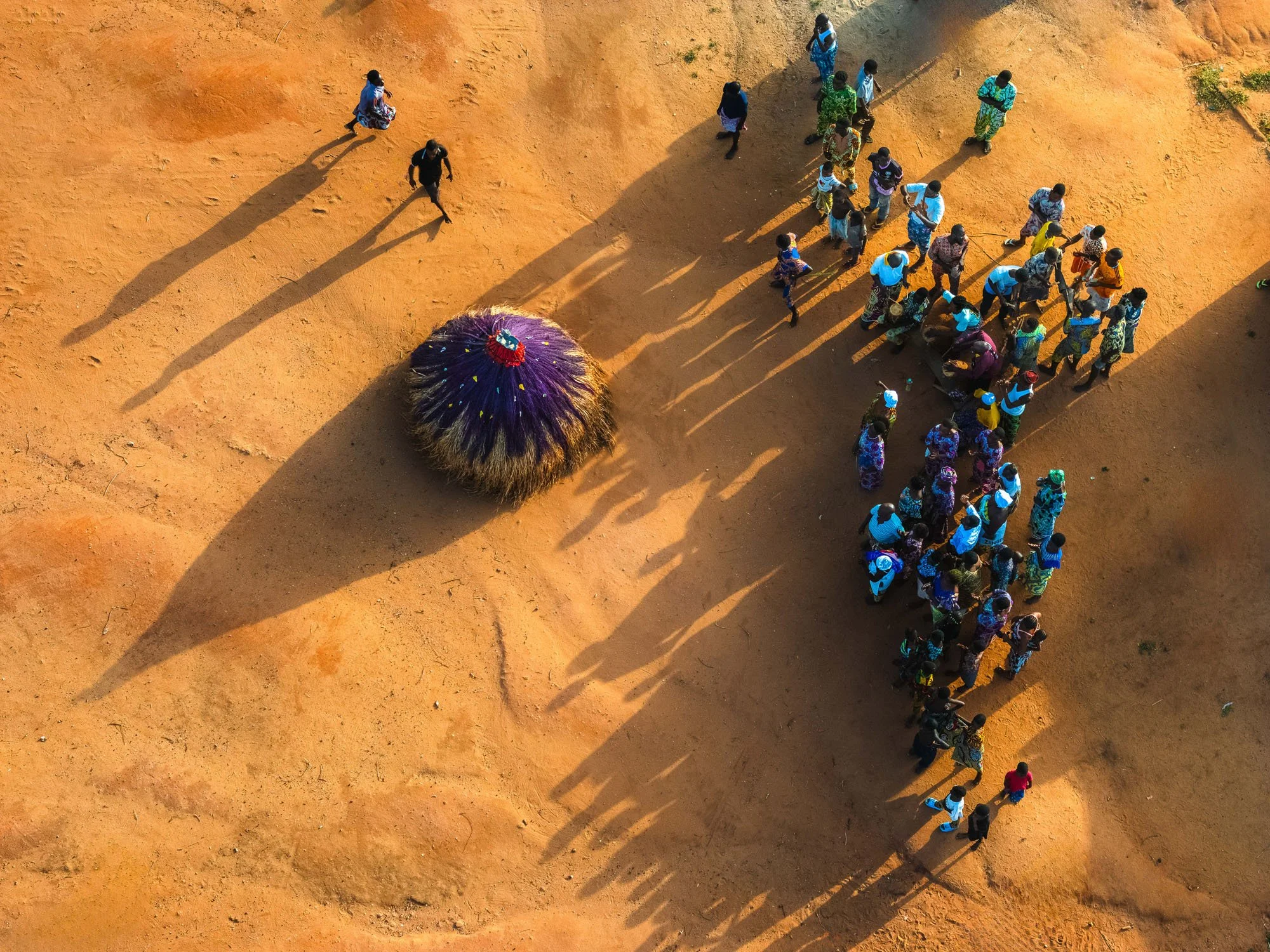
Lake Ahémé, Benin. From above, the sacred boundary becomes visible: the Zangbeto casting an impossible shadow across the red earth, facing the assembled village it is sworn to protect.
As drums thundered, the haystacks began to spin like a mechanical top across the dirt. Moving with terrifying speed, stopping on a dime and spinning so fast the straw hums in the air.
The village is whipped up into a frenzy until the minders stopped the dance. Suddenly they were signaling for me to step forward.
In front of the entire village, they tipped the heavy straw cone upside down.
It was completely empty.
No person inside.
No mechanical engine.
No hidden frame.
Just hollow straw resting on bare dirt. Seconds after setting it down, a whistle blew and the empty cone spun back into the clearing with ferocious velocity.
You can try to rationalise it, but sitting in the dust, you realise analysing the physics (or wondering how a person ‘hid’ whilst they turned the haystack over) misses the point. The Zangbeto works because the community shares the agreement that an invisible eye is always watching, holding everyone accountable to the moral law of the village.
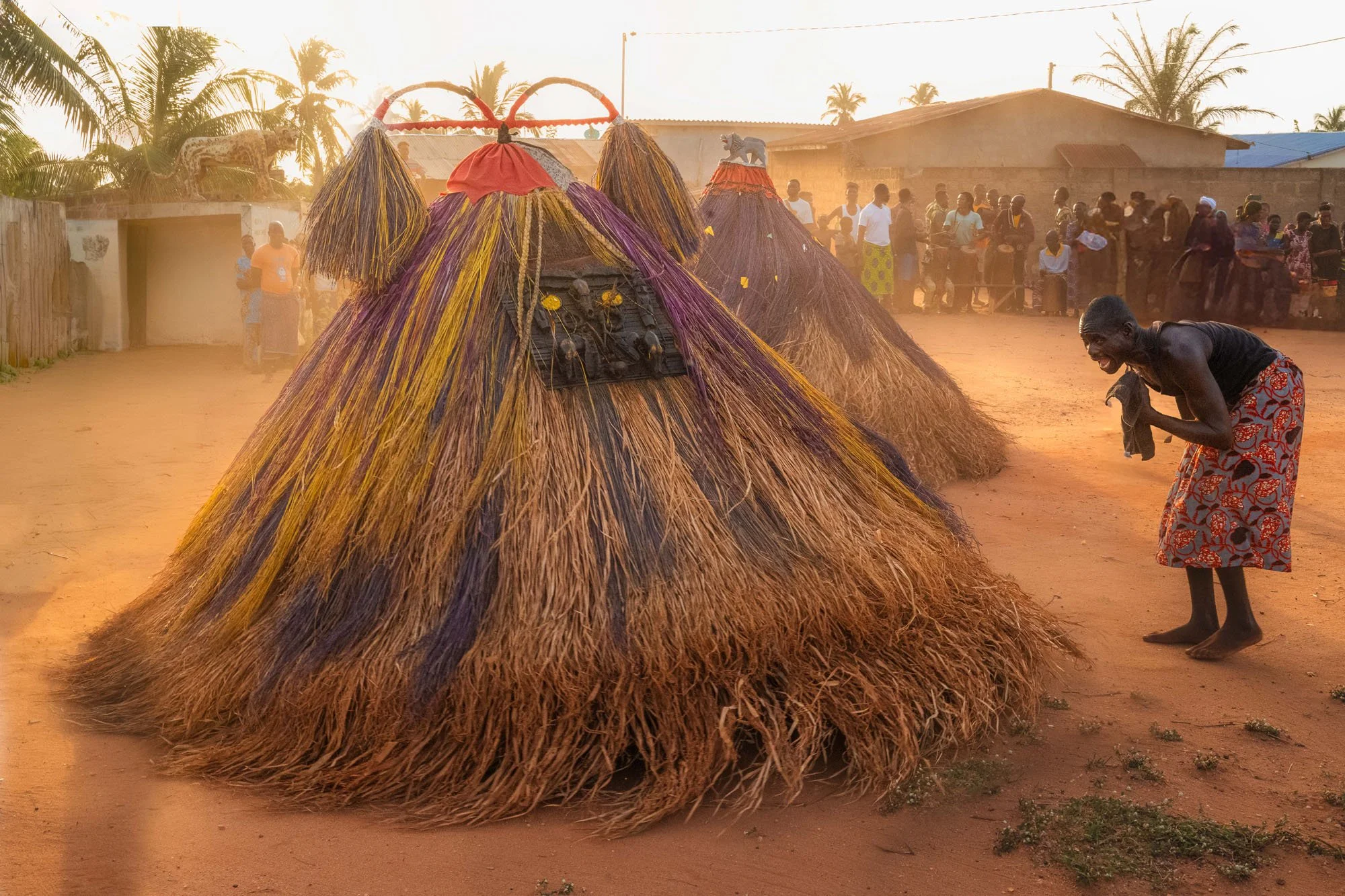
The dialogue of trance. A village minder, drenched in sweat, shouts instructions and incantations to direct the chaotic kinetic velocity of the Zangbeto.
MYTH: Ritual Sacrifice is an Occult
Spectacle of Death
REALITY: It is an Ancient Ceremony of Reciprocity—Life Honoured and Shared
In Ouidah, my guide led me down a narrow corridor between mud-brick walls into a brilliant aquamarine courtyard. We removed our shoes and stepped into the inner sanctum of a high priest: a tiny room built of rough breeze-blocks under a rusted corrugated iron roof.
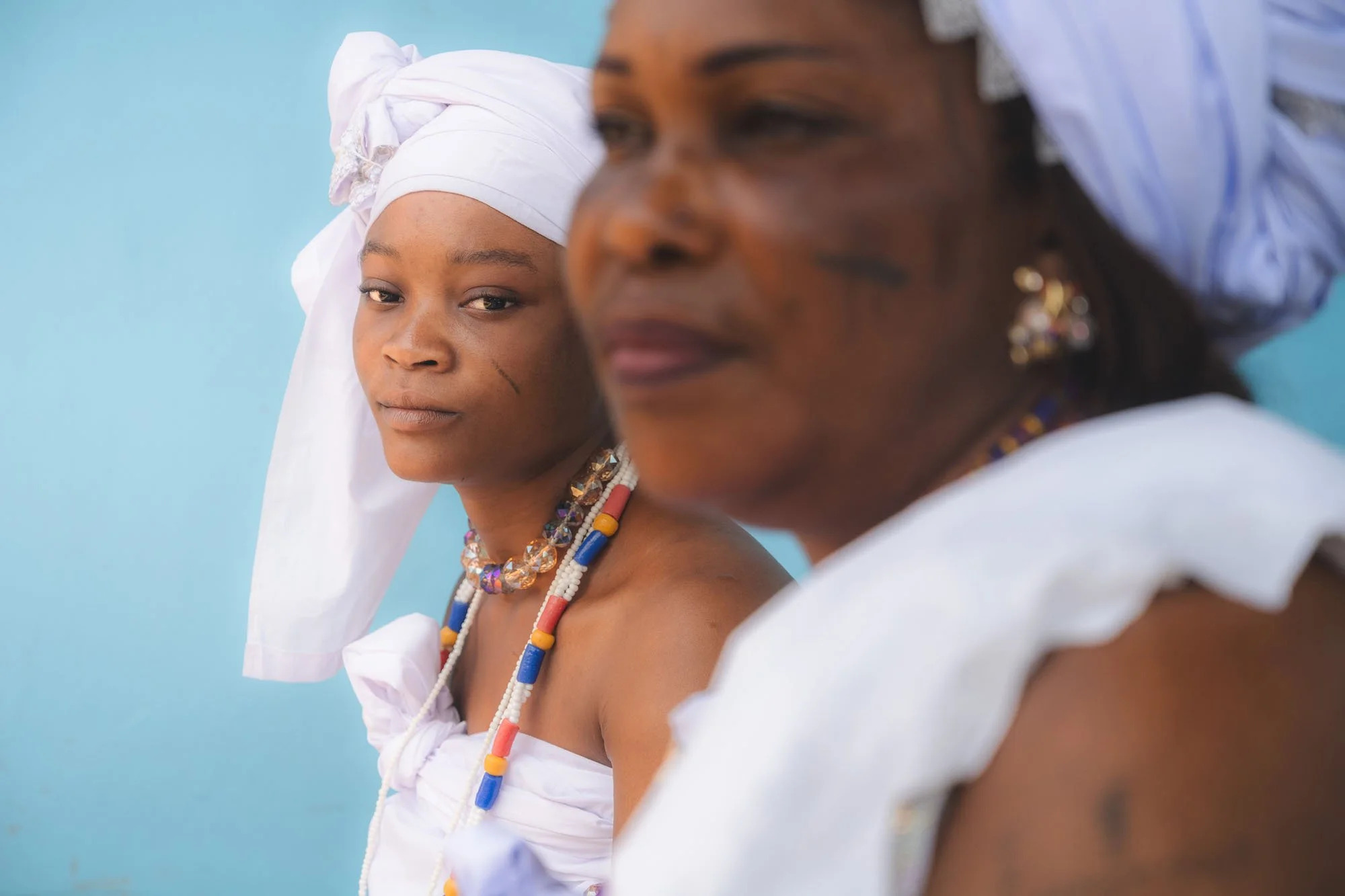
Ouidah, Benin. Mami Wata priestesses adorned in white cloth and beads. An expression of calm, focused devotion in the blue courtyard before the ceremony begins.
The heat was an oven. Sweat stung my eyes.
Packed around the walls were a dozen initiates playing gourd rattles and singing a hypnotic chant that rattled the metal sheets overhead. The room smelled intensely of burning paraffin wax, sea salt, chalk and sweat.
We were there for a ceremony dedicated to Mami Wata—the ancient, beautiful, and dangerous water deity.
The priest, wearing a blue robe and heavy ceremonial beads, knelt before an altar crowded with porcelain statues, perfumes, and carved wooden idols. Mami Wata governs the volatile ocean; she offers wealth and fertility, but she demands devotion.
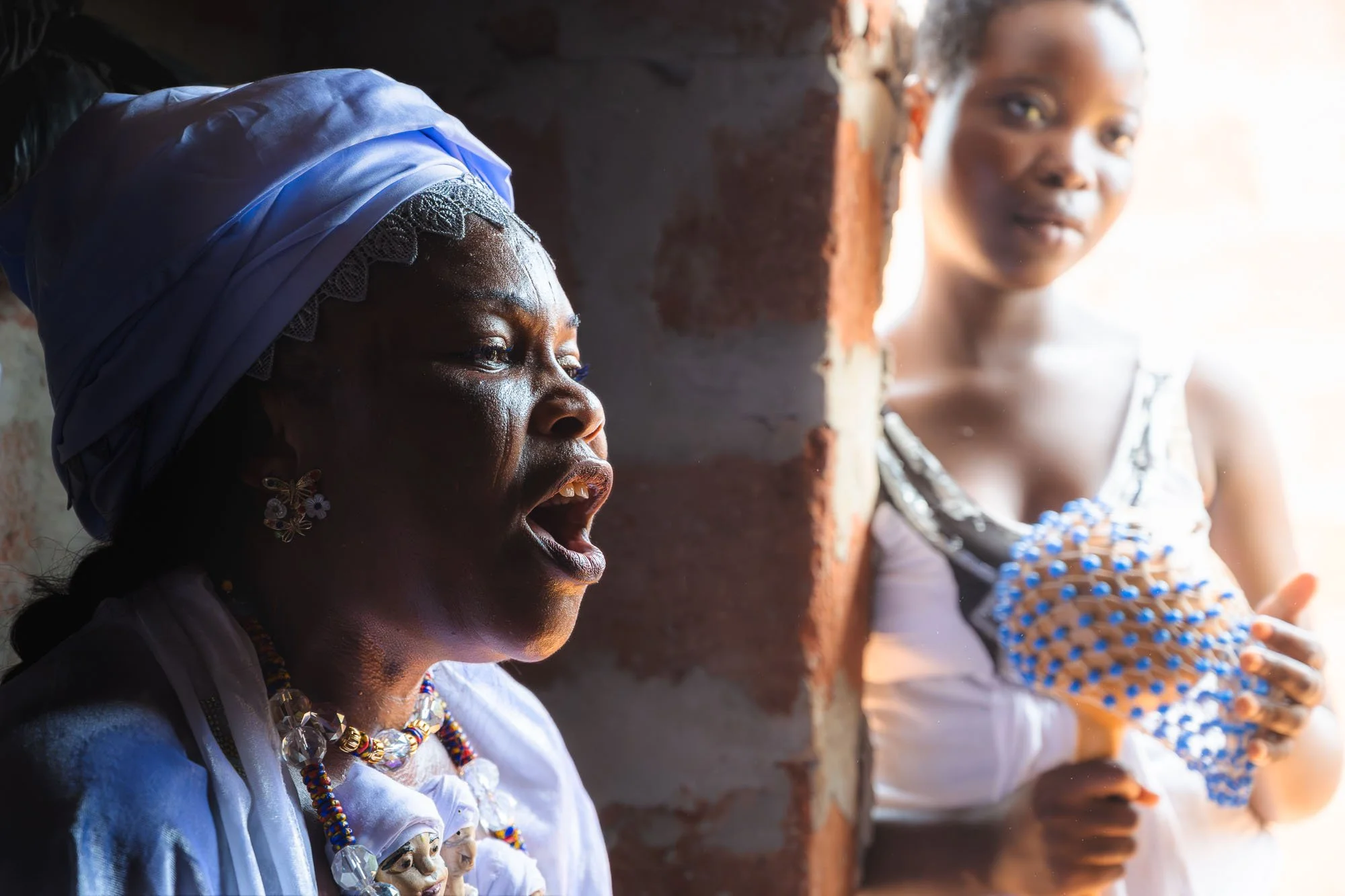
Inside the furnace. The chanting and heat inside the corrugated-iron shrine were absolute and hypnotic.
The drumming reached a fever pitch. Then came the sacrifice.
Watching an animal die in a confined room is jarring. Even as an experienced traveler, my stomach tightened. By modern sensibilities, it is uncomfortable, raw, and confronting.
Yet inside that tiny shrine, there was zero sadism or occult spectacle. In the West, we outsource our slaughter to industrial factory farms behind windowless walls, buying our meat sanitised in plastic wrap, completely divorced from the physical cost of our survival.
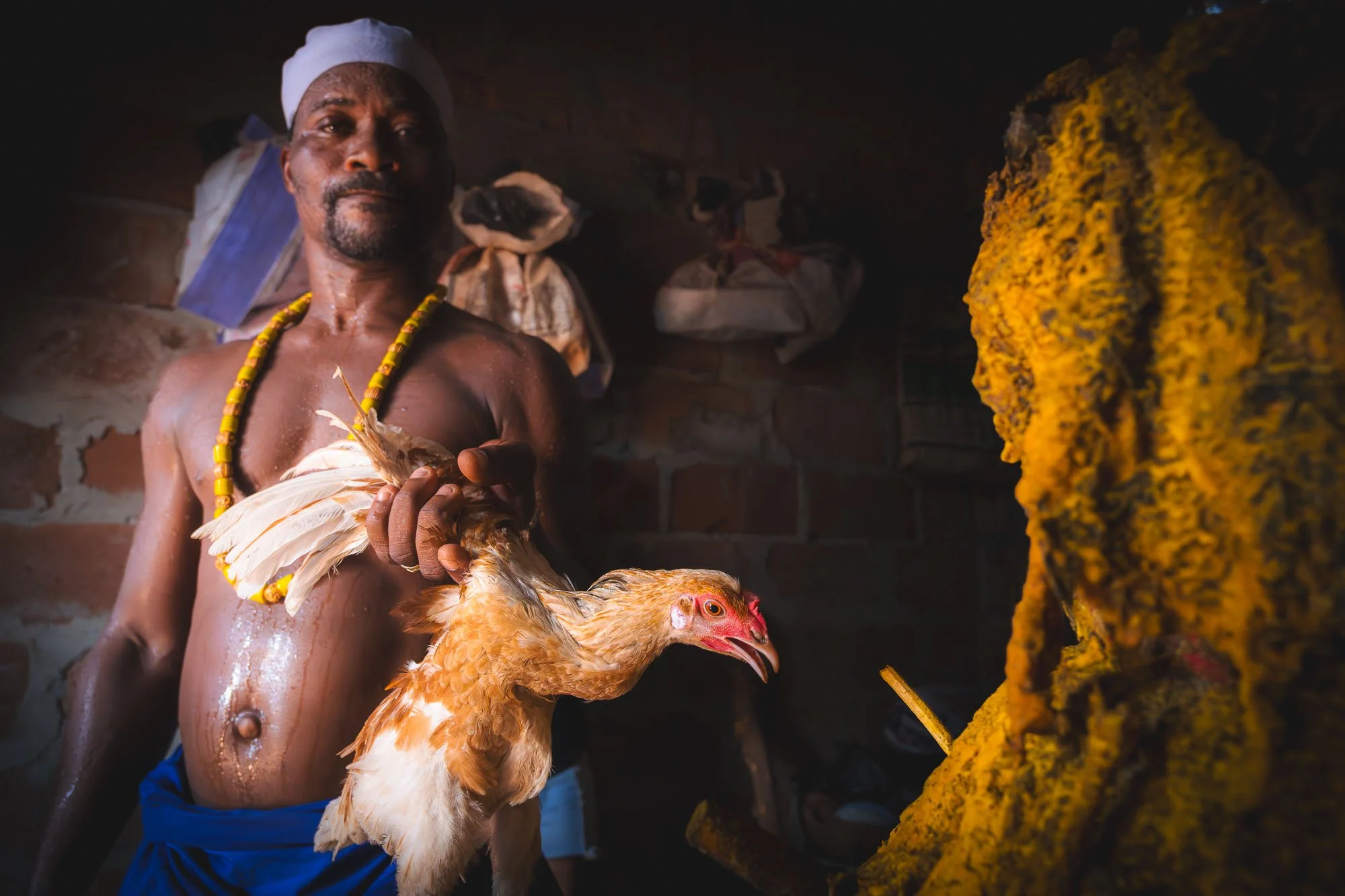
Sacrifices in Vodun are not about darkness; they are an ancient, reverent exchange of energy with the forces of nature.
Here, they do not look away. In Vodun, asking nature for protection, safe ocean passage, or abundance requires looking the moral cost of life directly in the eye.
The priest lifted a live chicken above the altar, speaking rapidly in Fon, invoking the water spirit. In one clean, practiced, reverent stroke, the offering was made. The blood was poured carefully over the sacred stones and carved figures, sealing the covenant.
The chicken was not a prop, nor was it discarded; it was cooked and shared among the community. As the priest marked his forehead with white clay, a profound collective exhale filled the room. The debt had been acknowledged. The balance had been restored.
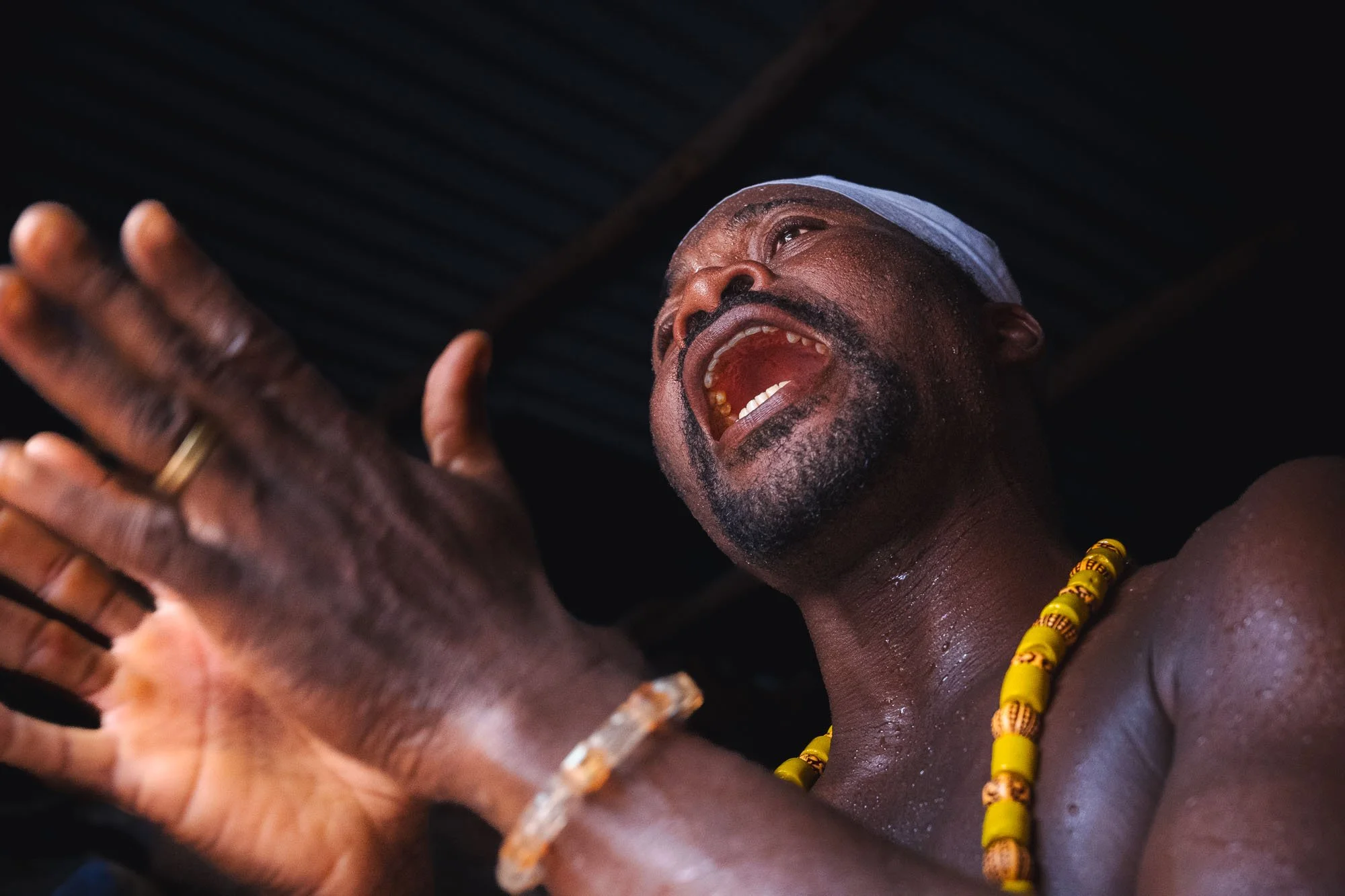
Drenched in sweat under a tin roof, the head priest surrenders completely to the drumbeats that call down the spirits.
The Death of the Tourist's Fear
Why did colonial powers outlaw Vodun with such violent desperation?
They demonised what they could not control, inventing the horror myth of the "savage with a voodoo doll" to justify cultural destruction and maintain dominance.
But when you drive a 4x4 into the red mud of Benin, when you sit on the floor of these shrines and when you watch those Hollywood delusions evaporate, you realise Vodun is not a nightmare to fear. For me, it actually exposed how disconnected the modern world has become from our ancestors, our communities and the natural forces that sustain humanity.
Travel at its best is not about collecting postcard vistas or confirming your existing biases. It is about allowing your comfortable, sanitised worldview to be shattered by the beauty of the unfamiliar.
I didn’t find dark magic in Benin. I found a civilisation that has spent thousands of years keeping its promises to the earth—and a humbling reminder of how much the modern world has forgotten.
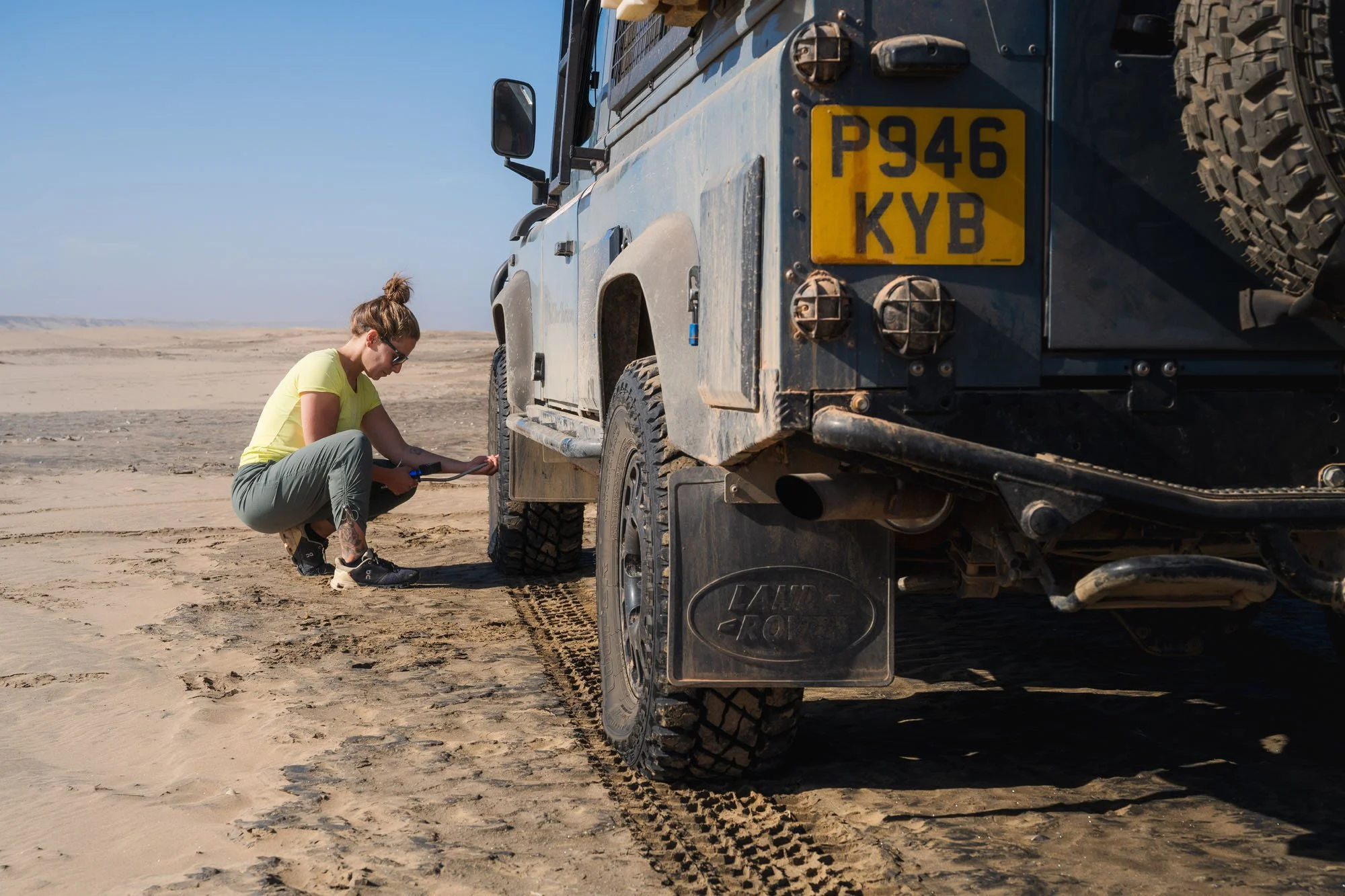
Leaving the sacred ground and continuing our overland adventure across West Africa…