
What is the ‘job’ of a photograph?
Hint: It’s not to “tell a story.” Behavioural science proves your viewer is actually looking for a puzzle to solve.

Polignano a Mare, Italy. The look of the fisherman leaves an intentional gap for the viewer's eye to explore.
I’m looking across the deep water at the jagged limestone cliffs of Polignano a Mare. The sun is already baking the ancient stone, and directly in front of the sheer, imposing drop, a lone fisherman in a small blue boat is idling near the mouth of a dark sea cave. The scale is massive—centuries of white architecture piled right onto the absolute precipice of the rock.
It is a beautiful scene. And like any photographer, my first instinct is to raise the camera and think: How do I capture this? What do I want to 'say' about this place?
That right there is what I want to talk about.
As photographers we spend all our time obsessing over ‘the photograph’. We obsess over our intent, our framing, our subject and what we are trying to communicate. We treat the image as a megaphone for our own ego. But we almost never stop to think about the viewer.
In marketing, there is a golden rule: novices sell the product; masters sell the benefit.
A bad salesman tries to sell you the chemical composition of a bar of soap. A good salesman sells you the feeling of clean hands.
As photographers, we are constantly trying to ‘sell the soap’ - we get so wrapped up in the perfect composition, a sharp focus, and our subjects - do we ever stop to think about the ‘clean hands’?
What happens if we stop thinking about what a photograph is, and start thinking about what a photograph does to (or for) the person looking at it?
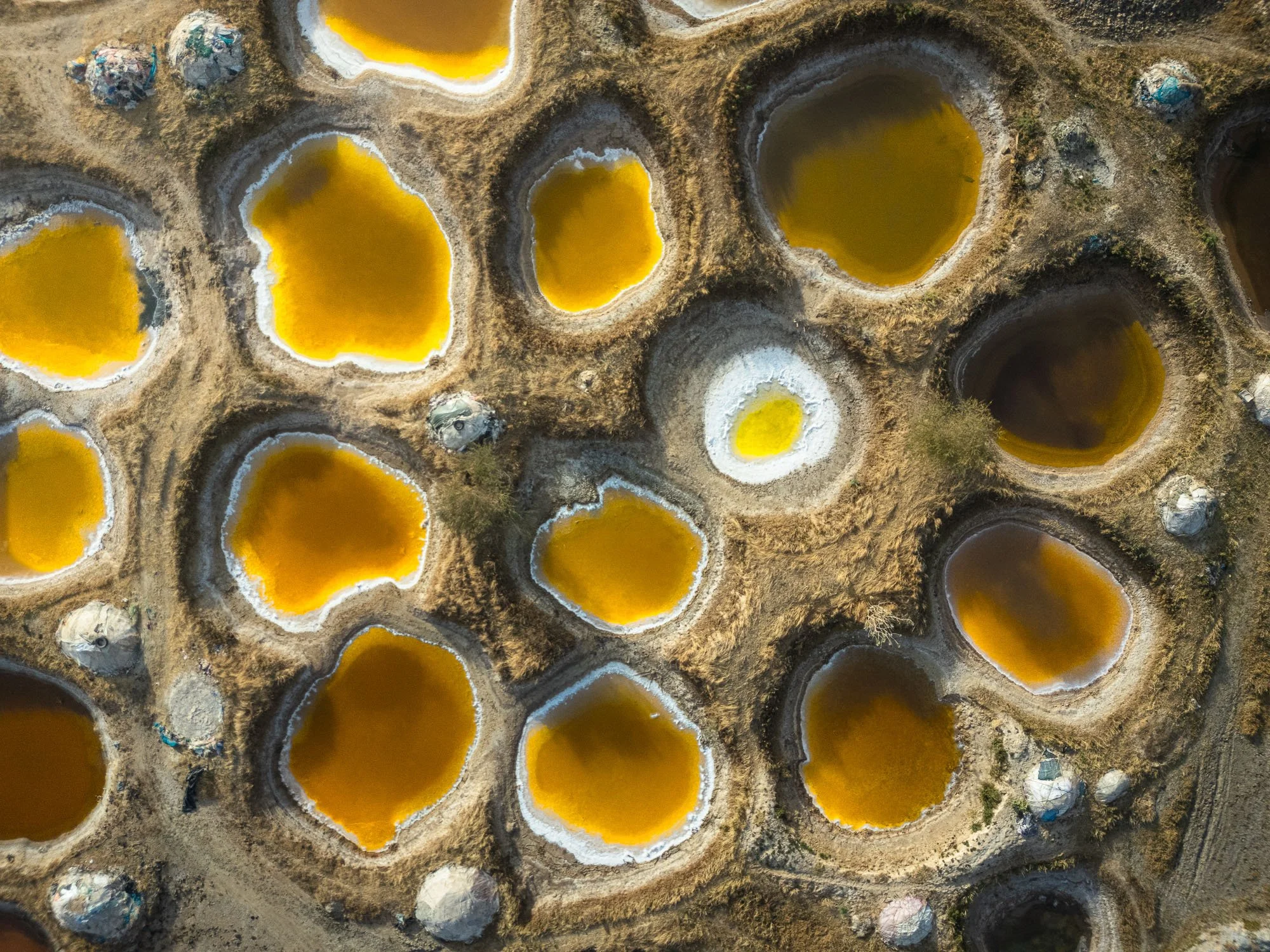
Palmarin Salt Pools, Senegal. A complex visual pattern that offers the viewer a moment of cognitive play.
The Viewer’s "Job To Be Done"
The photography industry is full of advice to "tell a story". This assumes the viewer is a passive vessel, sitting there waiting to be lectured by your artistic genius.
So let’s run photography through the classic behavioural economics framework known as Jobs To Be Done (JTBD). JTBD states that people don't consume products or media aimlessly; they "hire them to make progress in a specific psychological state”.
What "job" is a viewer hiring your photograph to do?
They aren't hiring your image to learn facts about the Italian coast. They aren't hiring it to hear your "story."
They are hiring your image to experience sense-making. They want the satisfaction of cognitive play.

Tenoumer Crater, Mauritania. Obscuring the horizon in the haze forces the eye to work a little harder to decode the landscape.
The Aesthetic Aha
Human perception is a survival engine. From an evolutionary standpoint, our brains are wired to recognise patterns, decode ambiguous information and solve visual puzzles.
In his foundational work on evolutionary psychology, Brian Boyd defined art as "Cognitive Play with Pattern." He argued that because our survival once depended on detecting a predator hiding in the brush, our brains evolved to release highly addictive neurochemicals whenever we successfully decode hidden or fragmented visual data.
Art is just the safe, modern playground where we get to exercise that biological machinery.
When a viewer looks at an image, they want to work for the meaning. They want the friction of figuring it out.
This was empirically proven in a landmark study published in Acta Psychologica by researchers Claudia Muth and Claus-Christian Carbon. They identified a neurological reward system they called "The Aesthetic Aha." Their research demonstrated that when viewers are presented with ambiguous, hard-to-recognize images, their aesthetic pleasure and liking of the image spikes only after they actively solve the visual puzzle.
The struggle is what creates the value.
When you frame a shot to "tell a story," you strip the image of visual friction. You are selling the soap and you rob the viewer of their cognitive play.

Lake Tuz, Turkey. Stripping away the horizon turns these tracks across the salt into a visual puzzle.
Engineering the Benefit (The 3-Step Outtake)
People want some friction in a photograph. They want to be participants, not passengers.
If the "benefit" we are selling is a dopamine hit, how do we actually deliver that? Here’s 3 steps I’ve found really helpful in creating a better experience for my viewers:
1. Stop Lecturing, Start Asking
Stop cramming an explanation into your viewfinder. Leave an information gap, ask a question, leave signals that allow them to search for their own meaning inside the frame.
2. Introduce Perceptual Friction
Give the eye an ‘obstacle course’. Shoot through the chaotic mesh of a market stall or let the shadows swallow your subject. Leave visual breadcrumbs to make the viewer earn the signal.
3. The Cognitive Audit
Look at your contact sheet and perform a cognitive audit: Did I pose a question? Did I give them a puzzle?
The next time you raise your camera, remember that nobody cares about your soap.
They care about the psychological reward that comes from looking.
If you want to stop guessing what makes an image powerful, start using the psychological triggers that transform photography. Upgrade your Visual Intelligence. 👉 Download my FREE Visual Intelligence Blueprints here.
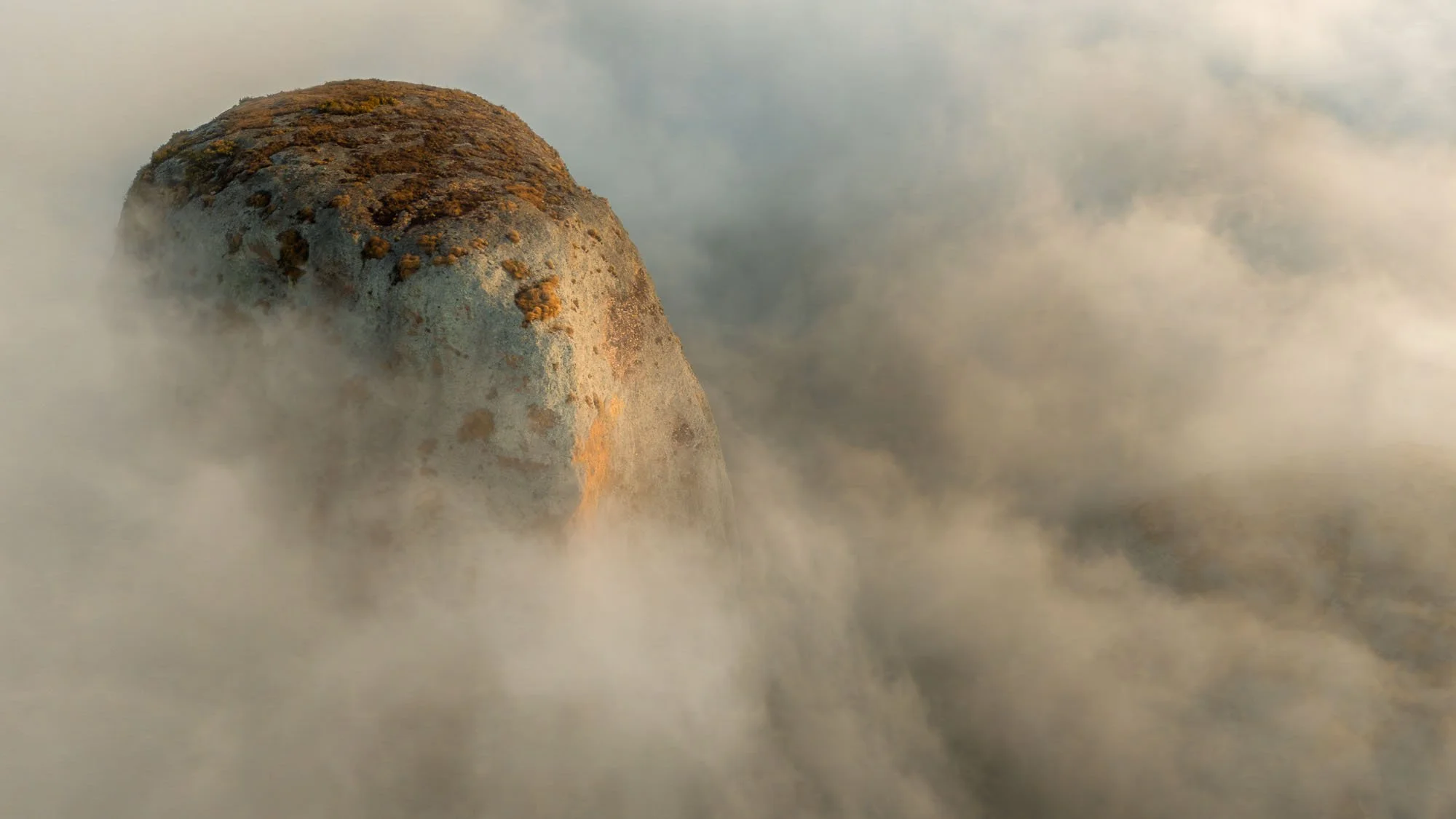
Pedras Negras, Angola. Letting the fog swallow the context leaves just enough visual breadcrumbs behind.