
How to photograph Awe
Awe isn't beautiful scenery or a ‘hero’ in your landscapes. True Awe is a psychological trigger—here is how to engineer it.
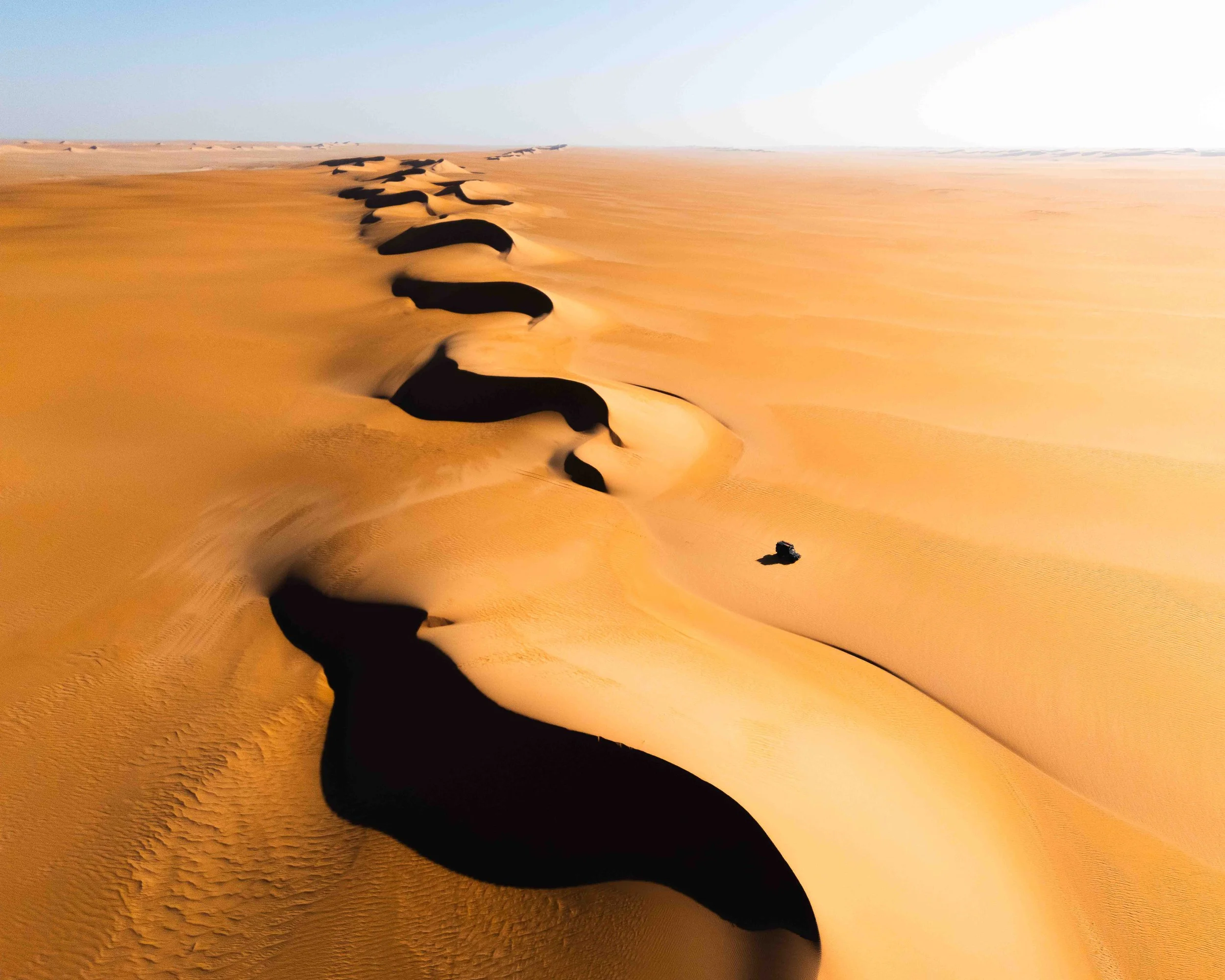
The physical weight of the deep Sahara. When the landscape offers no visual boundaries, the ego has no choice but to shrink
After almost a week coaxing Sully (my Land Rover Defender) through an endless, shifting ocean of sand, the exhaustion was total. The pale sky and the towering, wind-scoured dunes bled into a single, terrifying gradient of dust and light. The silence out there—broken only by the faint hiss of sand against the Defender’s aluminium panels—was so absolute it actually rang in my ears.
When you step out into that kind of vastness, you feel something profound.
You feel entirely irrelevant.
So, I pulled my camera from the dust-coated footwell to do what we do.
But here is the problem: how do you translate that crushing, infinite weight into a 2D rectangle?
The standard photography advice will tell you to place a solitary figure in the landscape to "tell an adventure story" or "create a hero."
Honestly, the instinct is good, but do you know why this works?
When you understand the psychology of visual perception, you realise that placing a tiny figure in a vast space does something far more powerful than tell a ‘story’. Because the human isn't a hero; it is an anchor that transforms our understanding.
By placing a recognisable subject—a solitary figure, or a dust-covered Land Rover—against an incomprehensible void, you force the viewer's brain to calculate the terrifying scale of the environment.
To transmit the true weight of a landscape, you don’t use the human to build the ego, you use them to destroy it.
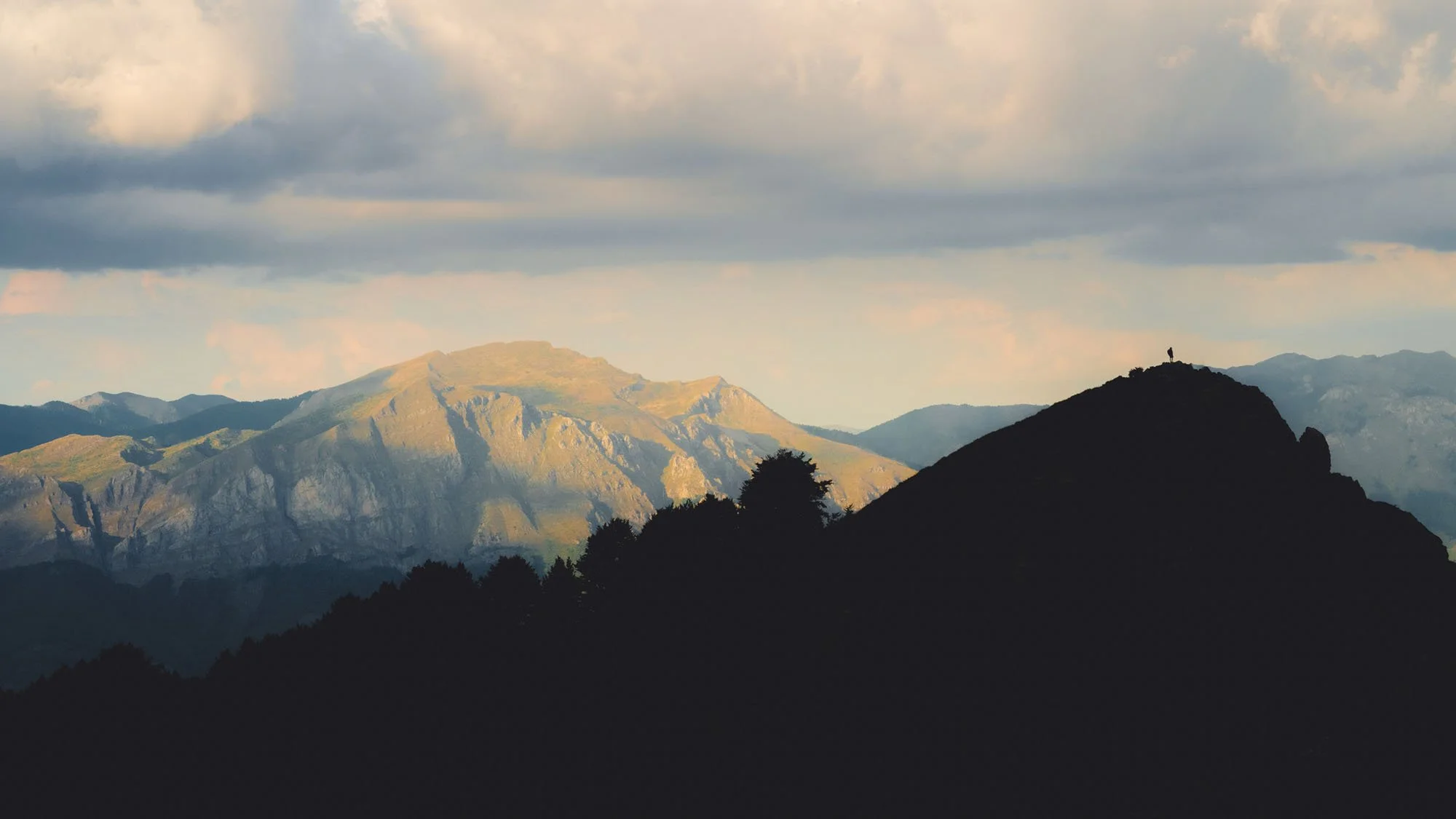
The human isn't the hero; the human is the metric. Use them to prove the terrifying scale of the void
Psychology of the "Small Self"
In a foundational psychological study published in Cognition and Emotion, researchers Keltner and Haidt established the core architecture of Awe. They defined it as an emotional response consisting of two distinct triggers: perceived vastness and a need for accommodation.
Vastness is anything that makes us feel tiny—whether it's the Sahara Desert or the ceiling of a cathedral.
Accommodation is the biological friction that happens when the environment is so massive or complex that our brain’s existing schemas cannot process it. We have to literally alter our mental models to accommodate the scale of what we are looking at.
When both of these triggers are hit, it creates a neurological phenomenon. In 2015, psychologist Paul Piff and his team conducted a massive study on this response, identifying it as the "Small Self" phenomenon.
Their research proved that when we experience true awe, the ego actually quiets down.
Our sense of self-importance vanishes.
We feel microscopic, but rather than inducing panic, this "ego-death" promotes deep psychological relief and connection.
This is the goal. If your viewer looks at your photograph and their ego remains intact, you have failed.
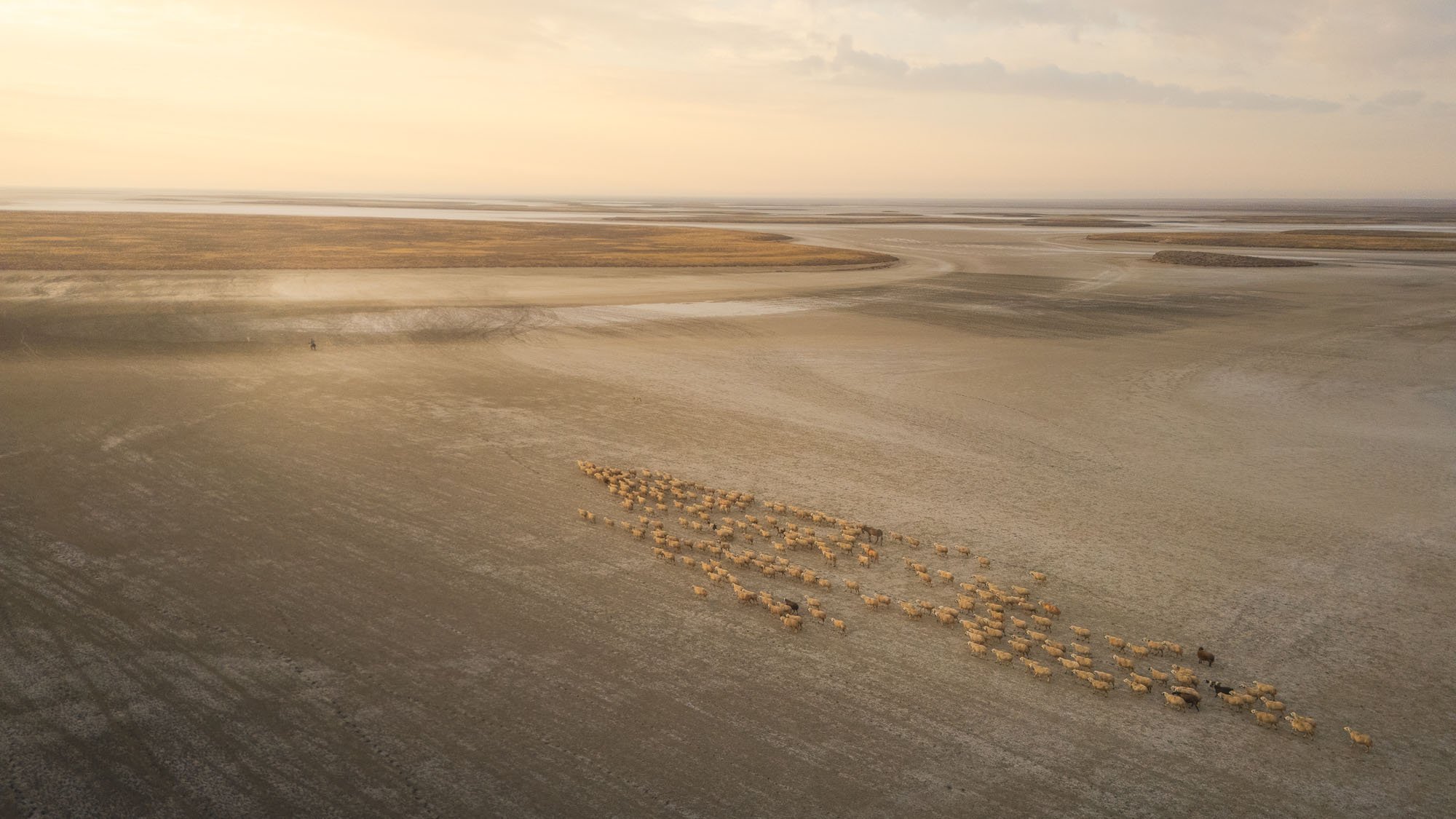
Vastness and Accommodation: When the brain cannot find the boundaries of a landscape, the ego shrinks
Engineering Awe: The Visual Gateways
You cannot "tell a story" about the Small Self. You have to trigger it in your viewer.
Whether you are deep in the Desert, staring at a frozen loch in Scotland, or standing at the edge of a canyon, here are the two visual prompts you should use to engineer Awe.
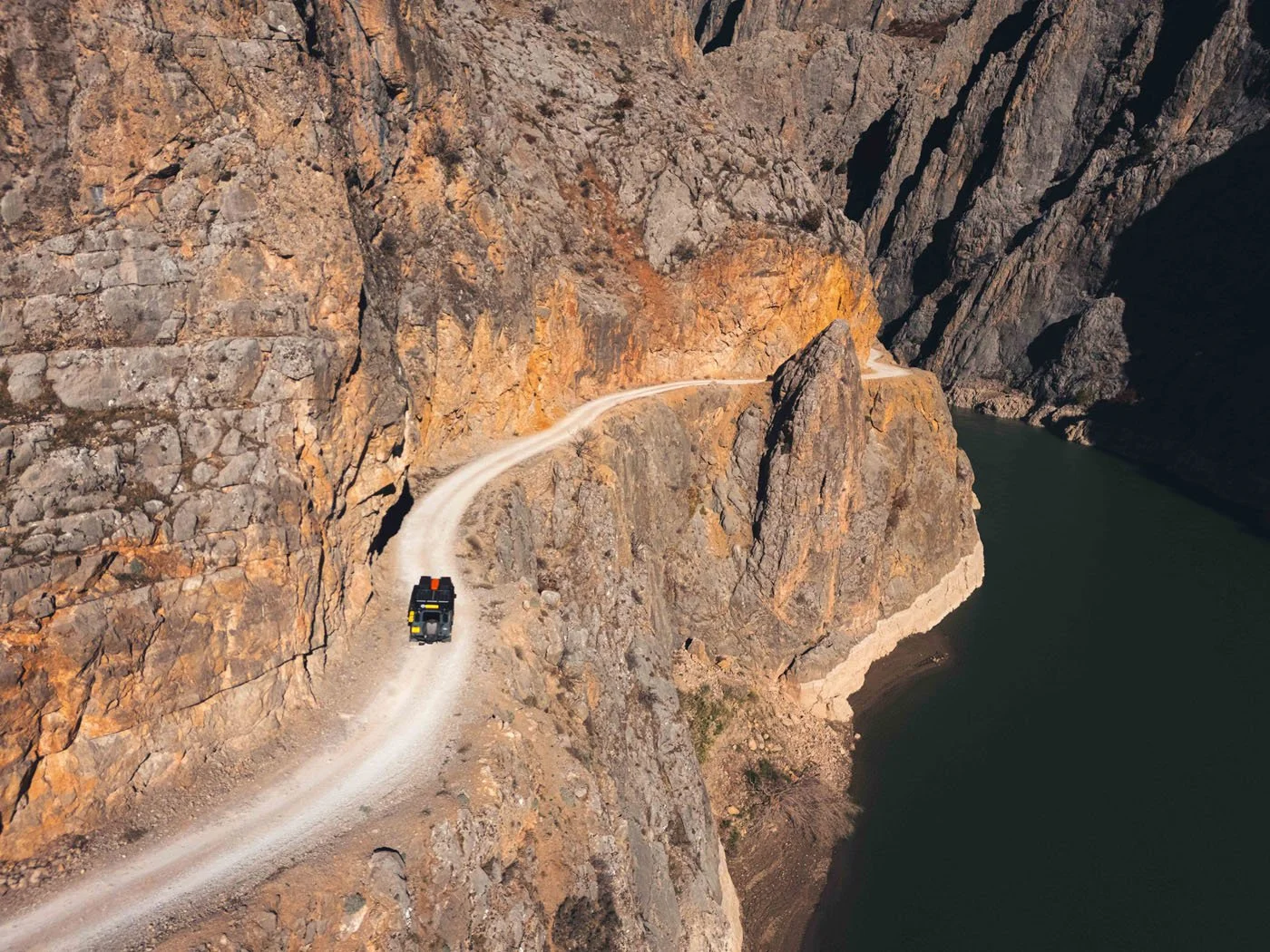
Sully reduced to a few pixels against a sheer drop.
1. Radical Scale (The Human as a Breadcrumb)
If you are going to include a human or a vehicle in an immense landscape, they are not the subject. They are a visual breadcrumb.
When I edit my files from the Salt Pans or the deep Sahara, I look for the frames where Sully is reduced to a few pixels. The visual hierarchy must be completely dominated by negative space.
By aggressively minimising the human element, you force the viewer's brain to calculate the ratio between the speck they recognize (the car) and the void they don't (the desert). That calculation triggers the vastness requirement.
You are proving to the viewer just how small they are, forcing their ego to shrink in real-time.
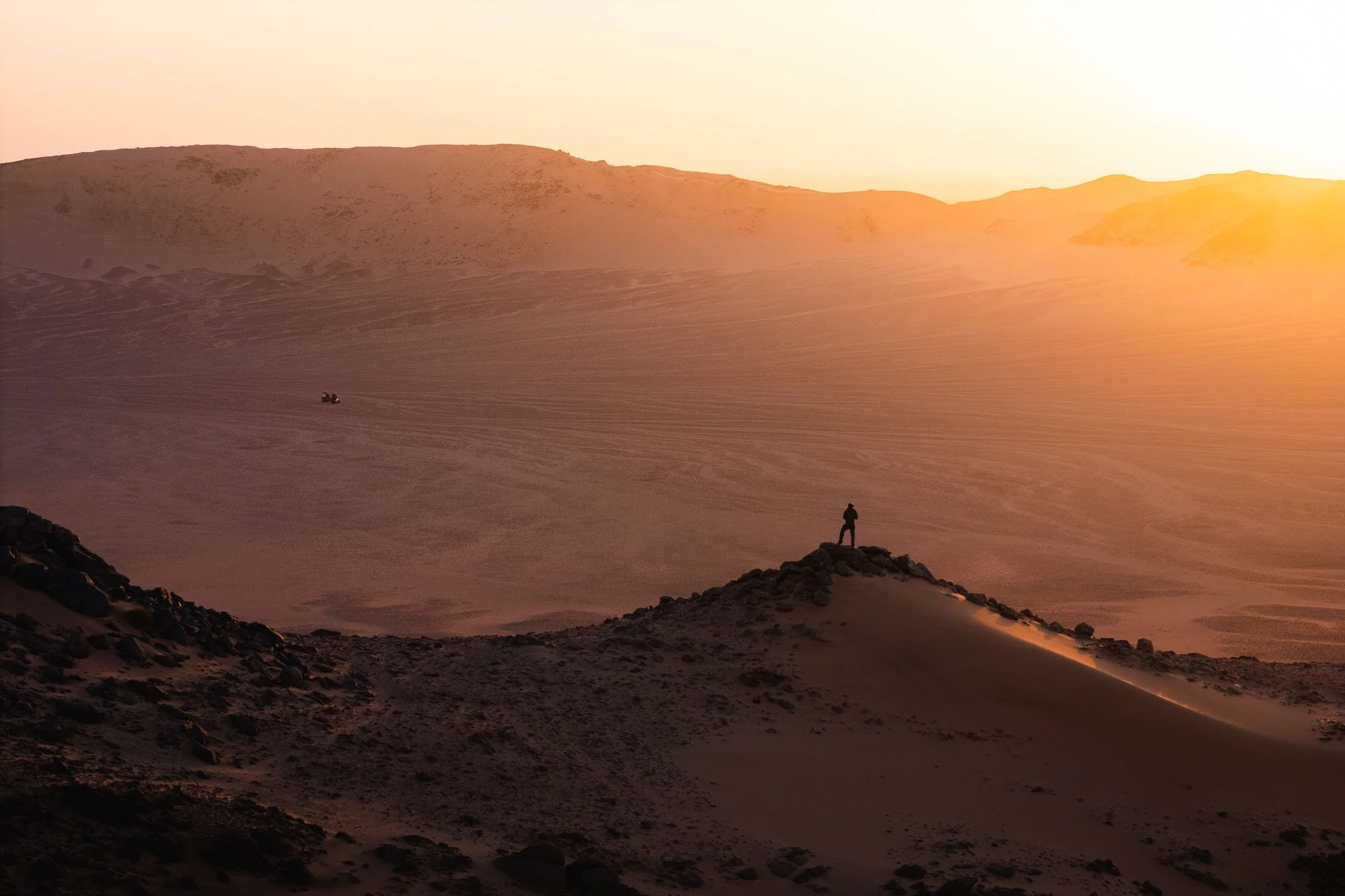
Minimising the human element against incomprehensible scale
2. Visual Ambiguity (Breaking the Horizon)
The second requirement of awe is the need for accommodation—the inability of the brain to easily process what it is looking at.
If you use a wide-angle lens to neatly frame the entire mountain peak, the valley, and the sky, you are giving the brain a closed loop. The viewer can instantly calculate the boundaries of the space.
To trigger awe, you create an Information Gap. Put a longer lens on and crop the edges off the mountain. Let fog obscure a peak. Frame the ocean so the horizon disappears.
If the viewer cannot find the edges of the environment, their brain is forced to assume the space is infinite. When you remove the visual boundaries, you force them to accommodate the unknown.
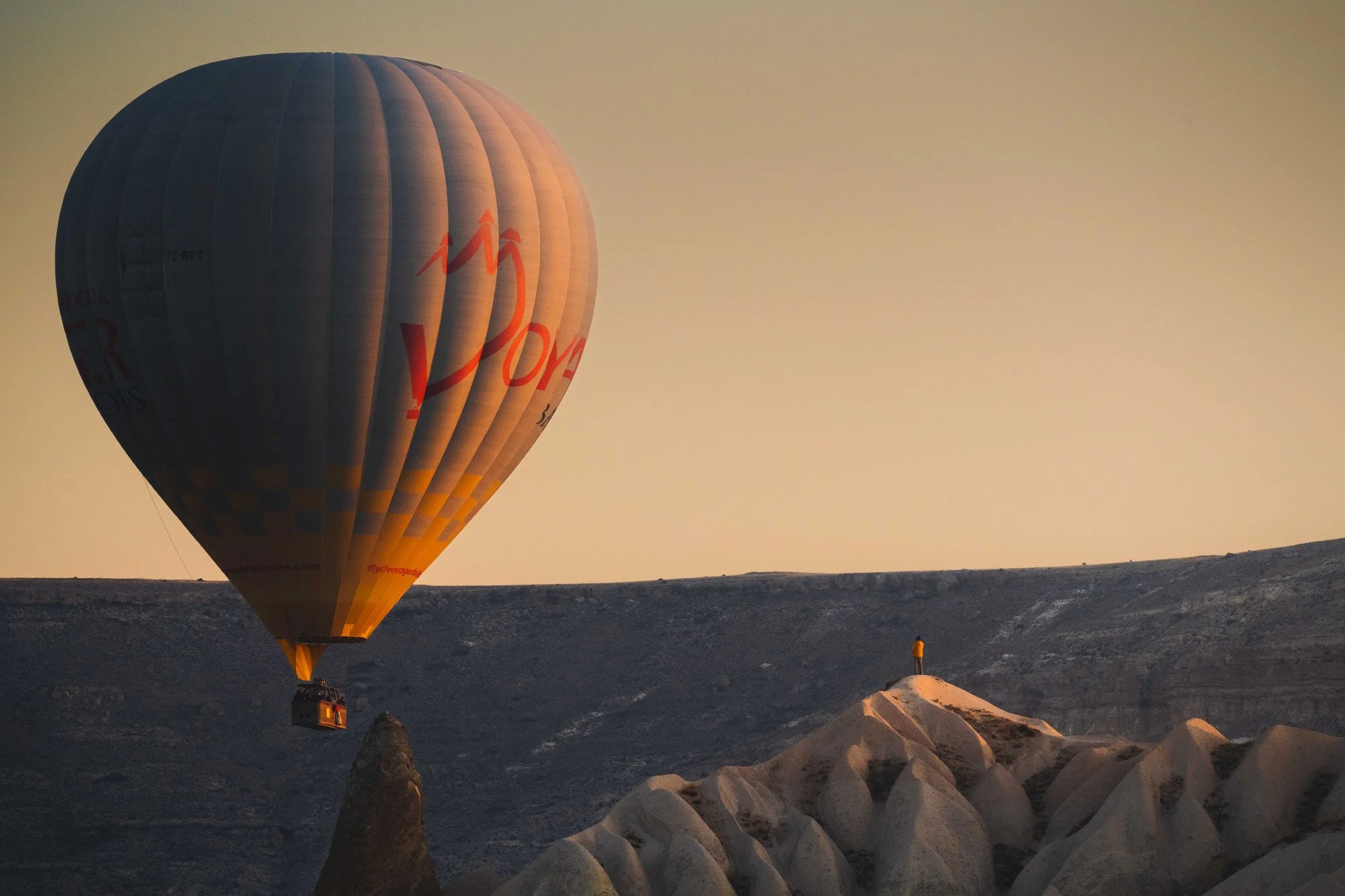
Information Gap: By letting the shadows swallow the valley, the brain is forced to assume the drop is infinite
The Signal of Irrelevance
Your hard drive is likely full of landscapes that document exactly what a place looked like. But look at them again and ask yourself: do they actually trigger an awe response, or are they just pretty?
The next time you are out in the dirt, start looking for the visual breadcrumbs that prove our irrelevance.
Engineer the Information Gap.
Use radical scale to crush the ego.
Give your viewer the profound, terrifying gift of the Small Self.
If you want to understand the psychological triggers that grab attention, upgrade your Visual Intelligence. 👉 Download my FREE Visual Intelligence Blueprints here
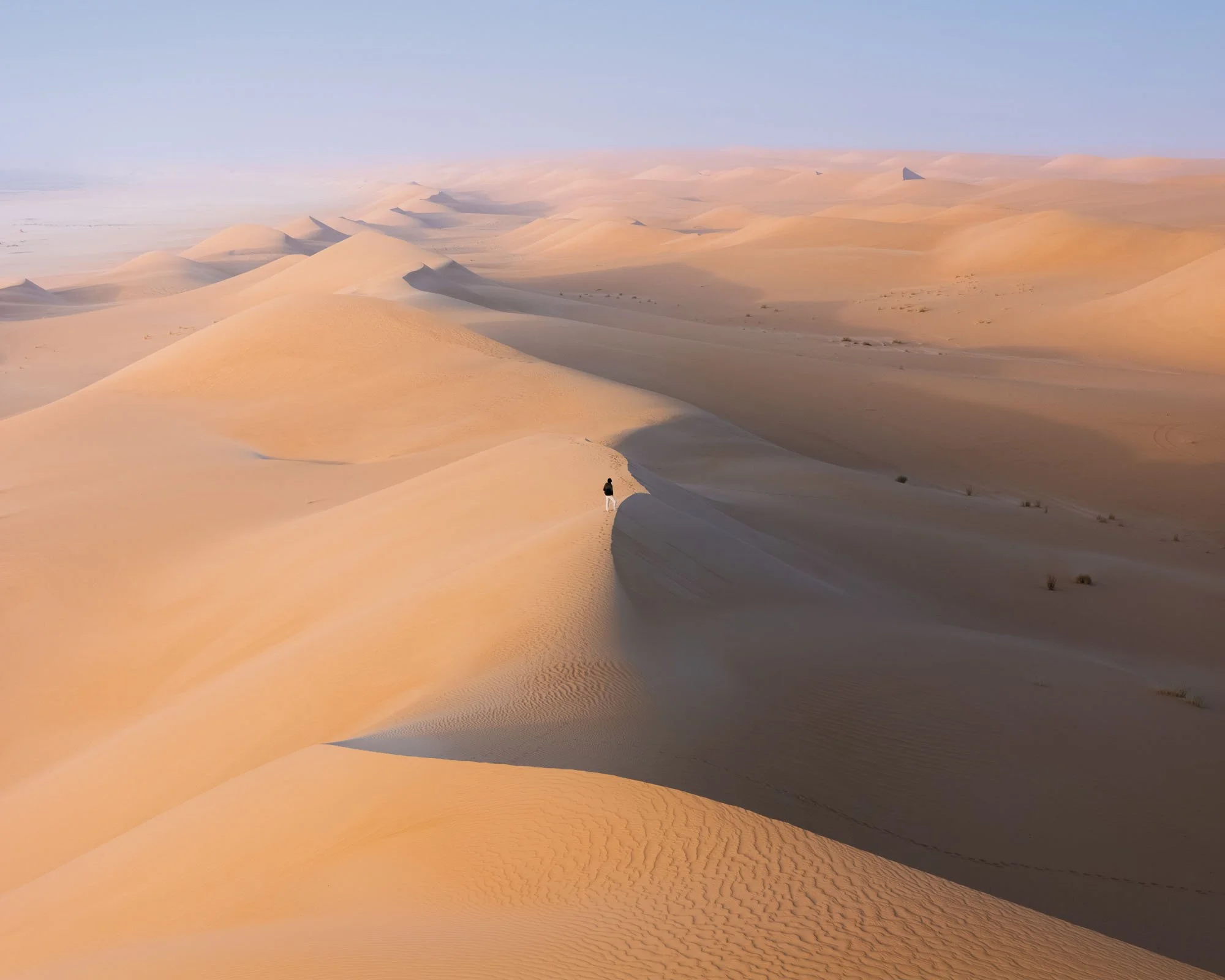
The figure is not the subject; they are a visual breadcrumb placed deliberately to trigger the 'Small Self' phenomenon.