The Weight of the Canvas
I waited five hours in a Havana gym for this one frame. Why the most powerful moments in photography don’t happen when you think they do.
The picture and the breakdown. Why it works
Most photographers are obsessed with the wrong kind of energy.
They wait for "peak action." The flying fist, the splashing water, or the athlete mid-stride. Shutter speeds cranked up to 1/2000th of a second, desperate to freeze a moment of kinetic power.
I’ve spent twenty years photographing all over the world and I’ve realised that there’s another type of energy often overlooked but carries more weight. The energy of ‘high tension’.
I call it ‘charge’.
The Currency of Exhaustion
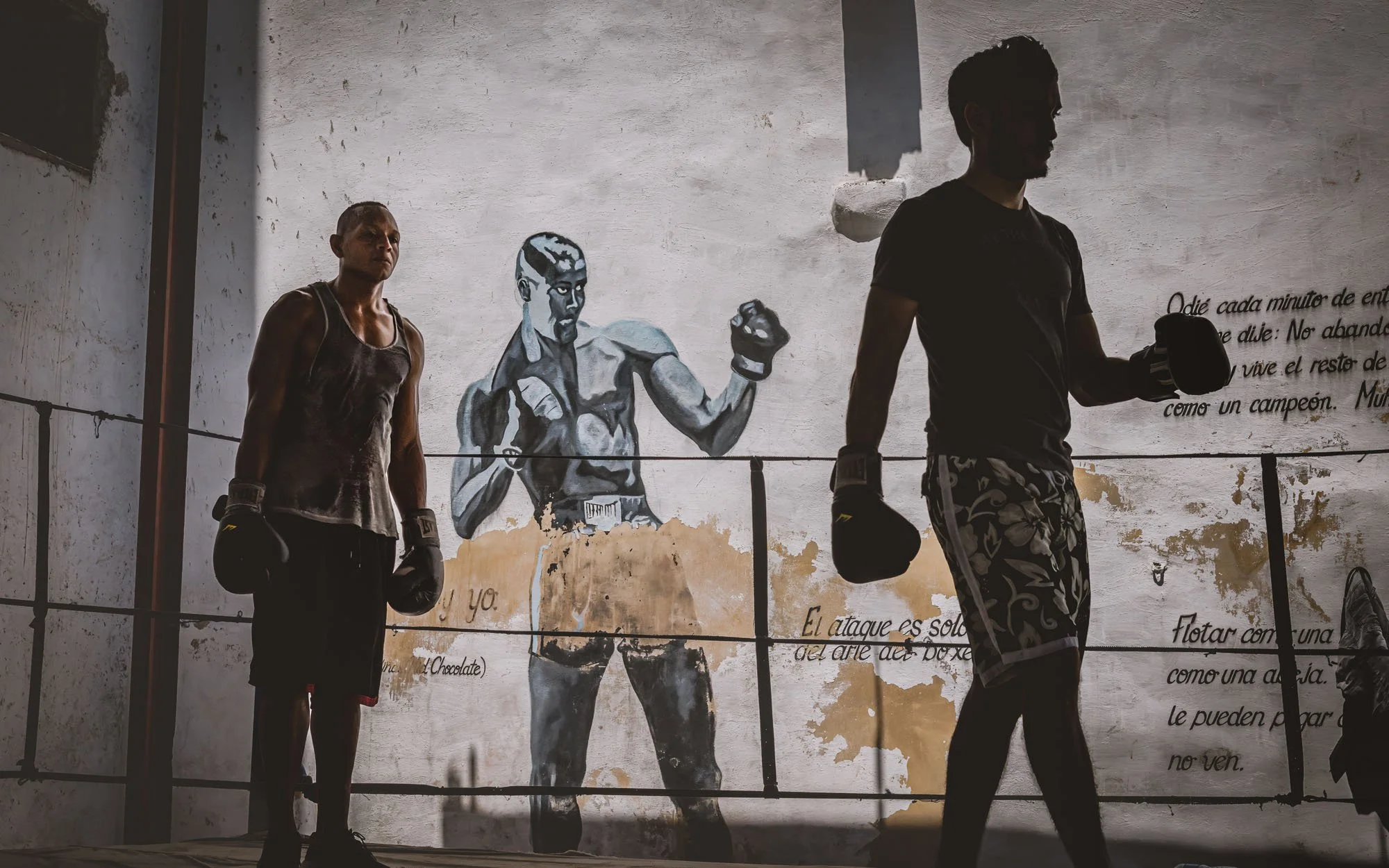
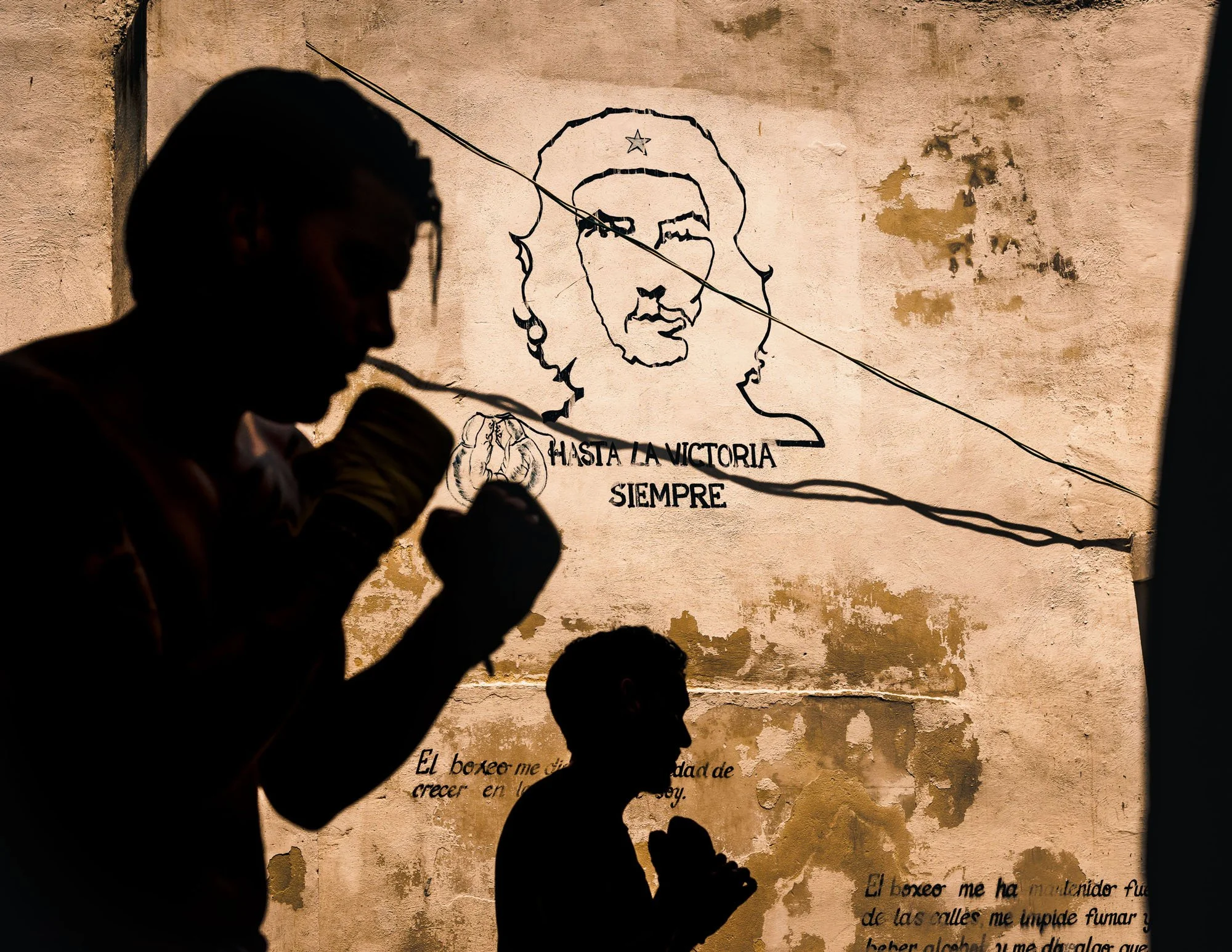
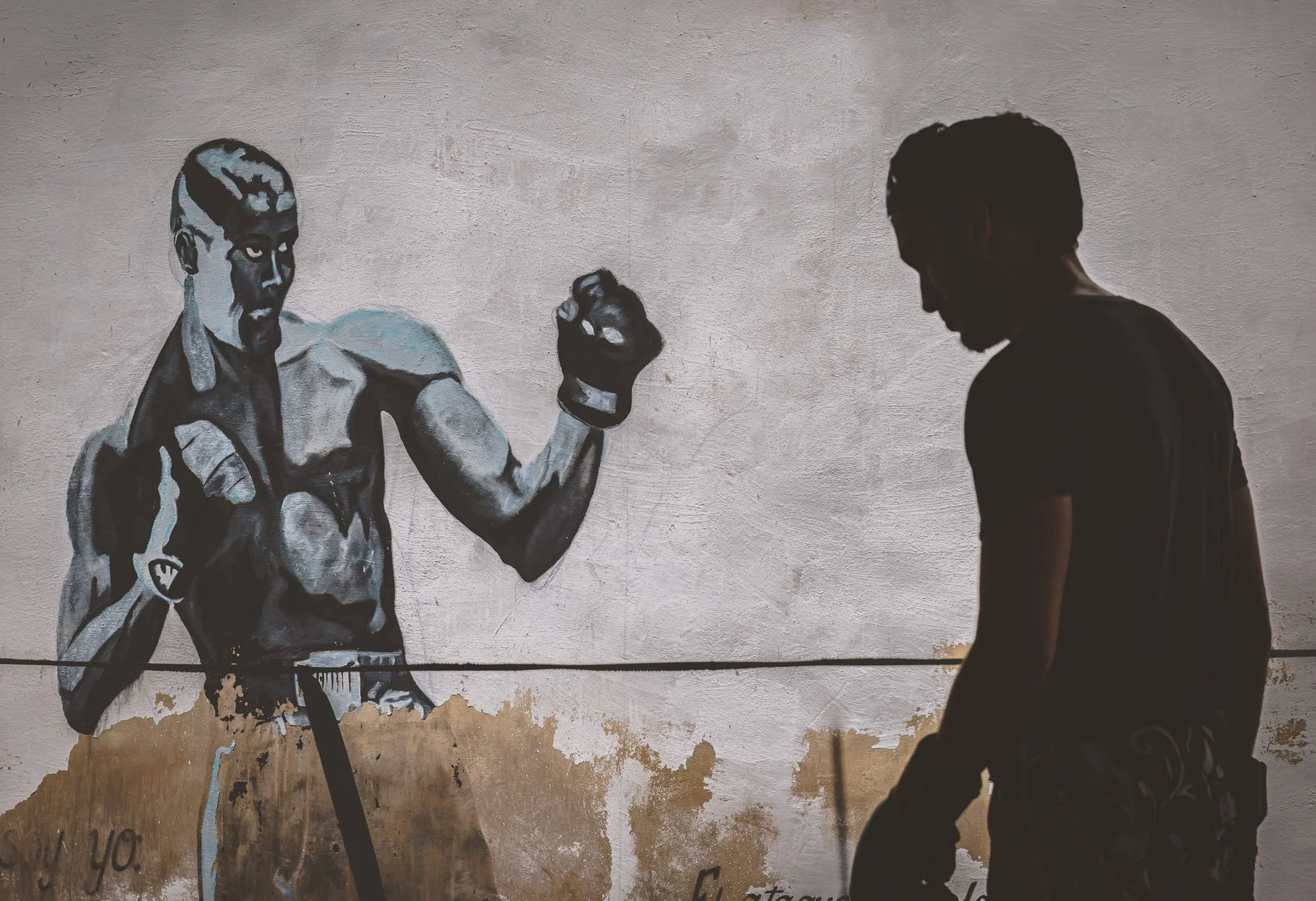
I was in a boxing gym in Havana, Cuba. The air was a thick soup of humid heat and the metallic tang of old sweat. I’d photographed the action — the impact of gloves on pads, the spray of water from a head being hit — but it all felt a bit flat.
I stayed on the floor.
I waited for the training to end.
I waited for the noise to stop.
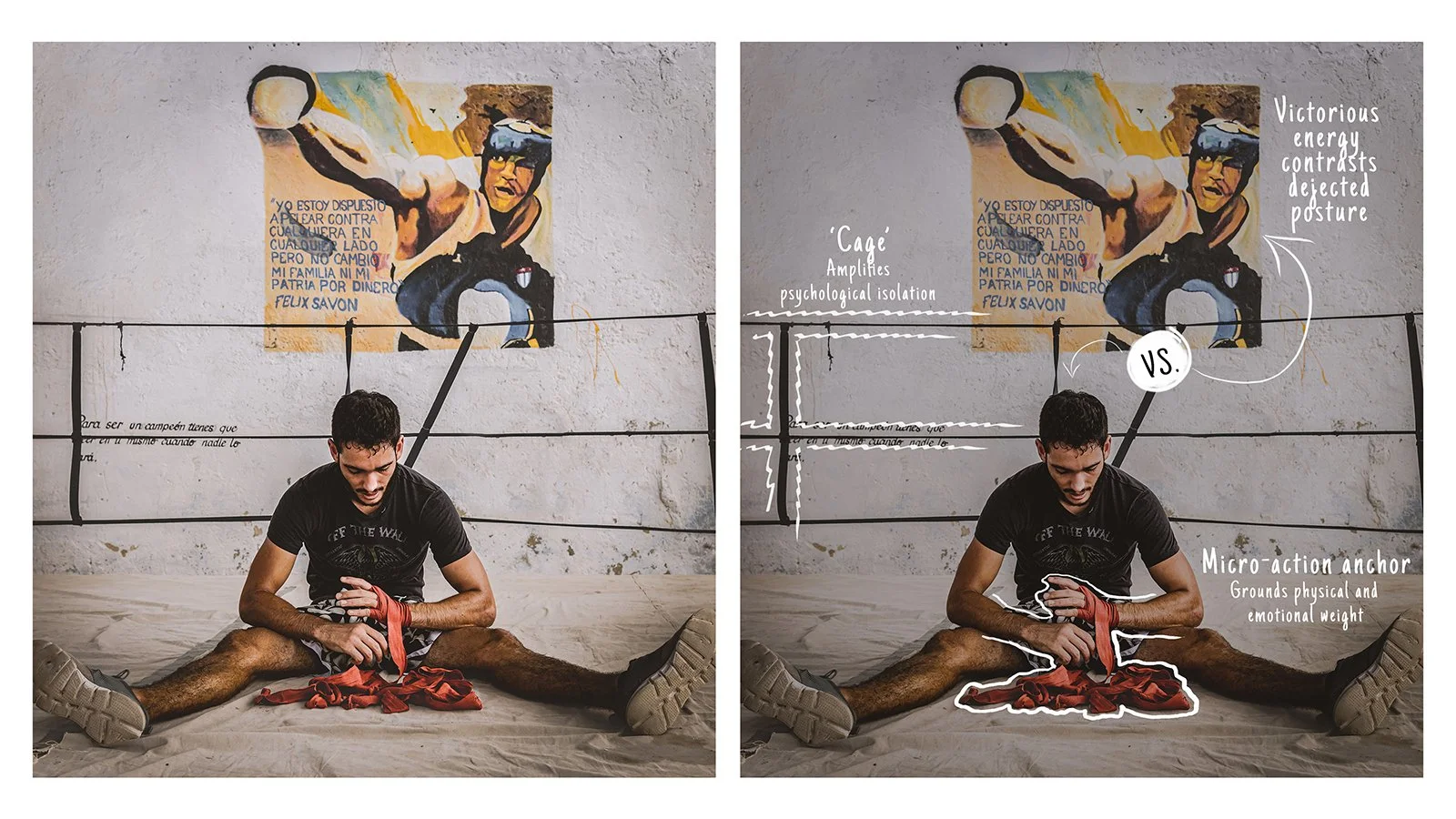
That’s when I saw it. A young fighter, completely depleted, sitting slumped on the canvas. In that moment, the energy in the room shifted. It was no longer about movement; it was about the heavy, unresolved weight of human effort.
In my masterclass, The Signal in the Frame, I call this signal Charge. Because you can feel it.
To understand why this image works, we have to deconstruct it through three specific psychological triggers.
👉 Master the seven signals that underpin great photography.
Upgrade your visual intelligence here: The Signal in the Frame.
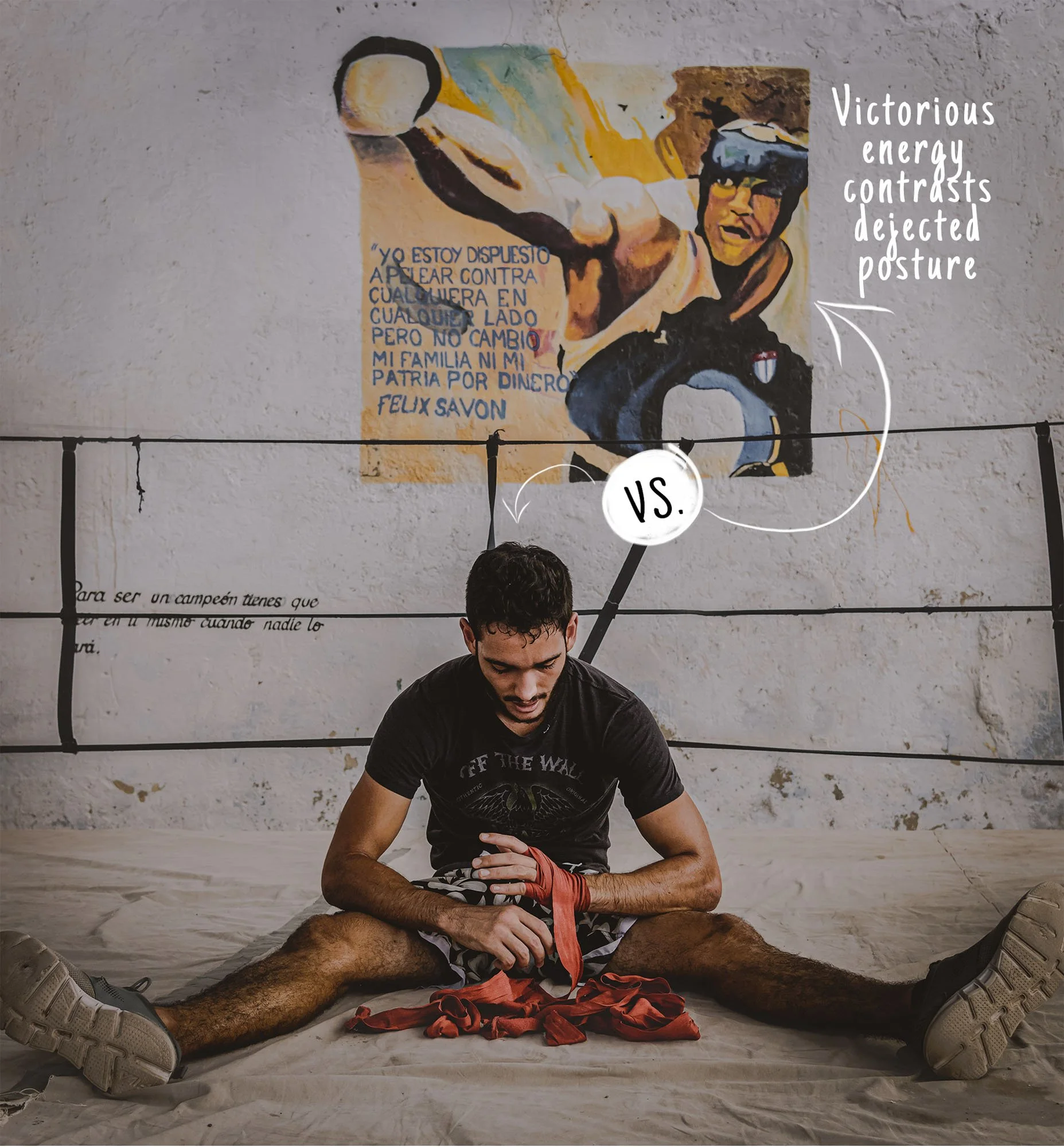
Contrast is powerful a powerful signal. Contradictions to our expectations more so.
1. The Contrast to Victory (The Mural)
The first thing your brain notices is the giant, painted champion on the wall behind the fighter. He is triumphant, muscular, and resolute. This is the "victor."
He is in contrast to the real, exhausted fighter sitting dejected directly beneath. This juxtaposition creates a psychological contradiction. More than this it also piques our curiosity. Our brains are prediction machines that seek to minimize energy by confirming what we already know. Your brain sees a boxing gym. You expect to see a winner.
But this hints at a different tale.

It’s the small actions and subtle signals carry real charge
2. The Inward posture (The Slump)
Most "Action" portraits demand a subject with high energy. They want to project strength. But here, the signal is found in the micro-action and posture.
The fighter isn't looking at me. He is looking inward. His slumped posture and focus on a specific action triggers a biological reflex called Embodied Cognition. We don't just "see" his exhaustion; we actually physically simulate it (when we look at a body under strain, our own Mirror Neurons fire; they spark sympathy)
Research shows that "low-energy" poses in photography can hold attention up to 40% longer than peak-action shots because they require more empathic processing.
Because the story isn't explained, the viewer is forced to finish it.
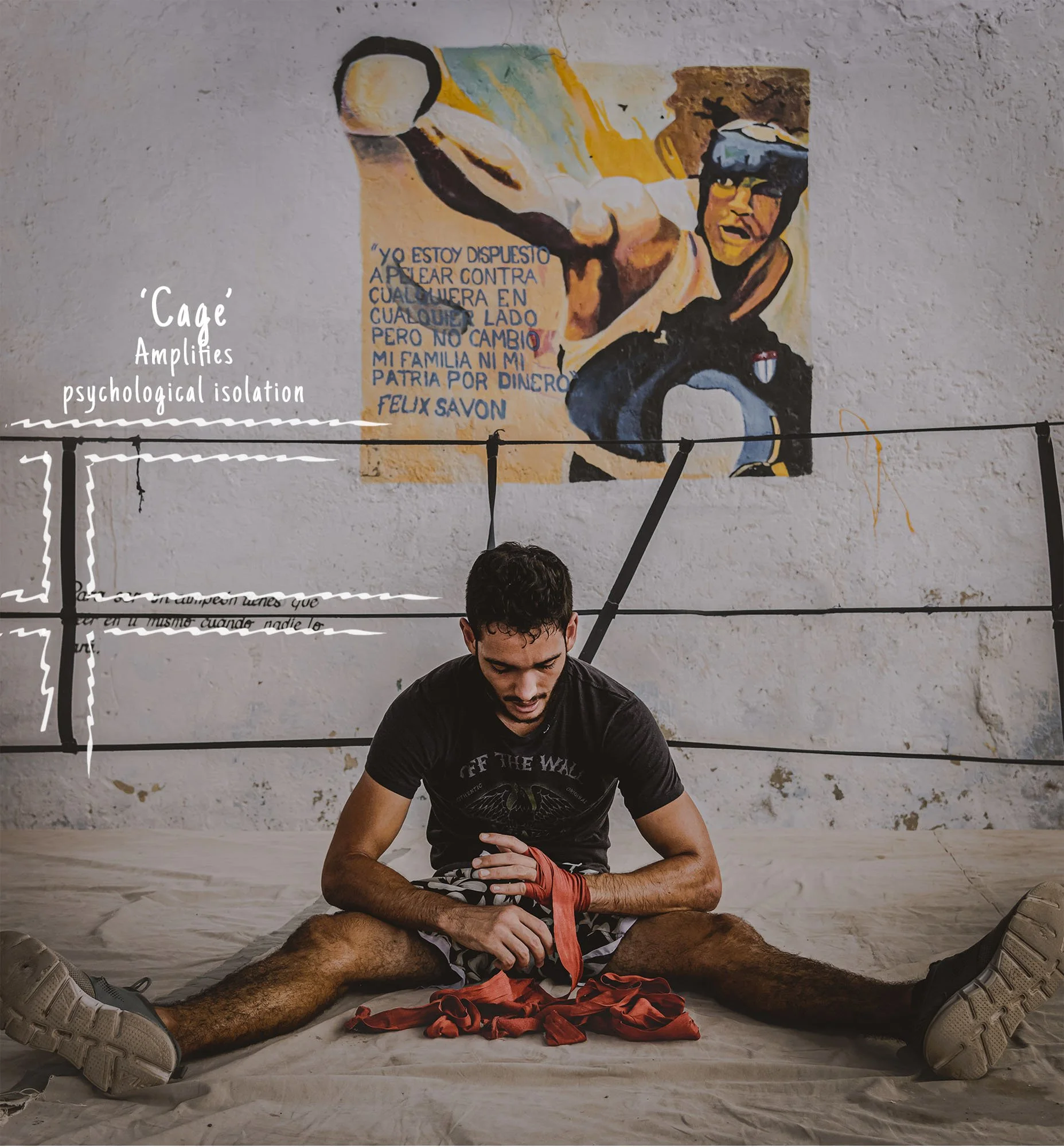
What’s the feeling you are trying to capture. Find the right perspective to amplify it
3. The Angle & the ‘Cage’ (The Perspective)
I didn't shoot this from a standing position. I dropped down to the canvas level, putting the lens just inches from the floor and framing the boxer within the ‘cage’
By placing the lens at his level, I have neutralized any "Authority Gap" between you and the subject.
The fact that the boxer appears ‘caged’ and beneath the figure in the mural only amplifies a feeling of dejection and isolation. This induces a state of Limbic Resonance — you aren't looking at a boxer; you are sitting on the floor with a defeated human being.
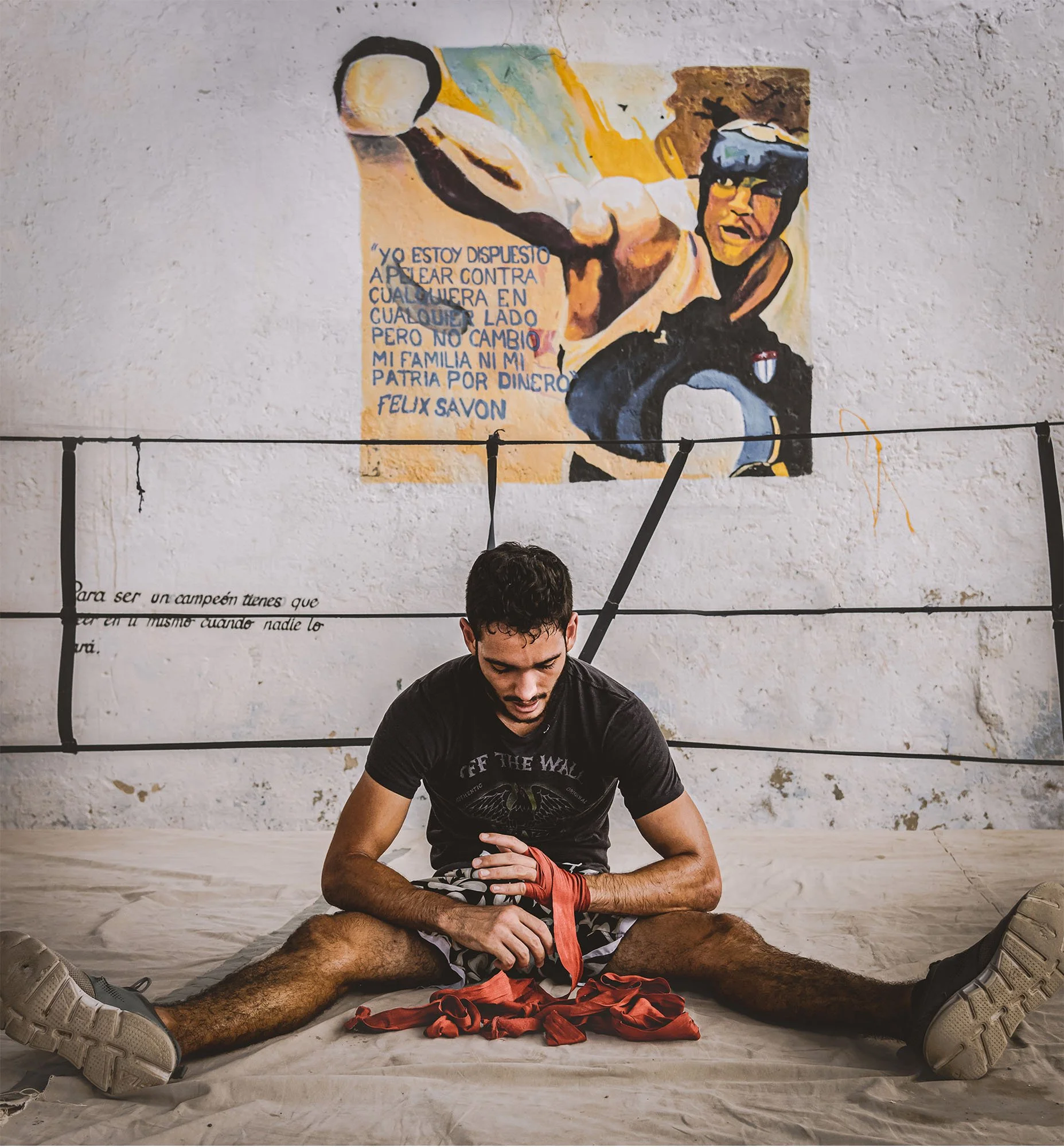
The weight of the canvas
The Price of the Shot
The industry wants you to believe that great photography is about having the right gear or being in the right place at the right time. They want you to believe in luck.
But this image didn't happen because of luck. I had to earn the trust of the gym and the boxers, I had to be patient enough to wait for the "highlights" to end and I had to have the visual intelligence to recognise that a slumped shoulder is more powerful than a landed punch.
If your photos feel "thin," it’s likely because they lack ‘Charge’. You are capturing what things look like, rather than what they feel like.
Next time you’re in the field, look for the moment after the action.
Stop trying to show the world how fast you can shoot, and start showing us how deeply you can see.
Cliff is a Visual Ethnographer using psychology to capture the unvarnished reality of the human condition. If you are ready to stop documenting what things look like and start capturing what they really mean, get the Signal in the Frame blueprint. Join the expedition on YouTube here.