
The Curiosity Gap
Why the Best Photographs Refuse to Tell a Story
The air in the Rajasthani market felt thick enough to chew—a suffocating mix of woodsmoke, crushed marigolds, and the relentless heat radiating off the baked stone. It was a chaotic, overwhelming, incredibly human space.
So, I raised the camera to do exactly what every photography YouTube channel, blog, and magazine tells you to do: I tried to tell the story.
I failed. And here’s why
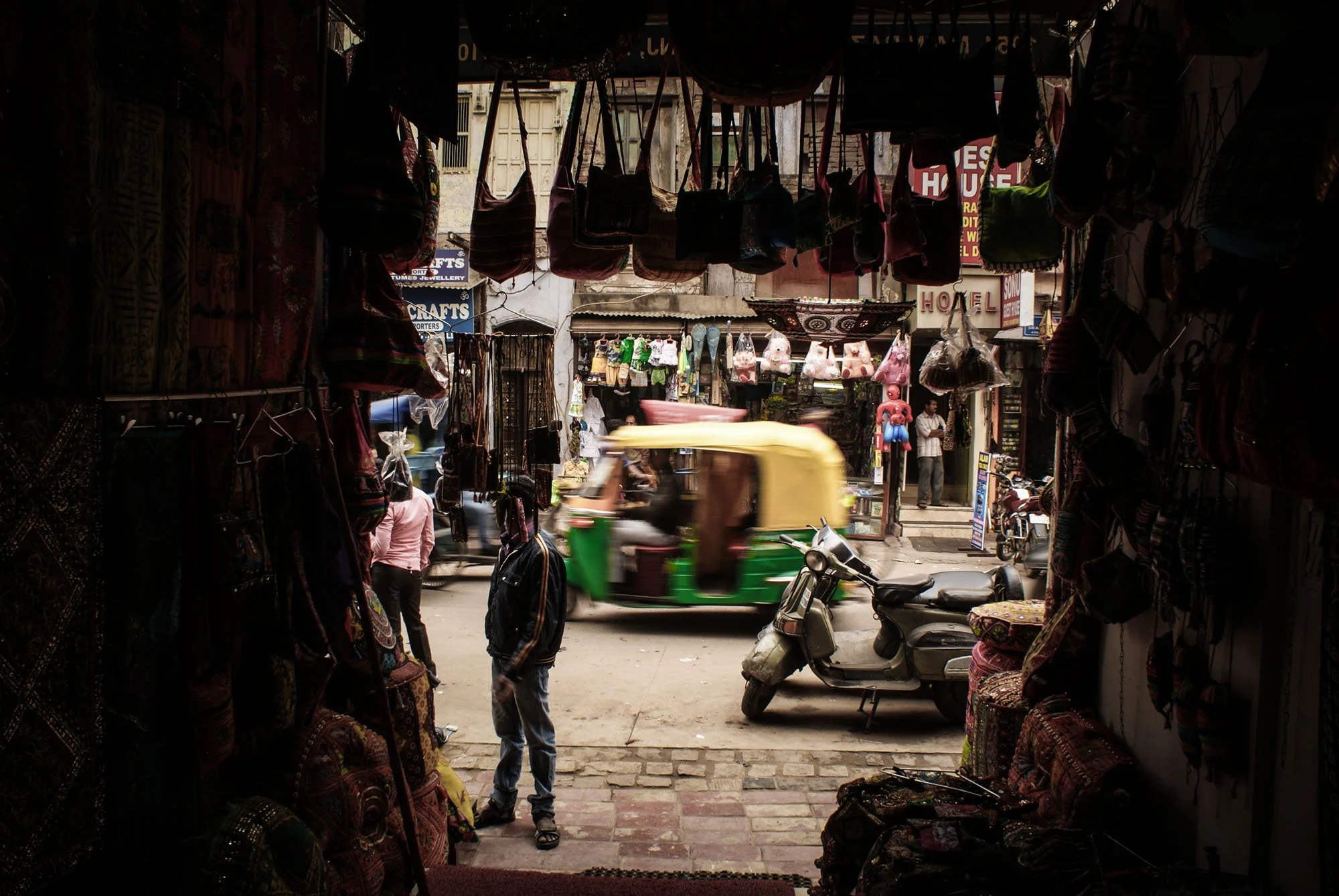
The Story Fallacy
Everywhere you look, photographers are instructed that their ultimate job is to "tell a story." It is the most pervasive, damaging piece of advice in modern photography.
It is fundamentally flawed.
Storytelling belongs to literature and cinema. Those mediums possess the essential dimension of time. They can build a beginning, navigate a middle and deliver a satisfying end.
Photography does not have time.
It operates in fractions of a second. When you take the rules of a time-based medium and force them into a still 2D rectangle, you don't get a story. You get a cliché.
When photographers try to be storytellers, they over-explain. At best they rely on obvious subjects, explicit context and easily readable emotions. At worst, they get lost down a rabbit-hole trying to put all this ‘advice’ into practice and never feel they ‘get it’.
I know I didn’t.
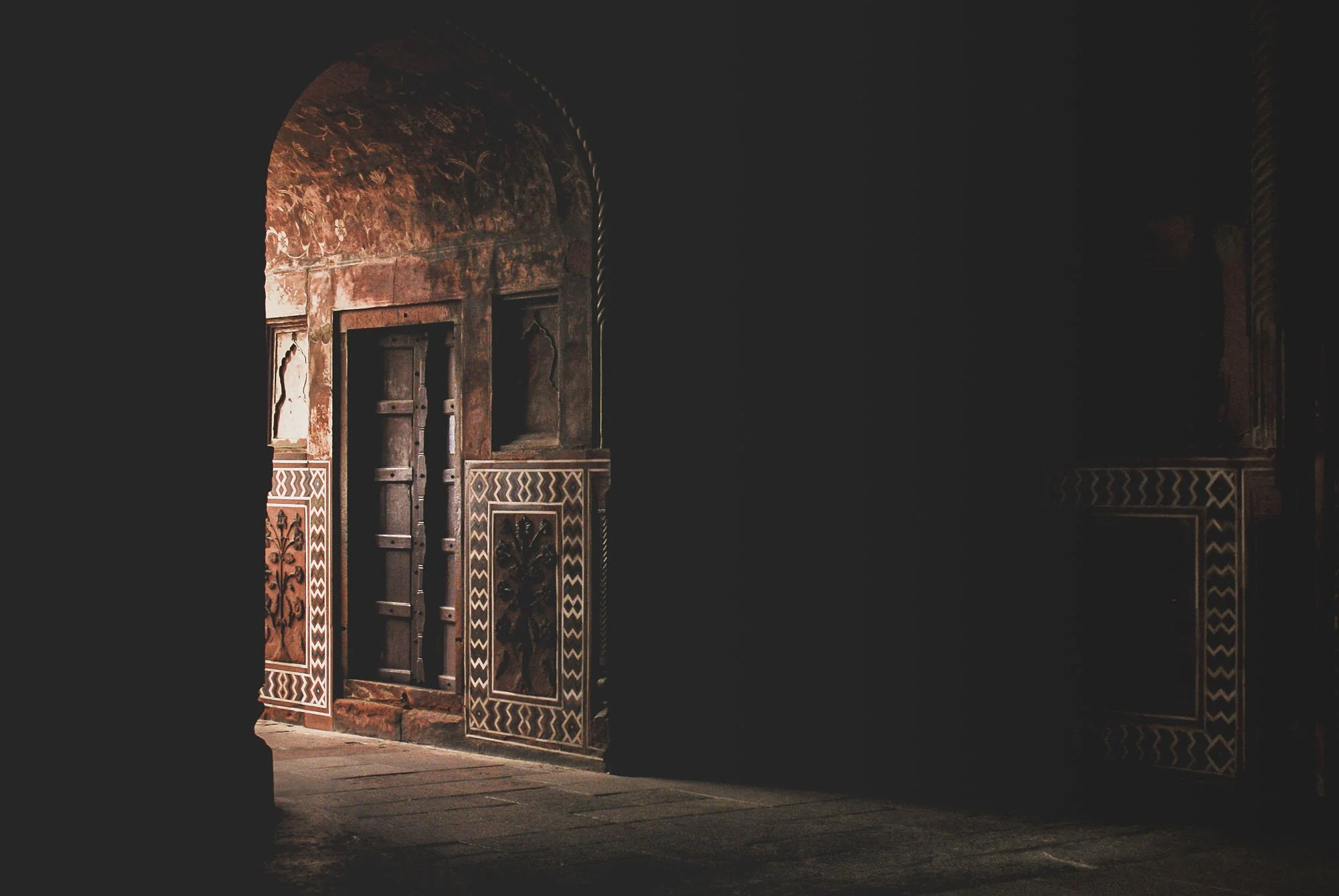
The most powerful photographs pose more questions than they answer
Engineering the Gap
If the job of a photograph isn't to tell a story, what is it? The answer lies in the work of behavioural economist George Loewenstein.
In 1994, Loewenstein published a breakthrough paper on the psychology of curiosity. He proved that curiosity isn't just an innate personality trait; it is a highly specific state of cognitive arousal. He called it the Information Gap.
He argued that curiosity is triggered only when a gap opens up between what we currently know and what we want to know. A biological itch that the brain is desperate to scratch.
I encourage you to apply this to the images you are making… when an observer looks at your photograph, their reaction will fall into one of three states:
1. The Void (Too Little Information)
If you shoot something the viewer cannot recognise there is no gap. They don't know enough to even form a question. The result is cognitive confusion. They likely scroll past.
2. The Closed Loop (Too Much Information)
The viewer looks at it, instantly decodes it and feels zero friction. Because there is no missing information to seek the result is cognitive boredom. They likely scroll past.
3. The Curiosity Gap (The Sweet Spot)
This is where powerful photography lives. You establish just enough for the viewer to anchor themselves, but you deliberately withhold something. You leave a gap. You engineer a question: who, what, where, why, when?
What story do you see here?
Curating for the Itch
You cannot tell a story with a photograph, but a photograph can spark one in the mind of your viewer. Your job is to drop the viewer right on the edge of the gap.
How do we actually do this? It requires a radical shift.
First, stop being a narrator. When you are in the field, fighting the environment and the adrenaline, don’t try to tell a story. Move closer. Isolate tension. Look for fragments. Imply without resolution. Find signals.
Second, when you sit down to edit, hone in on them.
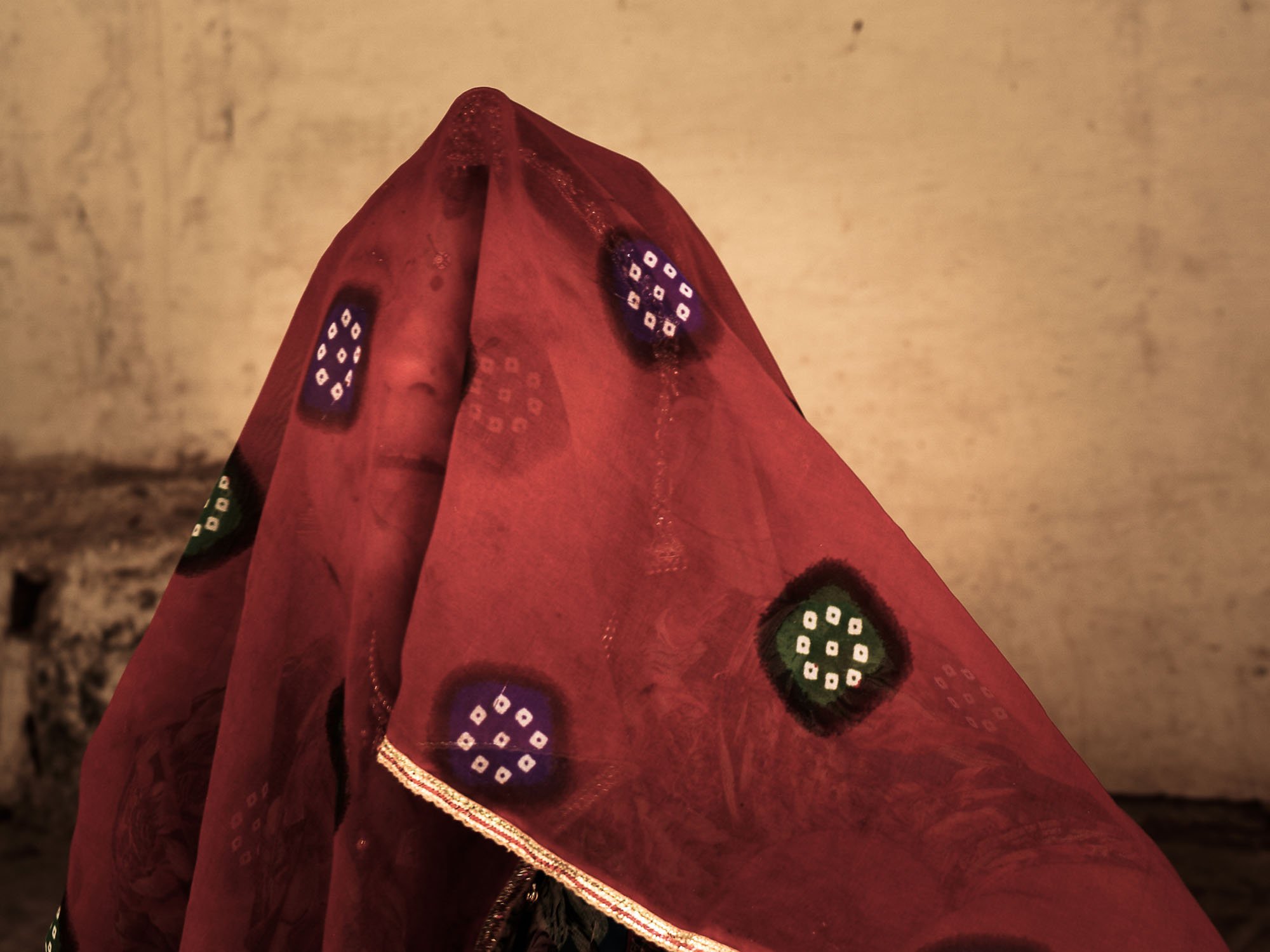
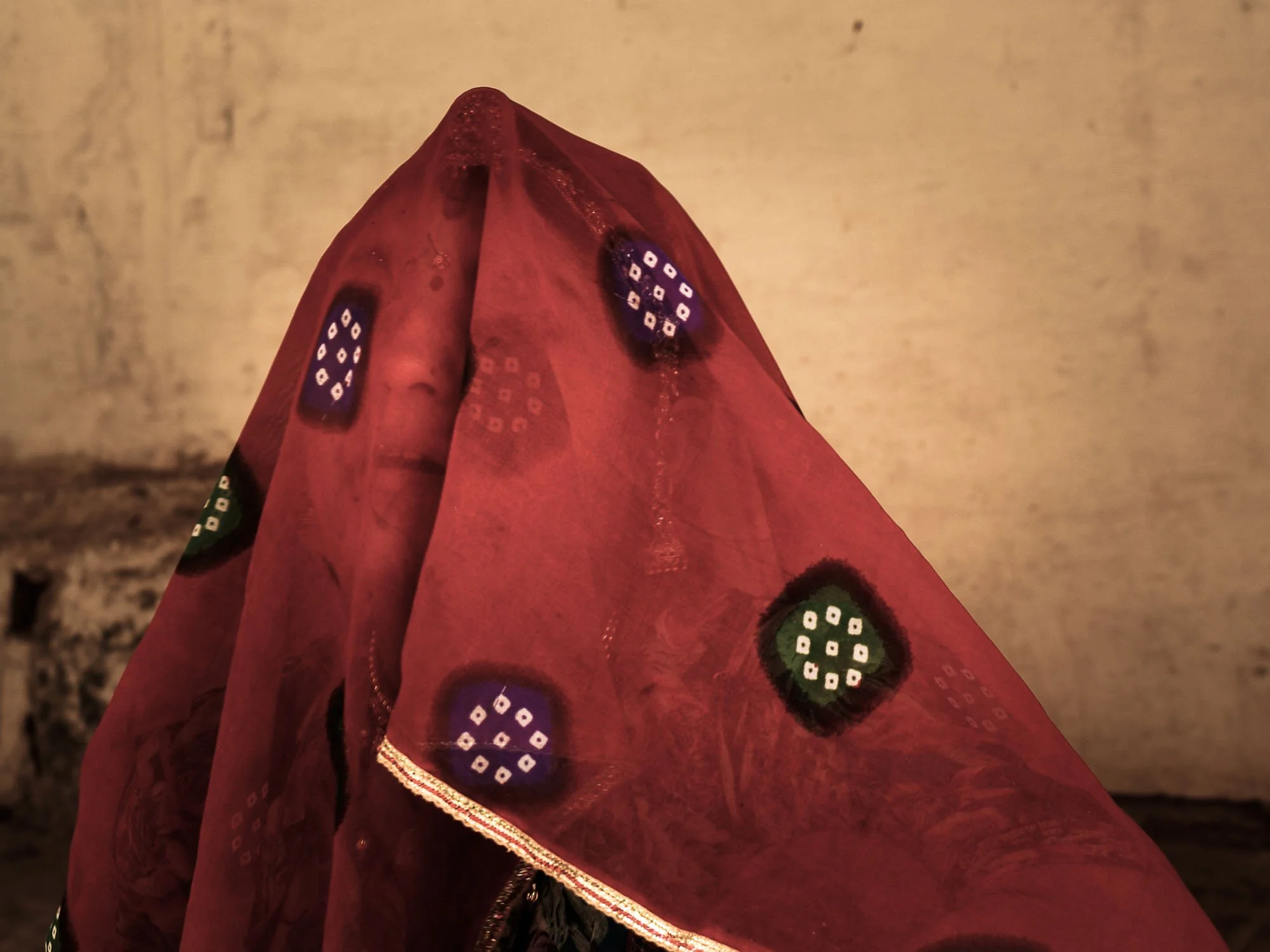
When I reviewed my contact sheet from the market, I found the signal I was looking for in a set of frames about a woman. They were tight frames of a figure enveloped in a vibrant red, patterned veil.
The flawed instinct of a novice is to wait for the fabric to drop, to get the clean portrait that tells ‘the story of who this person is’. But look at the sheer fabric. You see the deep crimson, the geometric shapes, and then—just barely—the faint outline of her features beneath it. A nose, the suggestion of an eye. The identity is entirely withheld, but the gaze remains as a subtle visual breadcrumb.
This is the Information Gap. I didn’t hand you a complete face; I handed you a locked door with a shadow moving beneath it. Your brain wants to work to construct the rest. By withholding her identity, the image forces your brain to actively participate. You can create a story from this I have no doubt, but I didn’t hand you one. I just gave you a signal.
The next time you are curating your work, look at the images you are drawn to because of the hints, the gaps and the questions within it.
Sever the story, leave the breadcrumbs, and let psychology do the rest.
If you enjoyed this article, check out my work, more of my thinking and a psychological framework that is transforming photographers all over the world.
👉 Upgrade your Visual Intelligence today.
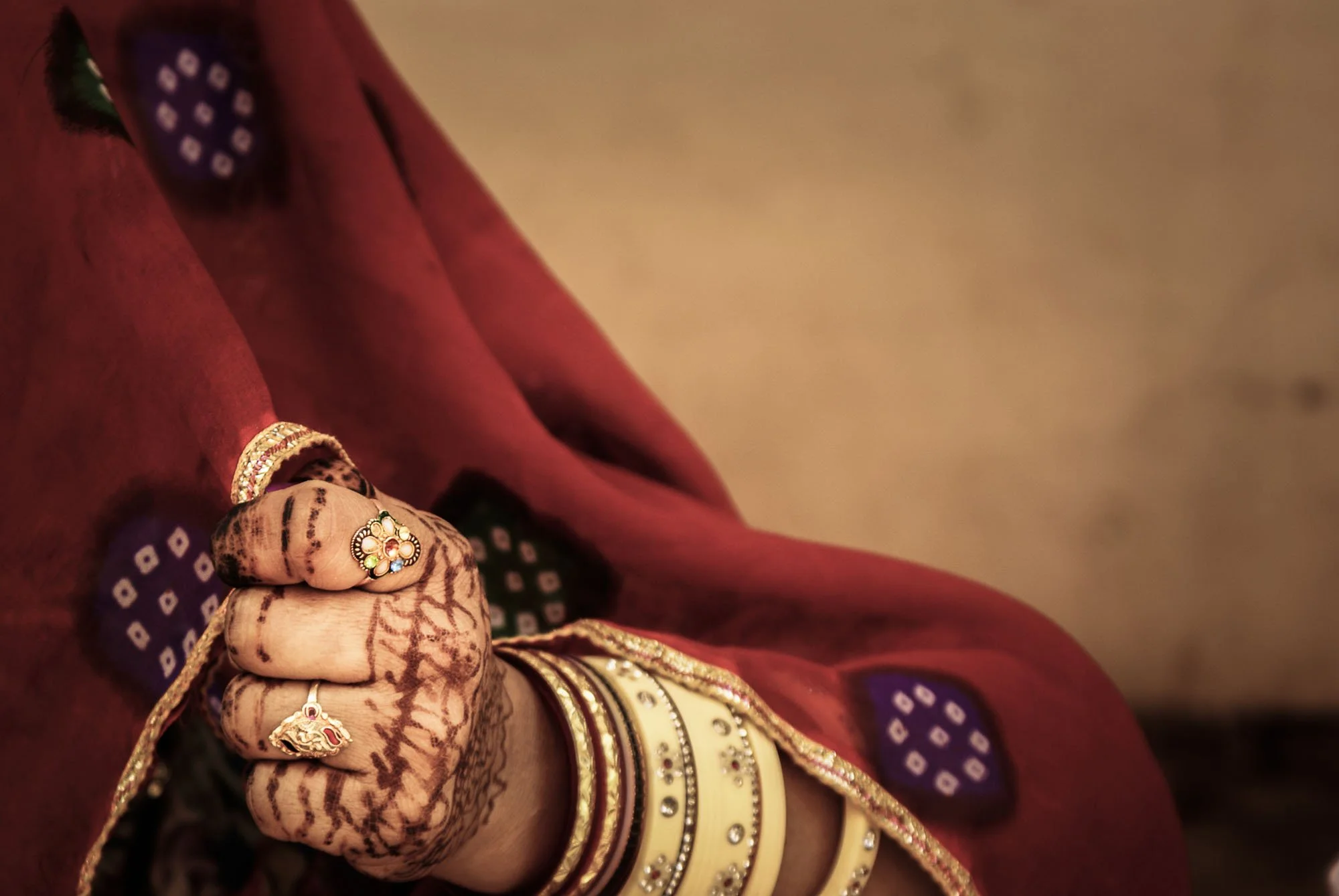
There is no such thing as THE story in a photograph. Only A story you see.