
What the desert horses of Garub teach us about resilience and photography
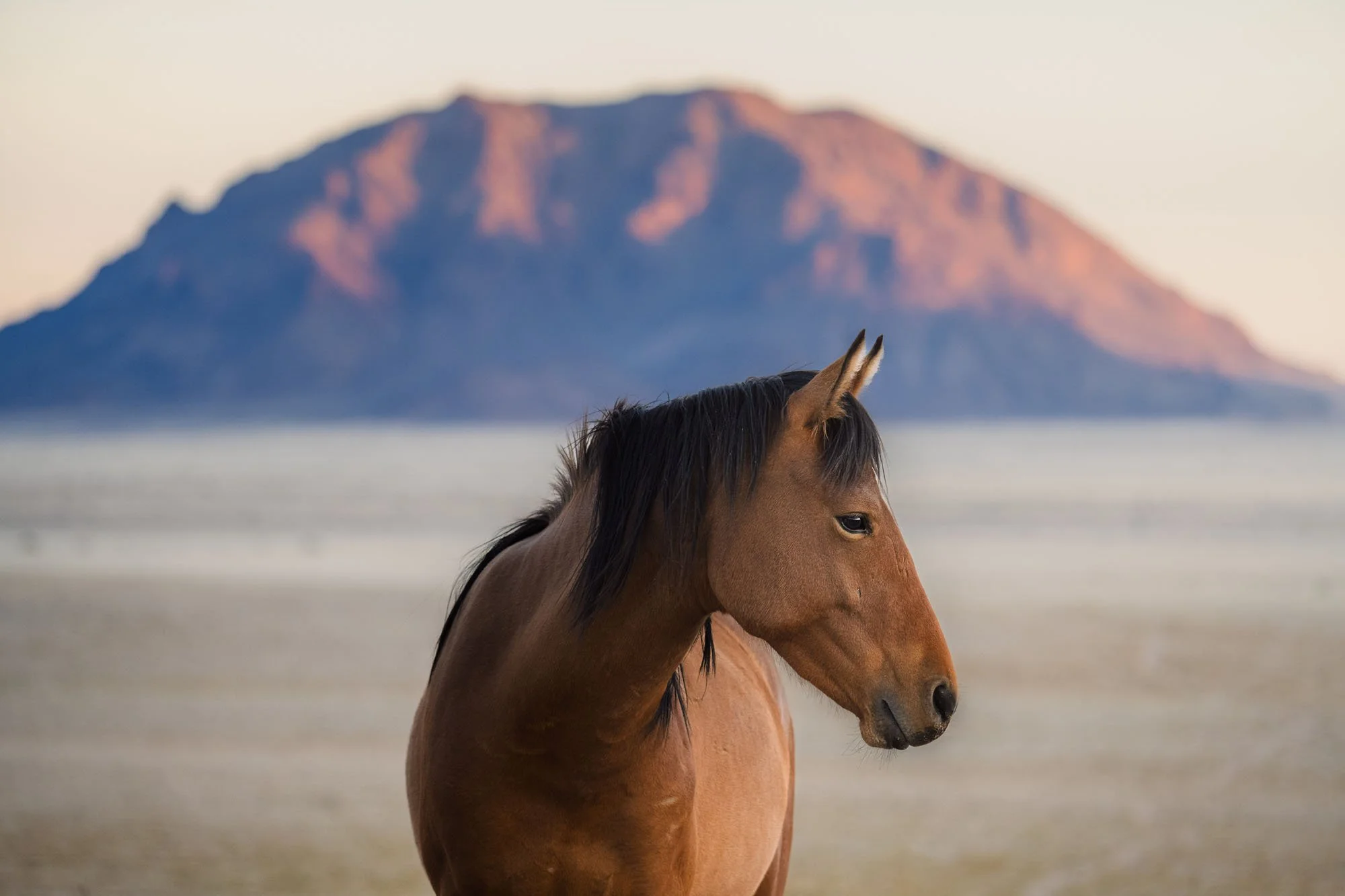
Contemplating a freedom earned. Garub Desert Horse, Namibia
We are a species that obsesses over the stable. We have been conditioned to seek the predictable. We have traded our primal resilience for the anaesthetic of comfort.
But deep in the Garub desert of southern Namibia, there is a living contradiction to this modern philosophy. It taught me a lesson in survival and was one of the most poignant things I think I’ve ever had the chance to photograph.
During the chaos of World War I in 1915, as German forces retreated from the advancing South African army, hundreds of elite cavalry mounts were scattered by aerial bombardments. Simultaneously, the abandonment of high-bred stud farms released some of the finest racehorses of the era into the desert void.
These animals performed a collective act of defiance. They turned their backs on a century of domestic breeding and walked into the oldest, driest desert on Earth.
They traded their master’s hay for a 100-year refusal to die.
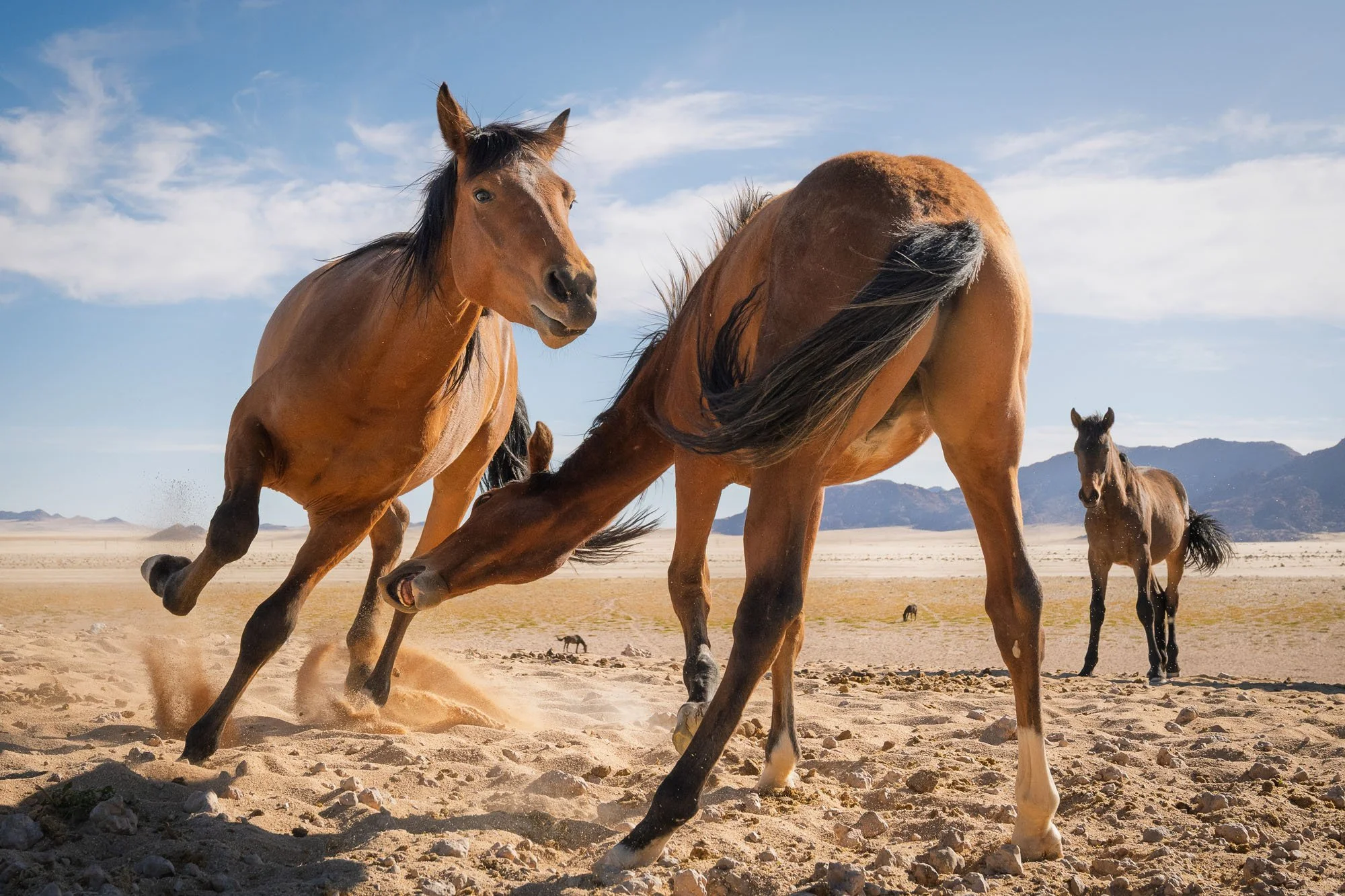
Resilience under unbearable conditions. Garub Desert Horses fight, Namibia
The Anatomy of De-domestication
To a psychologist, these horses represent a profound case study in behavioural plasticity. Domestication is essentially a state of neoteny—the retention of juvenile, docile traits into adulthood.
When these horses were abandoned, their survival depended on their ability to shed those traits in a single generation.
The docile nature that humans bred into them was a liability; in its place, they developed an acute, persistent hyper-vigilance.
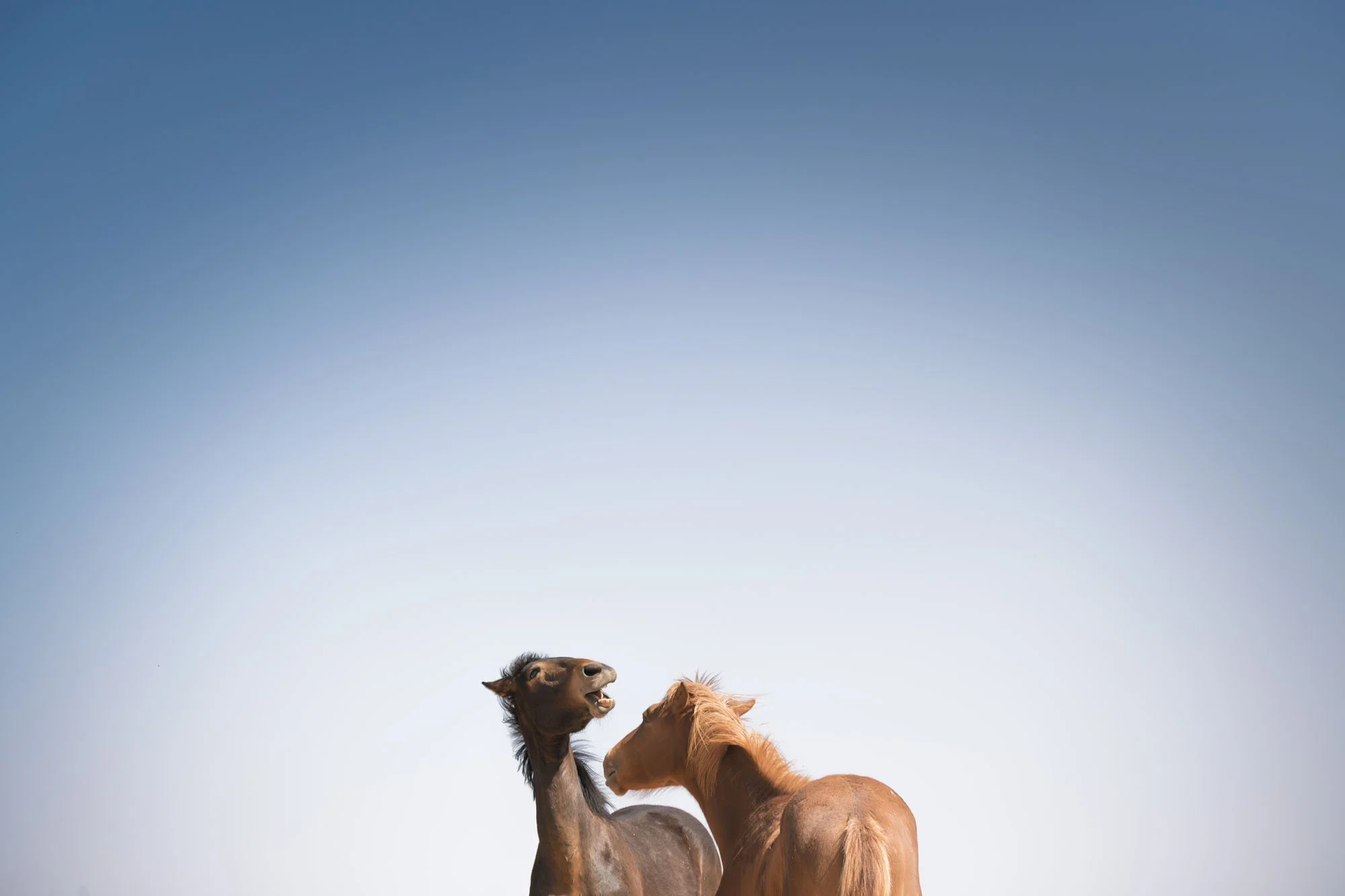
Under a never ending sky. Garub Desert Horses, Namibia
In my fieldnotes, I’ve remarked about the shift in their eyes. They don't have the 'soft' gaze of a domestic horse. They have a sharp, survivalist focus.
In the height of summer, they can go up to 72 hours without a single drop of water. This isn't just endurance; it is a neurological rewiring where the brain stops signaling 'crisis' and starts signaling 'baseline.'
These underlying psychological shifts are things I wanted to come through in the frame. I wanted to capture not just their beauty, I wanted to capture their resilience.
👉 Discover the cognitive operating manual for photographers.
The psychology-backed framework that transforms photography.
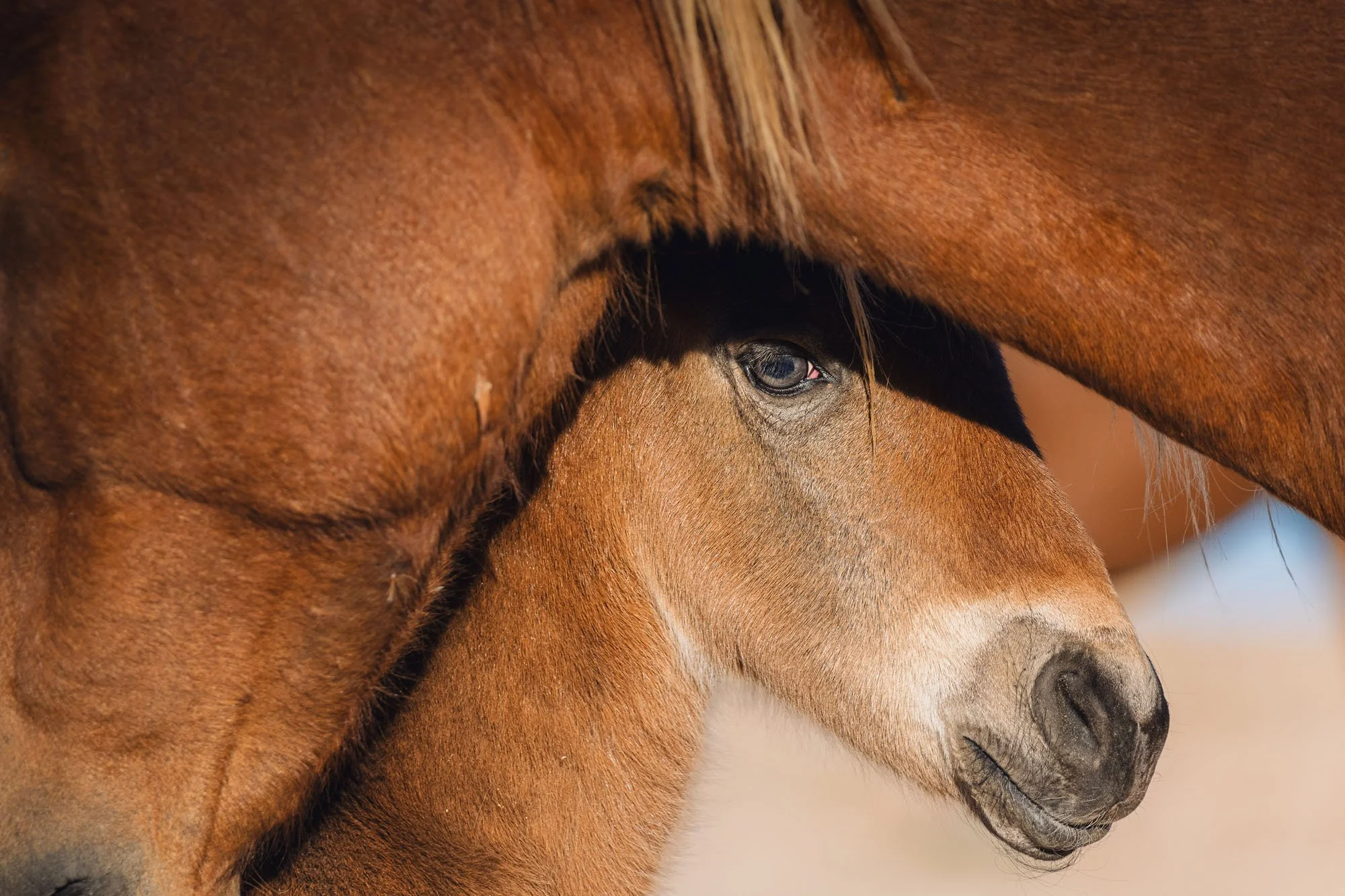
Finding refuge form the heat in the shade of mum. Garub Desert Horses, Namibia
The Mirror of Effort: Why the Image Resonates
As a visual ethnographer, I’ve realized that our fascination with these creatures is rooted in our own respect for provenance. We instinctively value a subject based on its uniqueness, the difficulty of its journey, the challenges its faced from its origin.
In photography, we often try to manufacture meaning through technical tricks.
But the desert horses prove that the most powerful signal is authenticity through friction.
When you look at an image of a stallion rearing in a dust cloud on the Garub plains, you aren't just seeing an animal; you are seeing a 'biological receipt' for a century of grit.
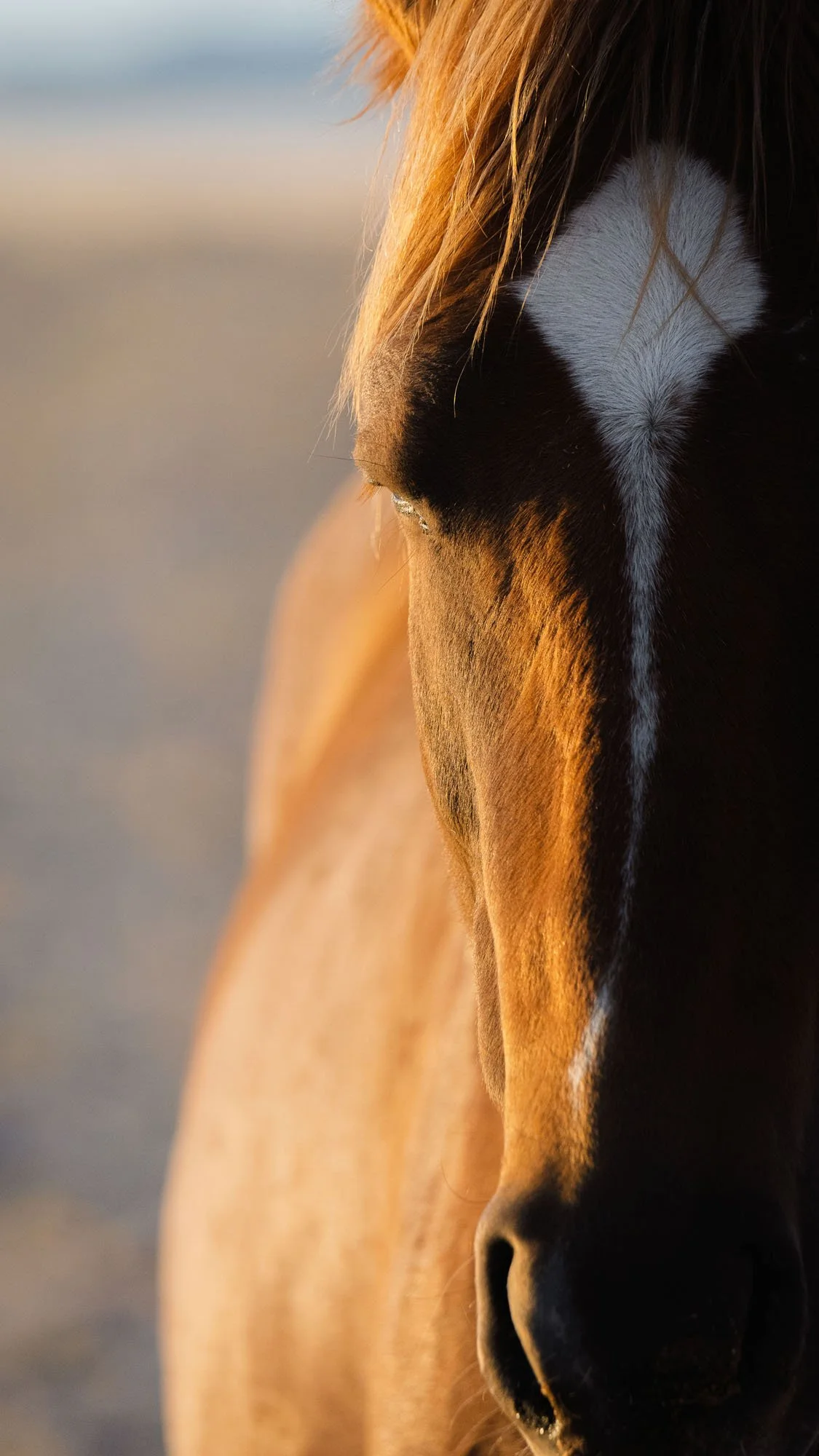
Sunrise - perfect light & temperature, but its short lived. Garub Desert Horse, Namibia
Your Mirror Neurons—the brain cells that allow us to feel what we see—respond to the physical cost in the frame. We don't just see the horse; we physically simulate the heat, the thirst and the defiance. It is an empathic bridge that a 'pretty' subject can never build.
Research in social neuroscience shows that humans can detect the 'truth' of a social or environmental signal in as little as 30 milliseconds. If the resilience in your frame isn't genuine, the viewer’s brain will instinctively dismiss it as visual noise.
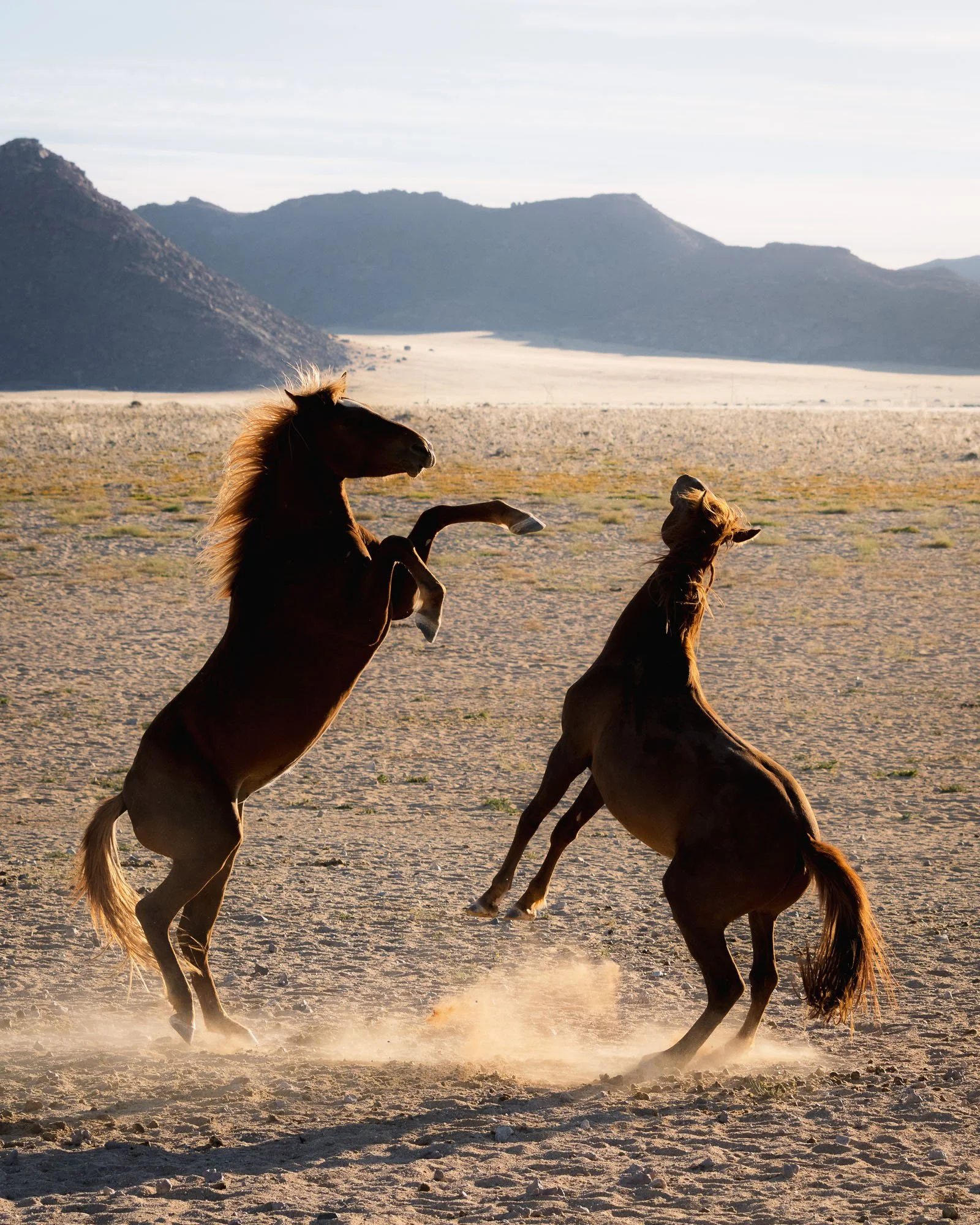
Silhouettes & Dust. Garub Desert Horse, Namibia
"So What" for the Photographer?
We worry about settings when we should be looking at the story of our subject. The journey they have been on and how we can capture that through our lens.
The desert horses teach us that true impact lives in the evidence of the struggle. The next time you are in the field, look for subjects that have paid a price to be in your frame and find a way to capture that.
Whether it is a weathered face in a village or a horse in the Namib, your job isn't to provide a pretty picture; it’s to provide the clues to a life actually lived.
We don't look at these desert horses because they are beautiful. We look at them because of the cost of their freedom.
Cliff is a Visual Ethnographer using psychology to capture the unvarnished reality of the human condition. If you are ready to stop documenting what things look like and start capturing what they really mean, get the Signal in the Frame blueprint. Join the expedition on YouTube here.