
Forget mugshots. How to take better portraits
Great portraits have nothing to do with f-stop or shutter speed. It’s about how we click with people before we click the shutter.
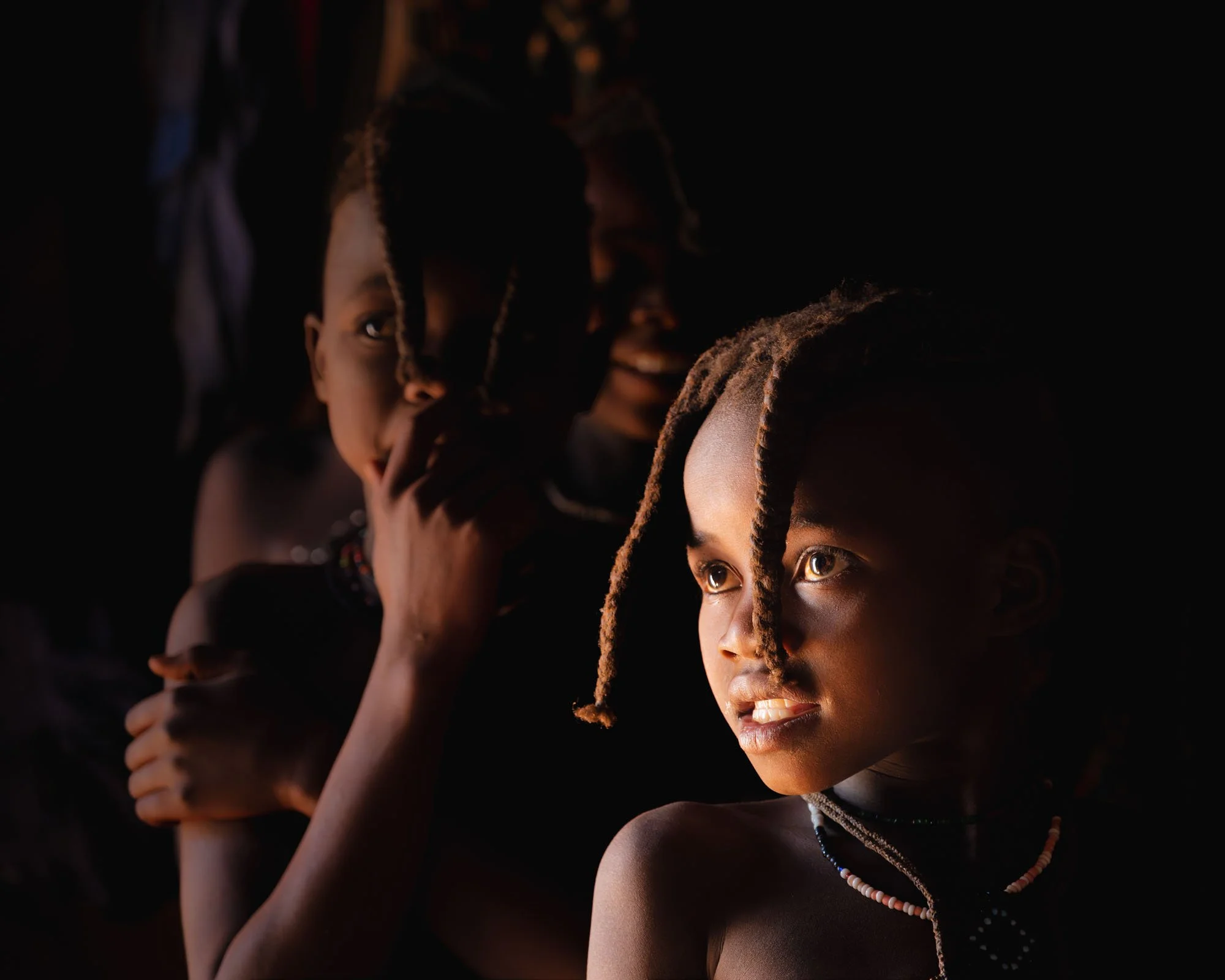
Connecting with and capturing the songs of the Himba
We are taught to obsess over aperture, shutter speed and the precision of our focus.
But when the subject of your frame is another human being, the stakes shift.
As a visual ethnographer, I am obsessed with the intersection of photography and psychology; I have spent years traveling some of the Earth’s most challenging environments, from the chaos of West African Voodoo rituals to the silence of the Andes.
👉 Discover the cognitive operating manual for photographers.
Know when to click, how to connect and what really matters in the frame.
My field notes tell a consistent truth that echoes Alfred Eisenstaedt’s famous quote:
“It is more important to click with people than to click the shutter.”
A portrait is not a collection of facial features; it is a record of connection. If you haven’t ‘clicked’ with the person in front of you, the resulting image will always feel sterile.
The Science of Synchronization
The human brain is a social organ. We have massive amounts of neural real estate dedicated specifically to decoding micro-expressions and intentions.
When you truly ‘click’ with someone, you are experiencing Limbic Resonance. This is a state of deep neurological synchronization where two people’s nervous systems harmonize. When this happens, the ‘performance barrier’ drops.
The subject stops being a ‘subject’ and starts being a partner.
The reason Eisenstaedt’s quote is so vital is that the viewer can feel this resonance. Through our Mirror Neurons, we don’t just see a face; we subconsciously simulate the emotion of the person in the photo. If the photographer was disconnected, the viewer feels that distance.
Research in social neuroscience shows that humans can detect genuine vs. performative smiles in as little as 30 milliseconds. If you don’t click with the person, you are essentially asking your viewer to believe a lie — one they will see right through.

Capturing the moment the performance ended and her genuine humanity emerged
Breaking the Performance Barrier
In my travels, I’ve often seen how the camera can act as a wall. In the market streets of Peru, I watched a young girl and her sister who were used to attention.
When tourists stopped, the girls would immediately jump into a rehearsed song and dance. It was expressive, but it was a mask.
I waited for that attention to fall away. When the crowd moved on, her body softened and her gaze drifted. What remained was quieter, more human and more telling image of who this girl was.
That was the moment of truth.
By waiting for the ‘act’ to end, I was able to capture the genuine human beneath.
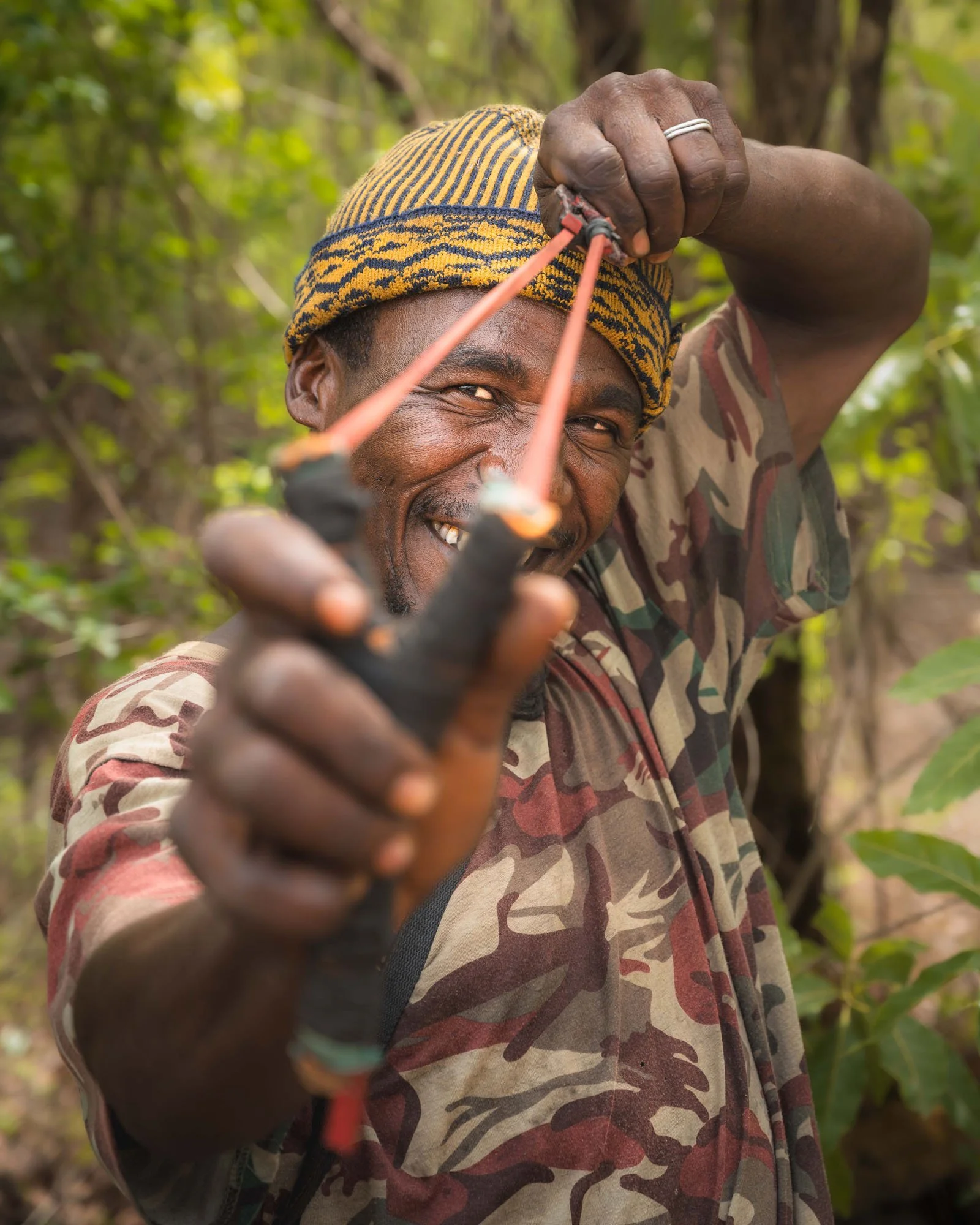
Moving from stranger to student allowed me to capture the pride of the hunter
Relational Fluency: The Unspoken Connection
Sometimes, the ‘click’ happens through shared activity rather than a shared language. In Guinea, I met a man off on a hunt.
I didn’t see him as a subject; I saw him as a teacher. I got him to show me how he used his slingshot. It put him in the position of ‘expert’ and me the slow-learning student! Tension vanished instantly.
This is what psychologists call Relational Fluency (the ability to navigate interpersonal dynamics). By lowering the camera and engaging in his world first, I earned the right to capture his prowess.
Similarly, when I sat with a widow in the Lares Mountains, the portrait was merely the ‘receipt’ for the hours I spent listening to her life stories the night before. That ‘click’ was built on the universal human need to be seen and understood. I had taken the time to understand her. As a gift, I got to take away a 2D memory of her wisdom.

My 2D memory of a night spent listening to stories of wisdom and gratitude
The “So What” for the Observer
The trap for the modern photographer is obsessing over the ‘Look’ while ignoring the ‘Limbic Resonance’.
If your photo is technically ‘imperfect,’ it often doesn’t matter. The photo below was taken during a chaotic Holi festival. My framing was slightly off, but the man and I were having a great time, laughing and joking. He started to forget about the camera and focus on the celebration. The viewer can feel the frozen moment in time — the man warily looking to his side as a ‘friend’ approaches with handfuls of paint.
They feel the connection.
The most powerful portraits aren’t taken through the lens; they are given through connection.
Put another way, whilst your shutter speed can be 1/8000th of a second, a genuine human connection takes time.
I encourage you to take it.
Cliff is a Visual Ethnographer. With a background in psychology and behavioural science, he travels the Earth’s challenging environments to decode human psychology and capture that authenticity with his camera. If you’re tired of taking ‘postcard’ photos check out ‘The Signal in the Frame’ and if you want to join his Land Rover adventures, they can be found here.
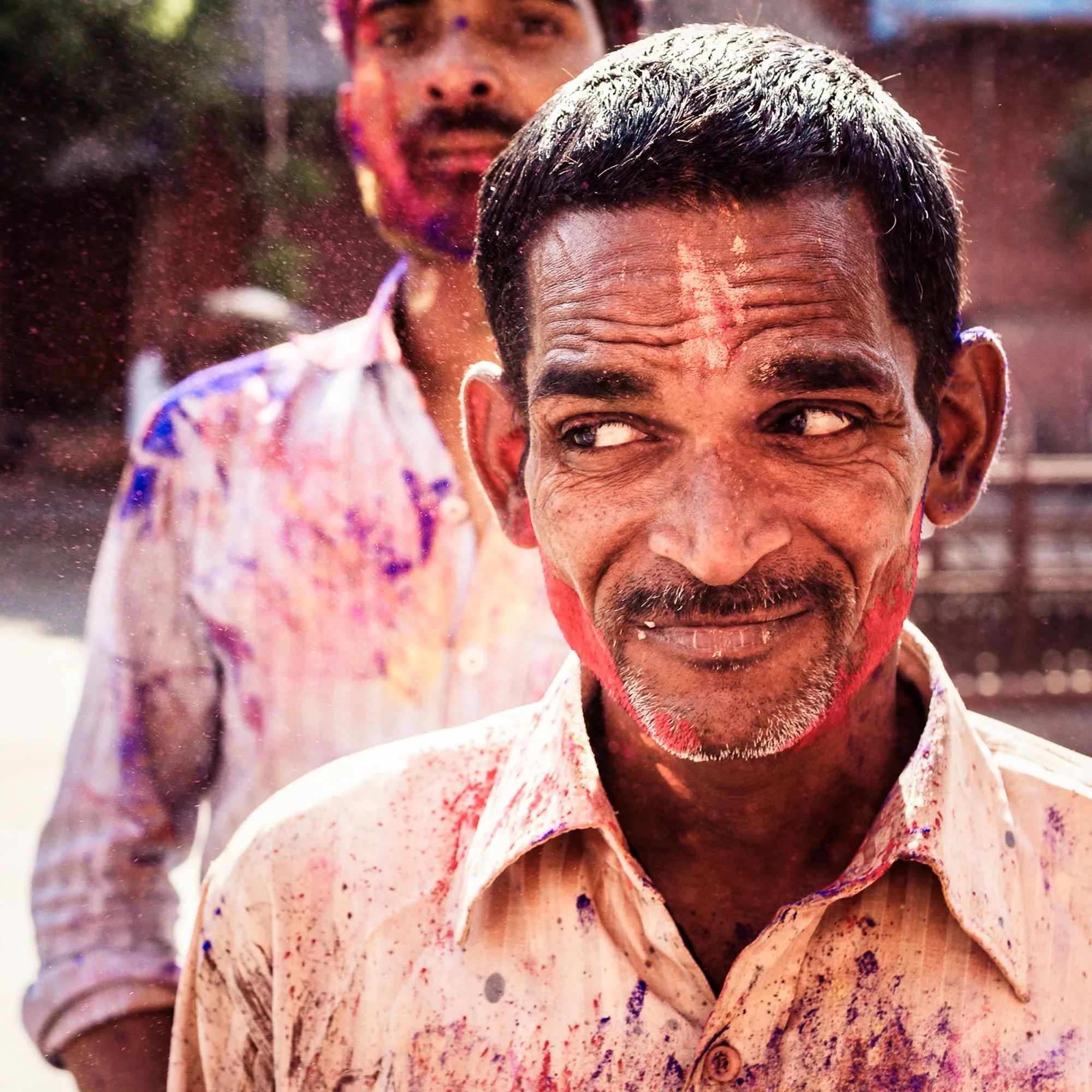
The triumph of connection over technical imperfection