
Why I don’t care about a sharp image
So many photographers strive for sharpness above all else. We have forgotten what the great Ansel Adams said…
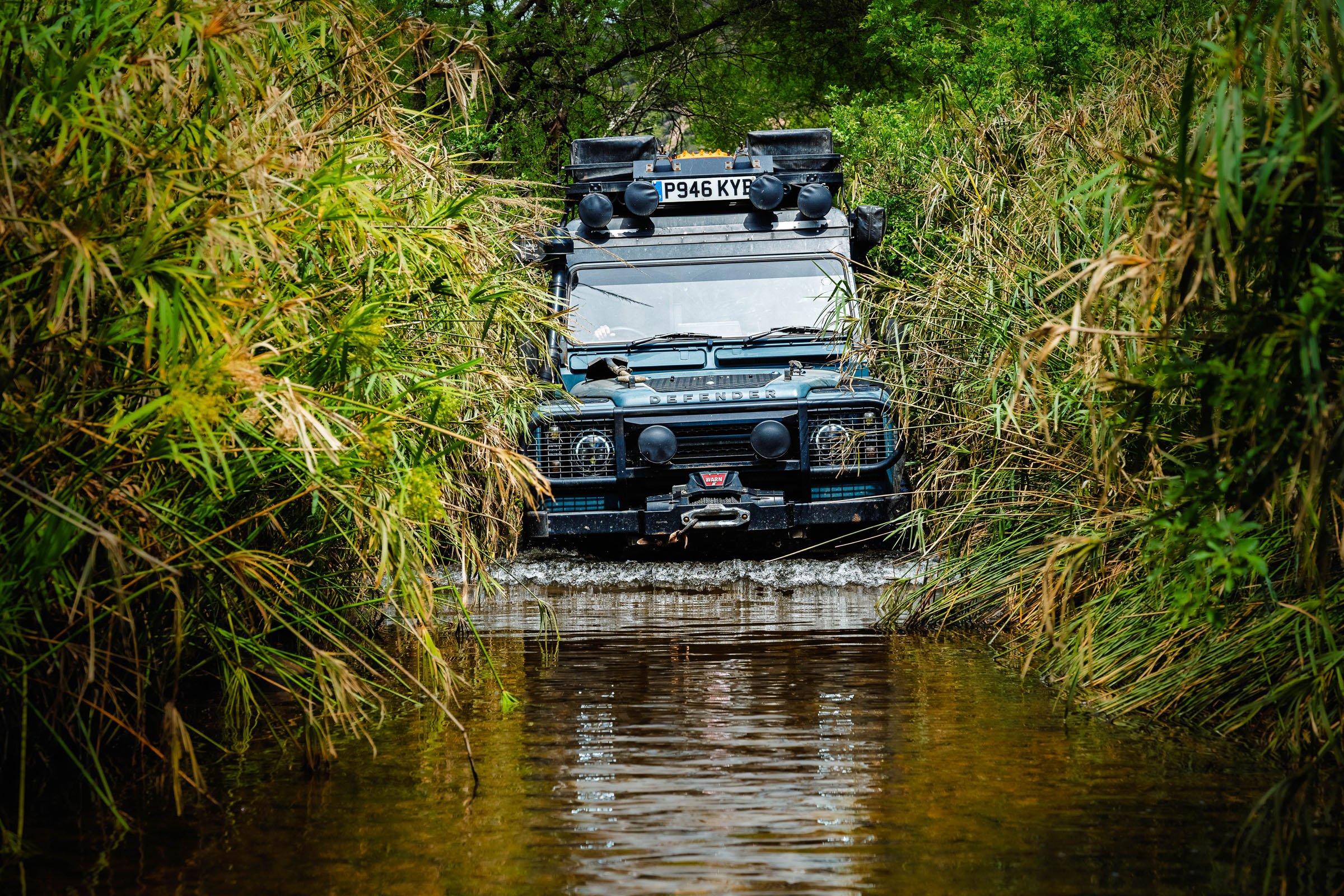
Capturing the concept of ‘The obstacle is the way’ after months of trying
I’ve found the photography industry — and photographers — too often think sharpness is the same thing as quality.
We pay thousands of pounds for glass to capture our subject in microscopic detail, yet it is too easy to return from the field with a hard drive full of technically flawless, completely forgettable images.
As a photographer and psychologist, who has created a unique I wanted to dive into Ansel Adams’ classic quote to understand why it resonates so strongly and how it can help us all when we are out in the field.
“There is nothing worse than a sharp image of a blurred concept”
👉 Master the conceptual signals in the frame.
Tested across 70 countries. Grounded in neurobiology.
The Dissonance of Processing Fluency
First, we have to look at a concept called Processing Fluency — the ease with which our brain processes information. In a photograph, technical sharpness acts as a signal for the eye. High sharpness creates high fluency for our sensory receptors.
However, if the eye lands on that sharpness but finds a scene with no clear meaning or missing a unique perspective, the fluency for the mind drops to zero.
The brain feels cheated.
It has spent cognitive energy ‘focusing’ on a subject that has no depth. It’s the psychological equivalent of opening a beautifully wrapped gift box only to find it empty.
Research in cognitive aesthetics shows that while we are initially attracted to high-contrast, sharp stimuli, our long-term ‘aesthetic appreciation’ depends on Cognitive Challenge. If the brain cannot find a narrative, a concept or a puzzle to engage in, it disengages.
Sharpness captures the eye, but only a clear concept can hold the mind.


Semantic Satiation: The Death of the Sharp Pixel
Having a ‘blurred concept’ is especially dangerous in an era of AI and high-end sensors because of a phenomenon called Semantic Satiation.
You’ve likely experienced this with language: if you repeat a word like ‘lens’ fifty times in a row, it eventually loses all meaning and becomes a weird sound.
The same is happening to our visual culture. Because ‘perfect light’ and ‘razor sharpness’ have become commodities, we are suffering from visual satiation.
When we see another sharp photo of a sunset with no unique perspective or underlying meaning, the ‘Signal’ of a sunset stops being a signifier of beauty and starts being visual static.
In a saturated market where 3.2 billion photos are uploaded daily, ‘technical perfection’ has reached a point of diminishing returns. Psychologically, we are numb to the sharp pixel.
The thing that doesn’t satiate is a clear, authentic concept that resonates with our audience.


The “So What” for the Photographer
The trap for the modern photographer is behaving like a technician rather than an observer.
We spend our time obsessing over how we are saying something (aperture, composition, sharpness) rather than what we are actually trying to say.
During a recent expedition across Africa, I wanted to capture the adventure; the grit, the challenge, the difficulty. I have a hard drive full of failures — sharp, beautiful images of mud, rocks, and mountains. Technically, perfect, but conceptually blurred. They showed the things, but they didn’t show the truth. I was checking my f-stop when I should have been checking my motive.
Over time, I boiled what I was trying to capture down to a simple sentence, ‘The Obstacle is the Way’. I used this sentence to intentionally guide my mind on what I was trying to capture.
Now every decision — framing, timing, what I decided to include or exclude — had a purpose. I was no longer reacting to what I was seeing. I had defined a meaning I wanted to capture. Put another way, I had aligned my attention with intention before composition and, in so doing, given a clear ‘search command’ to my brain.
In this photograph from South Africa (below), the ‘concept’ for me is finally sharp. The water isn’t just a subject; it’s a barrier I’m relentlessly pushing through. The Land Rover isn’t just a vehicle; it’s about commitment to a goal.
Because the concept — the friction of the journey, overcoming the obstacle — is in focus, the technical specs become secondary. You don’t look at this photo because it’s sharp; you look at it because you can feel the weight of the moment.
To paraphrase Ansel, “Stop checking your focus. Start checking your motive”.
Cliff is a Visual Ethnographer. With a background in psychology and behavioural science, he travels the Earth’s challenging environments to decode human psychology and capture that authenticity with his camera. If you’re tired of taking ‘postcard’ photos check out ‘The Signal in the Frame’ and if you want to join his Land Rover adventures, they can be found here.
The obstacle is the way