
Why you struggle to photograph chaos
The science of why taking away context is the best way to capture ‘meaning’ in a chaotic environment.
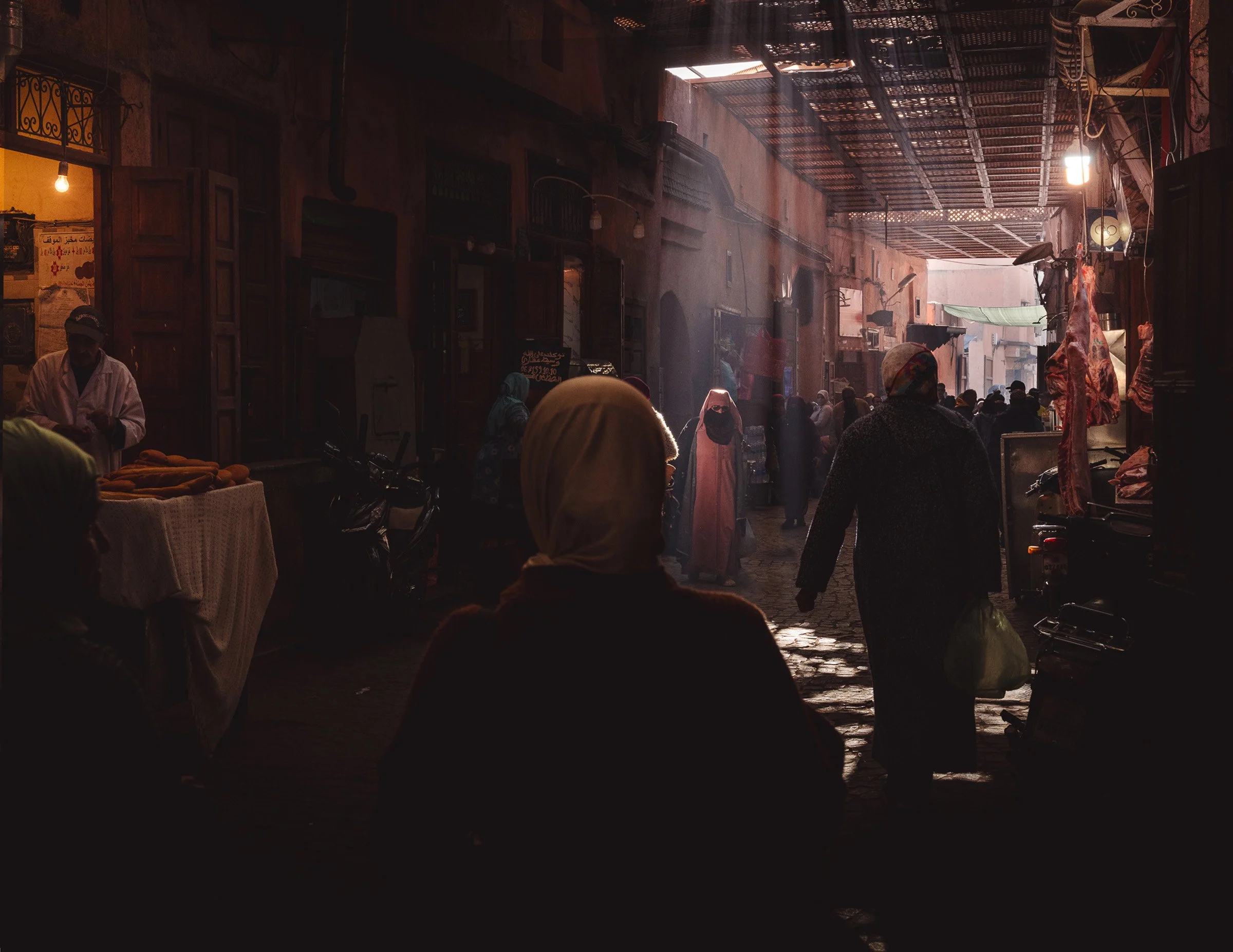
Looking for the light to bring clarity in amongst the chaos of the Souks, Morocco
If you have ever stood in a crowded city square, a dense forest or a busy market and felt completely overwhelmed by where to point your camera, you know the challenge of finding meaning in the maelstrom.
We are often taught that the big scene requires a big, wide-angle lens. But in practice, this often leads to the same frustrating result: a hard drive full of messy, unreadable snapshots that fail to capture how the moment felt.
To fix this, we need to stop looking at composition and start looking at the psychology of the viewer.
During a 14-month expedition across Africa, the rainforests taught me a valuable lesson. After the vast, silent vacuum of the Sahara, the jungle felt like a physical assault.
The horizon had disappeared. The sky had become a ceiling of interlocking leaves.
In my field notes, I’d captured this feeling as the ‘Green Pressure’. But from my background in psychology and behavioural science, I recognised it as something else: Cognitive Overload.
By understanding what the jungle does to the human brain, we can unlock a specific photographic habit that will transform how you shoot any complex environment — whether it’s a tropical rainforest or a Tuesday morning in London.
👉 Discover the cognitive operating manual for photographers.
The psychology-backed framework that transforms photography.
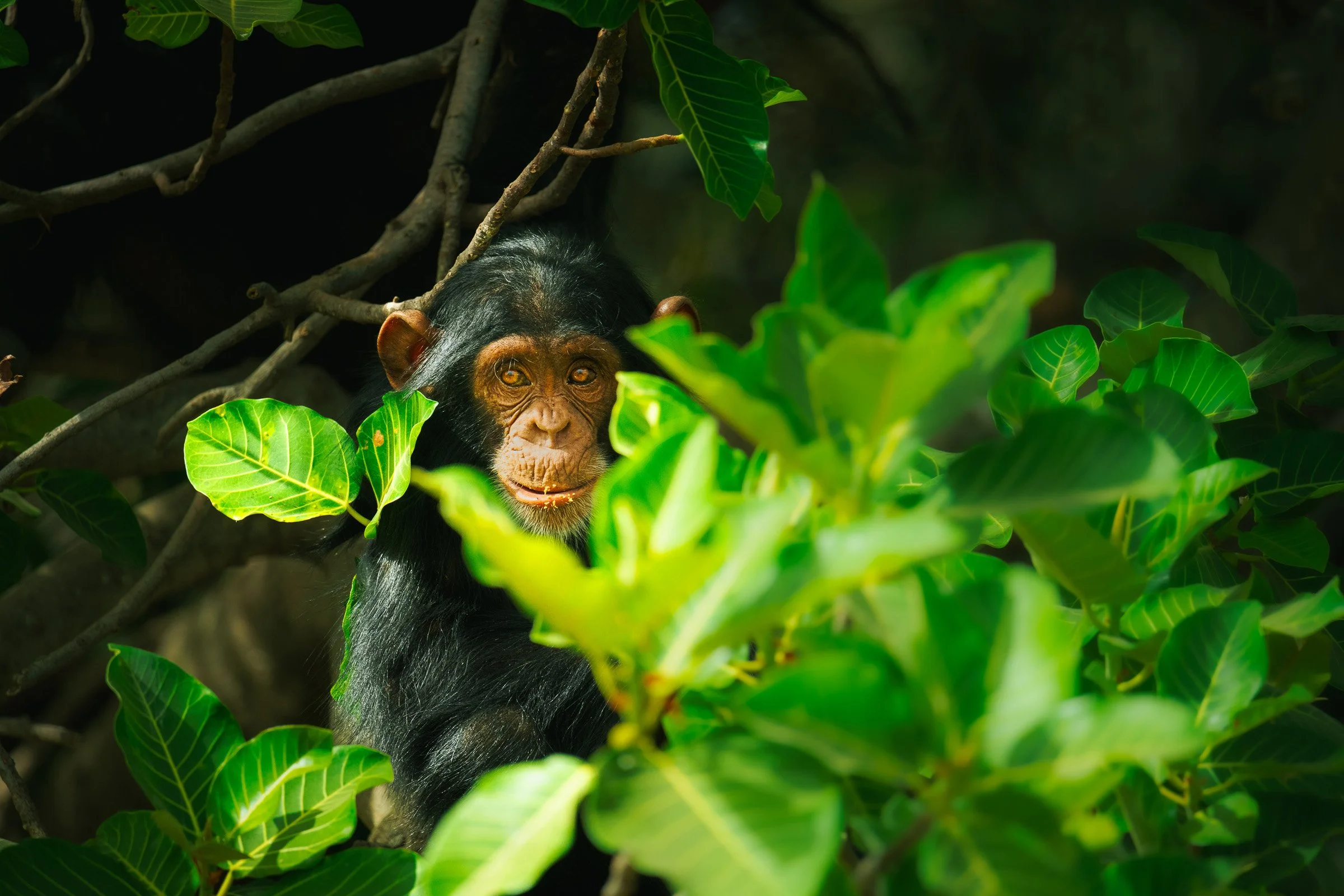
Looking for movement between the foliage to bring the forest to life, Gambia
The Anatomy of Green Pressure
The human visual system evolved on the open savannah. Our brains are hardwired to scan the horizon for movement and threats. We crave ‘Low Cognitive Load’ environments where the path ahead is clear and predictable.
The jungle violates this need. When you are encased in a dense environment, your brain is bombarded by millions of competing data points. Every vine, every flickering shadow, every rustling leaf is a potential signal. Because there is no horizon to anchor your gaze, your brain’s Saliency Network — that detects, filters and prioritises stimuli — goes into overdrive, trying to process everything at once.
What you are experiencing is the limit of your Working Memory. Unlike a camera sensor, which records everything equally, the human brain can only actively process about four to seven ‘chunks’ of information at a time.
When we are presented with the chaos of a jungle or a crowded street, the brain searches for a focal point. Research shows these high-entropy environments can measurably increase cortisol levels and decrease our capacity in ‘directed attention’… which is exactly what you need to compose a meaningful shot.
The result? Visual paralysis. You feel the ‘drama’ of the scene, but because your brain is over-saturated, you struggle to find a meaningful focal point.

Getting up close, removing distractions to capture the feel of the rainforest, Cameroon
The Universal Thicket: From the Jungle to the City
You don’t need to be stuck in the mud of Cameroon to feel this pressure. You feel it every time you walk into a crowded street or a dense pine forest.
These are all versions of cognitive overload.
In these spaces, I’ve found less utility for the technical rules. Instead I’ve found the best practice — when the environment takes away your space — is to take away the environment’s context.
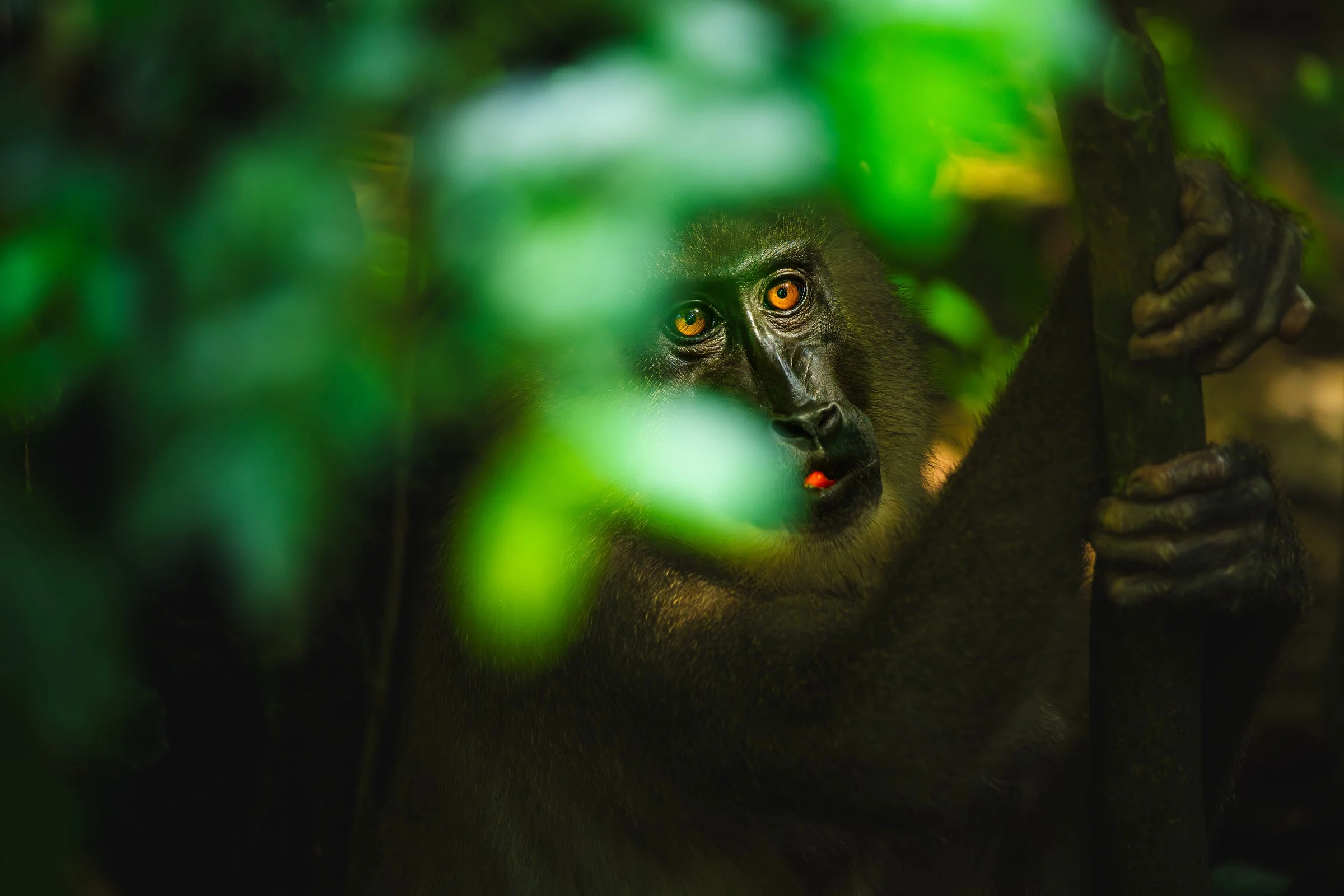
Sometimes you have to react quickly to visitors from the jungle, Nigeria
The Macro-Fragment Signal
To win against this overload, change your ambition. Shoot the fragment rather than the whole.
In psychology, we know the brain finds relief in Perceptual Fluency — the ease with which we process sensory information. By abandoning the wide-angle shot and switching to an intimate frame, you are increasing perceptual fluency.
Instead of the entire forest, look for an element that personifies the feeling. Instead of the whole market, look for an action that amplifies the culture.
By stripping away the surrounding chaos, you aren’t missing the ‘story’; you are distilling it.
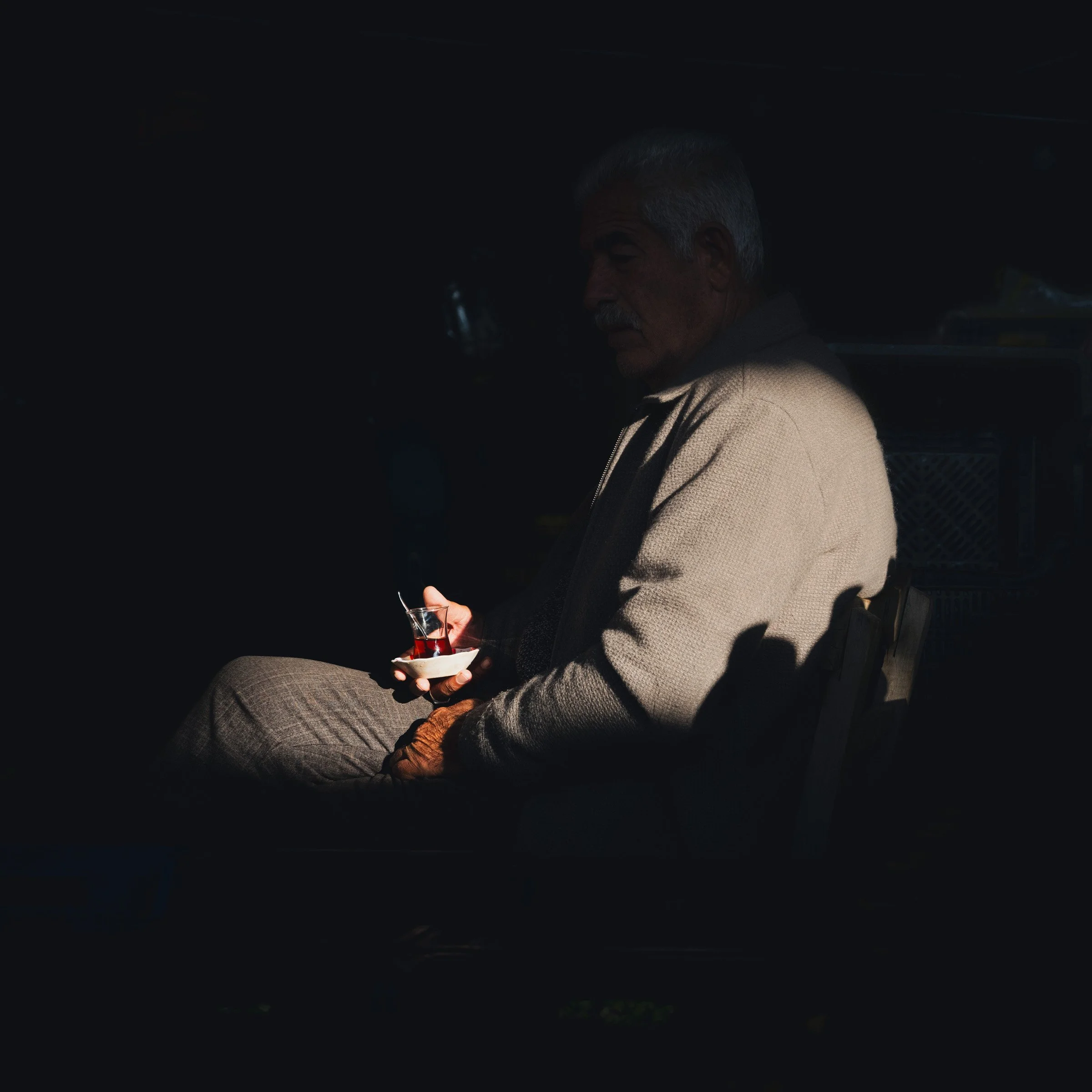
Honing in on the details can say more than trying to capture it all, Türkiye
The ‘So What’ for the photographer
The next time you find yourself in a Sensory Thicket — whether it’s green leaves or grey concrete — stop trying to ‘conquer’ the chaos in a single frame.
Instead, ask yourself: “What is the one fragment here that tells the truth of the whole?”
When you find that single point of order, isolate it. Make it the only thing that matters. You aren’t ‘cropping’ the world; you are rescuing the signal from the storm.
The jungle wants to steal your eyes. Your job is to steal back the signal from within. That’s where you find the feeling.
Cliff is a Visual Ethnographer. With a background in psychology and behavioural science, he travels the Earth’s challenging environments to decode human psychology and capture that authenticity with his camera. If you want to take photos full of feeling check out ‘The Signal in the Frame’. Join the expedition on Youtube here.
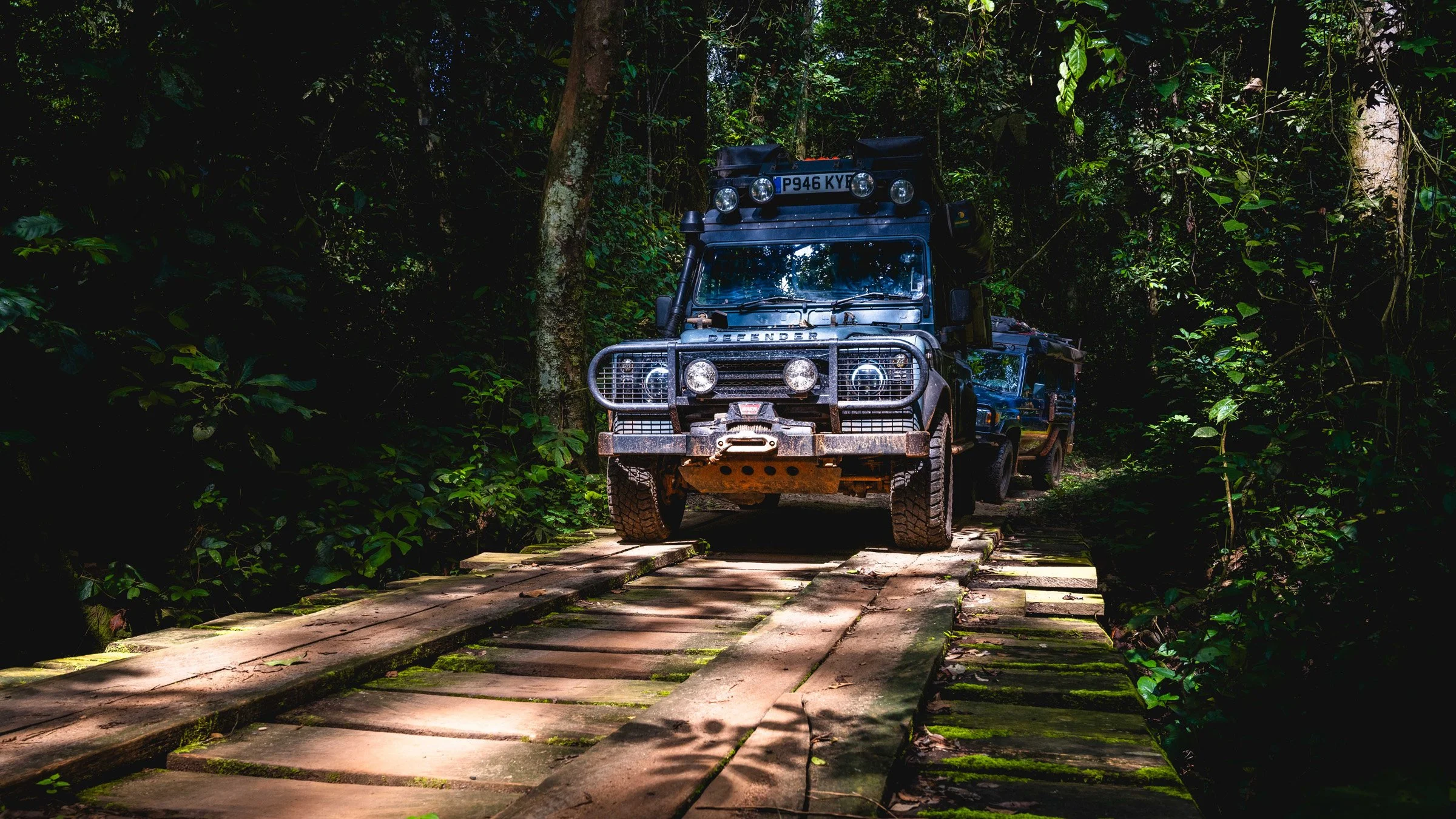
Time to leave the confines of the jungle, Nigeria