
Why Smart Photographers Take Boring Photos
And how to train your eyes so your brain gets out of the way.
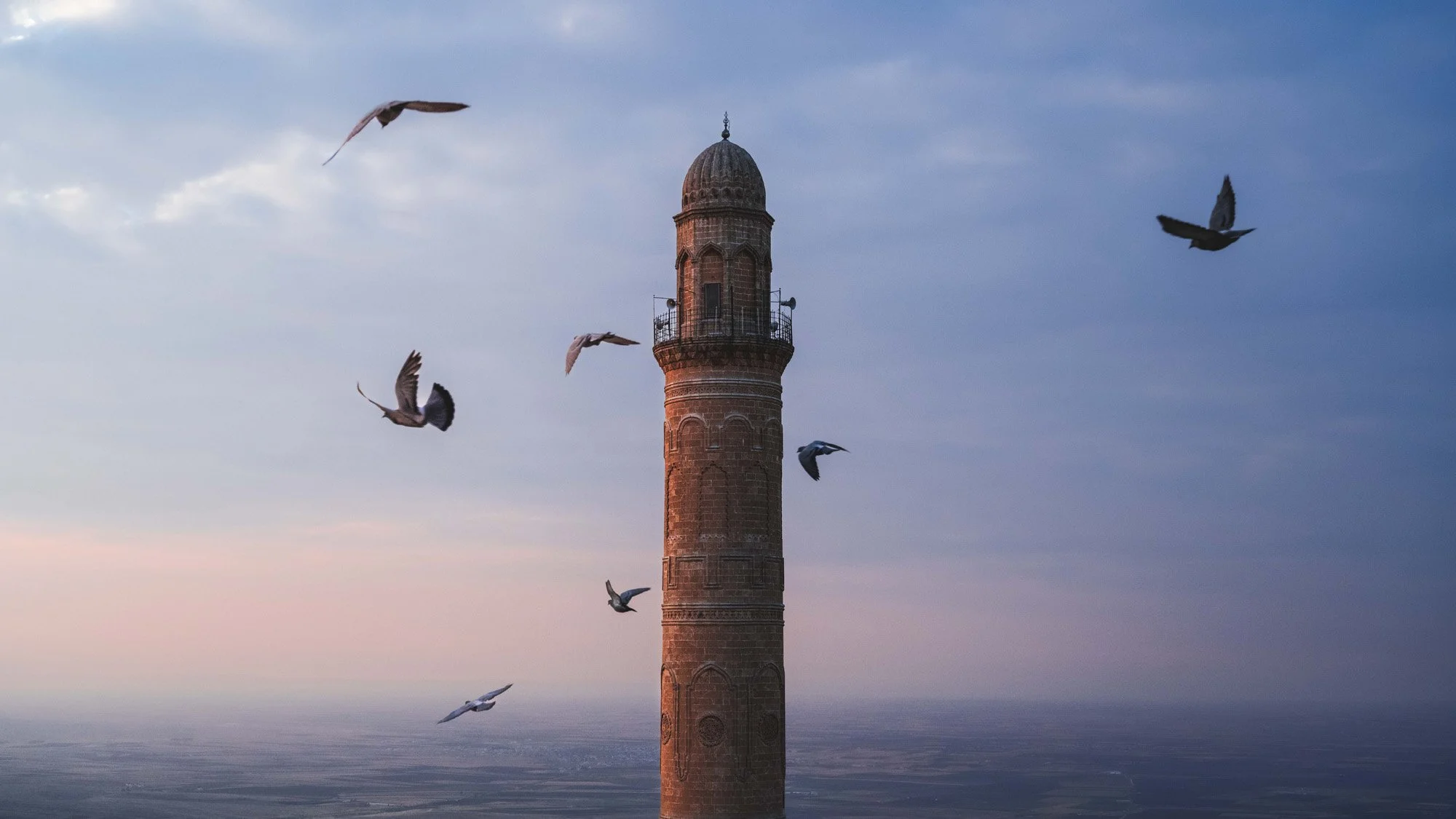
Mardin, Türkiye. The decisive 1/500th of a second. If you pause to calculate the composition, the flock has already dispersed. Train your mind before so you shoot on instinct in the moment.
You are standing on a street corner in Cape Town, a rooftop in Eastern Türkiye, or watching the late-afternoon light carve deep shadows across the mountains.
Suddenly, the world aligns. A man turns his head, a flock of birds erupts around a stone minaret, or the light hits in just the right place.
The window of opportunity will last seconds at best!
In that moment, the amateur photographer’s brain begins to calculate.
They consciously scan the frame: Where are my leading lines? Is my exposure balanced? What is my subject? Am I following the rule of thirds?
Click.
Did they get the shot?
By the time your conscious mind runs the equation, life has drained out of the scene. You didn't capture the moment because you were busy dissecting it.
Treating photography like a science—mechanically checking off compositional rules and following a strict analysis methodology in the moment—kills it.
Yet the opposite dogma—the romantic myth that great photographers rely on raw artistic talent—is just as toxic. It’s why so many photographers remain wildly inconsistent, wandering aimlessly with a camera, hoping that lightning strikes their sensor.
But I’ve come to the conclusion that the clash between science and art is a false choice.
Science doesn’t replace your creative intuition.
Science is the gym where your intuition is built.
The Cartier-Bresson Paradox
Decades before neuroscientists began mapping how the human eye scans an image, street photography pioneer Henri Cartier-Bresson understood this tension intimately.
“Thinking should be done beforehand and afterwards—never while actually taking a photograph”
I’ve heard many photographers misinterpret this. They assume Cartier-Bresson was advocating for careless, thoughtless shooting.
He wasn’t. He was talking about the division of cognitive labour.
Cartier-Bresson spent decades obsessively studying classical geometry, painting, philosophy and human behaviour. He did the gruelling intellectual work before he ever stepped onto the pavement. By the time he raised his Leica, his thinking was already finished.
The camera wasn't a thinking tool; it was an instinctive reflex.
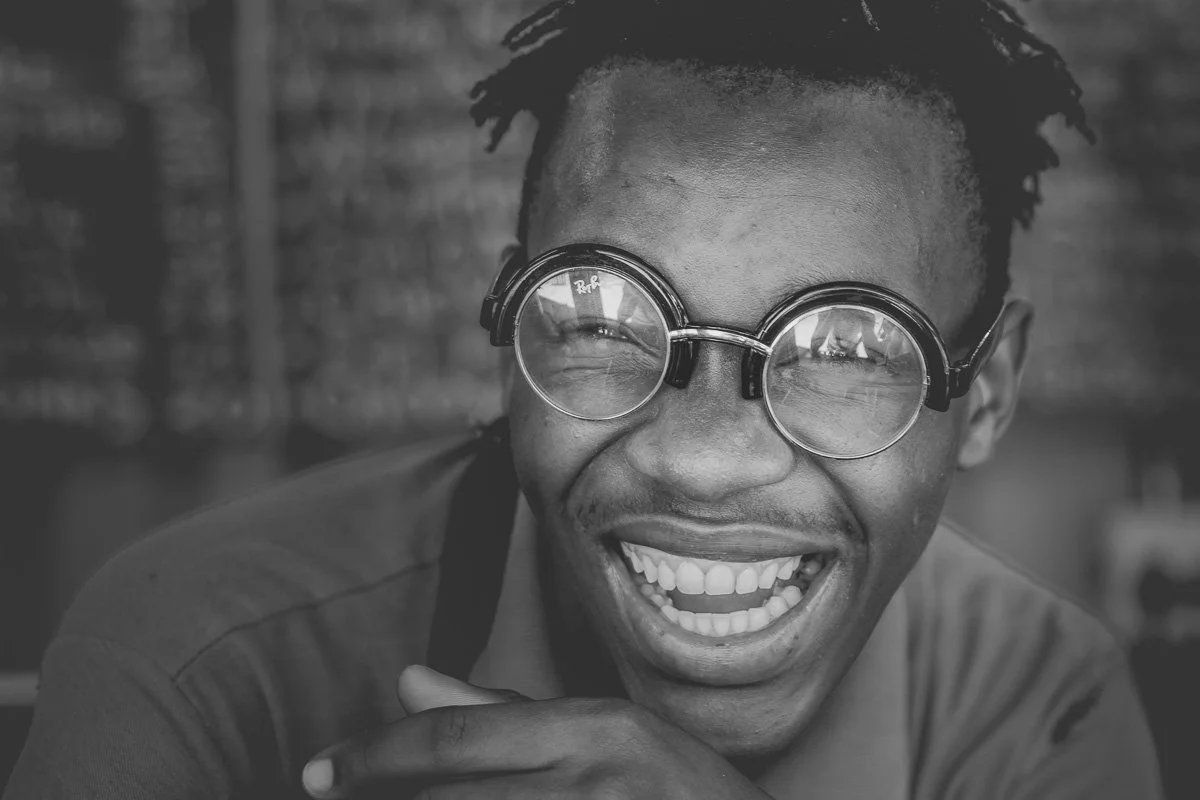
Langa Township, South Africa. The fleeting micro-expression. If you hesitate to calculate settings, genuine joy stiffens into an awkward pose. System 1 lets you connect first and shoot second
The Science: What "Intuition" Actually Is
We treat "artistic intuition" like a mystical muse that descends from the heavens to bless the gifted.
In behavioural science, intuition is understood as something far more grounded: it is compressed pattern recognition.
In a paper published in American Psychologist, Nobel laureate Daniel Kahneman and Gary Klein investigated the conditions that allow intuitive expertise to develop. They agreed on a fundamental principle:
“True intuition only functions when an individual has spent years internalising the underlying patterns and regularities of their environment.”
In Kahneman’s framework, your brain operates on two distinct engines:
System 2 (Slow & Analytical): Conscious, effortful, deliberate, and rule-based. This is the brain you use when you study a contact sheet or analyse why a composition failed.
System 1 (Fast & Instinctual): Automatic, emotional, lightning-fast, and effortless. This is the brain that reacts in a split second in a busy street scene.
The tragedy of the analytical photographer is that they try to use System 2 behind the viewfinder. They stand in front of a fleeting moment and consciously try to solve the puzzle.
By the time their mind finishes calculating, the moment has evaporated.
The entire point of studying visual psychology is to use System 2 to train you in advance—so that in the field, System 1 takes over.
Field Studies: How Science Becomes the Shot
When you train your eye to recognise the underlying psychological Signals, photography shifts from being a checklist to becoming second nature.
Here is how deliberate analytical training converts into intuition:
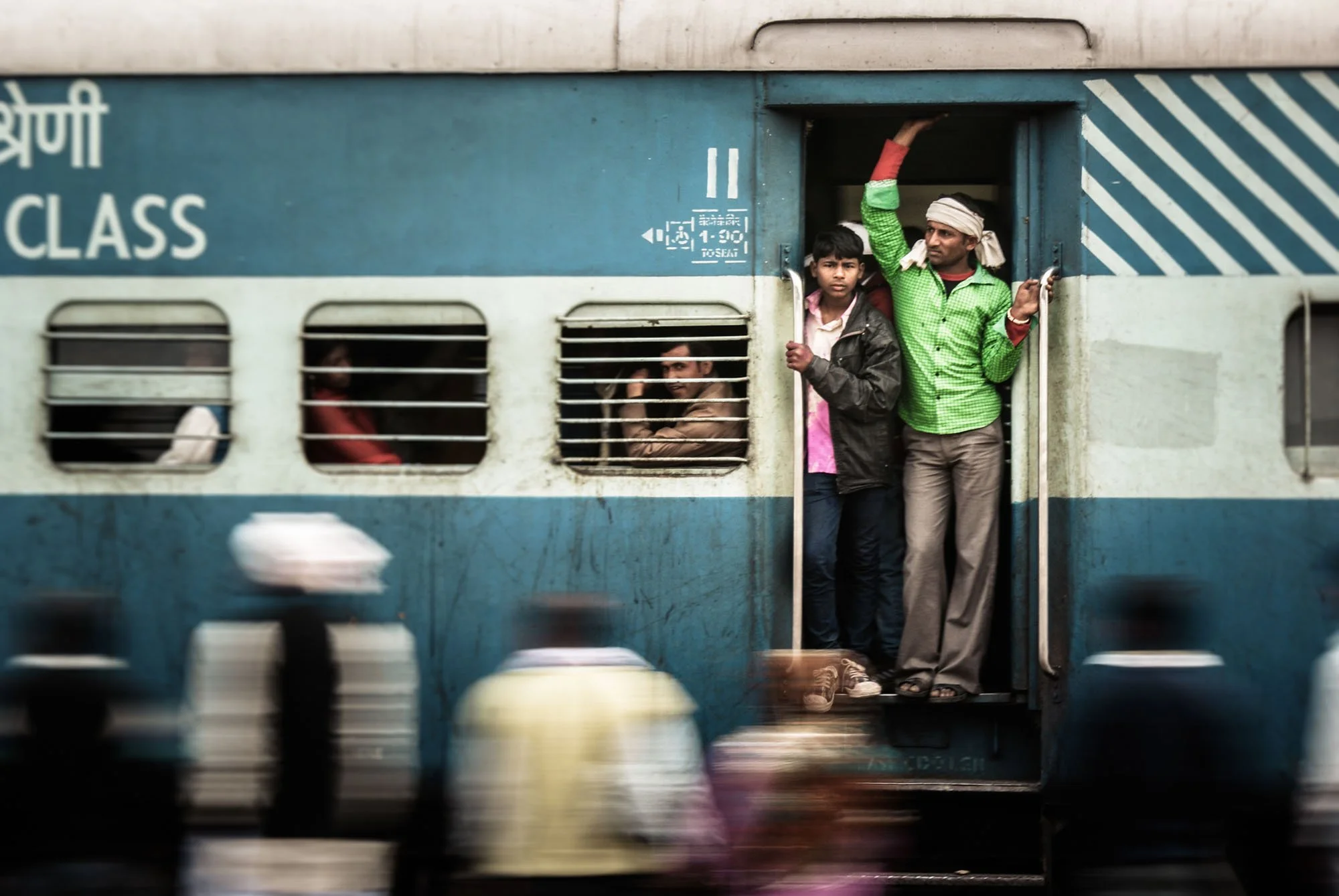
Rajasthan, India. The decisive anchor. Surrounded by the chaotic blur of a surging platform, System 1 instinct knows where to lock the stillness.
1. Anchor in the Chaos (Rajasthan, India)
The System 2 Study: Understanding that when surrounded by motion, the brain seeks structure and more importantly, naturally prioritises human faces and direct eye-contact.
The System 1 Moment: Standing on a deafening, swarming railway platform in India. Passengers were surging past in a blur. I didn’t have time to measure shutter drag or adjust composition. I just locked my eyes onto the open door and the young man hanging out of it and pressed the shutter as I panned the lens. Instinct did what thought could never coordinate in time.
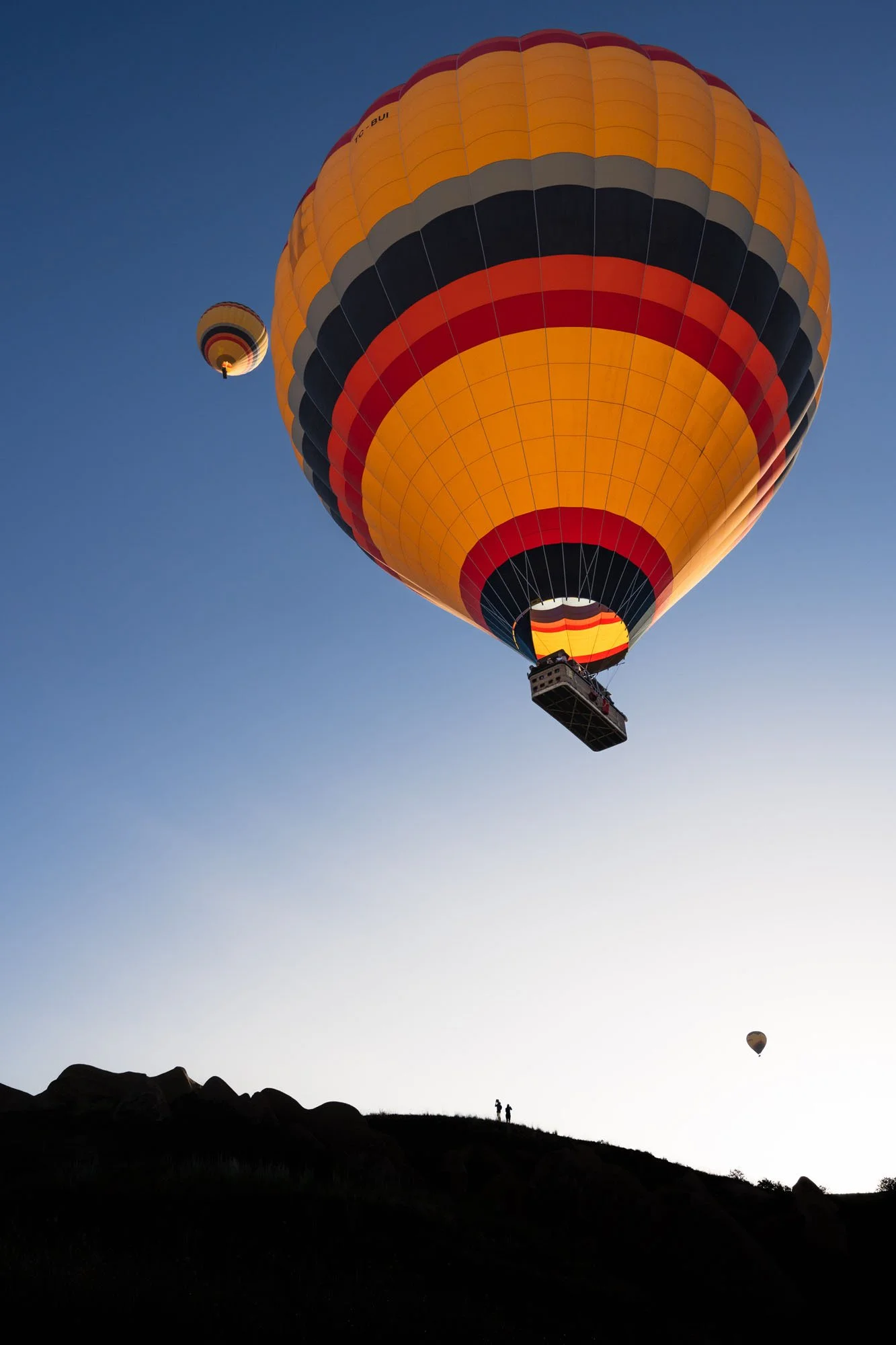
Cappadocia, Türkiye. Relational scale in action. The brain doesn’t register the size of the balloon until it calculates the two human silhouettes on the ridge below.
2. Dwarfed (Cappadocia, Türkiye)
The System 2 Study: Understanding that the brain does not calculate the size of an object in isolation; it measures it through relational processing - evaluating an object against an established human baseline.
The System 1 Moment: Dawn in Cappadocia. A hot air balloon was drifting silently overhead, descending toward the ridgeline. The alignment would last less seconds. If I had stopped to calculate the rule of thirds, the balloon would have drifted out of that window. My instinct recognised the relationship—the giant sphere over two human specks—and fired.
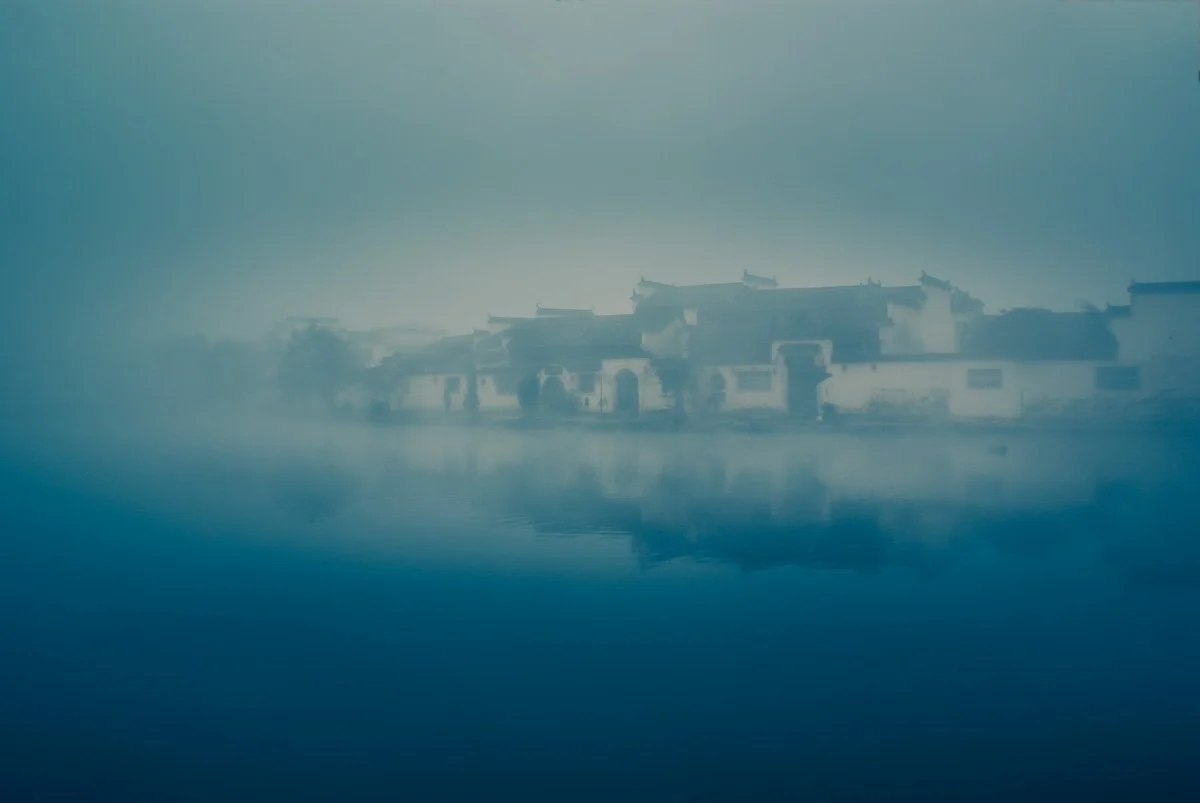
Hongcun, China. Dense morning fog strips away clutter, reducing a complex village to an ethereal, reflection that makes the brain relax
3. Atmospheric Subtraction (Anhui, China)
The System 2 Study: Understanding that fog is nature’s mute button. When you strip away thousands of distracting details, the viewer’s brain relaxes and finally has permission to slow down and absorb the mood.
The System 1 Moment: First light in Hongcun. The blue mist was drifting fast across the lake. My analytical brain wanted to panic—there were no leading lines, no sharp edges, no obvious "hero subject" to lock onto. My instinct told it to shut up. I trusted the weight of the reflection, centred the village in the fog and fired before conscious thought could clutter the frame or make me miss the moment.
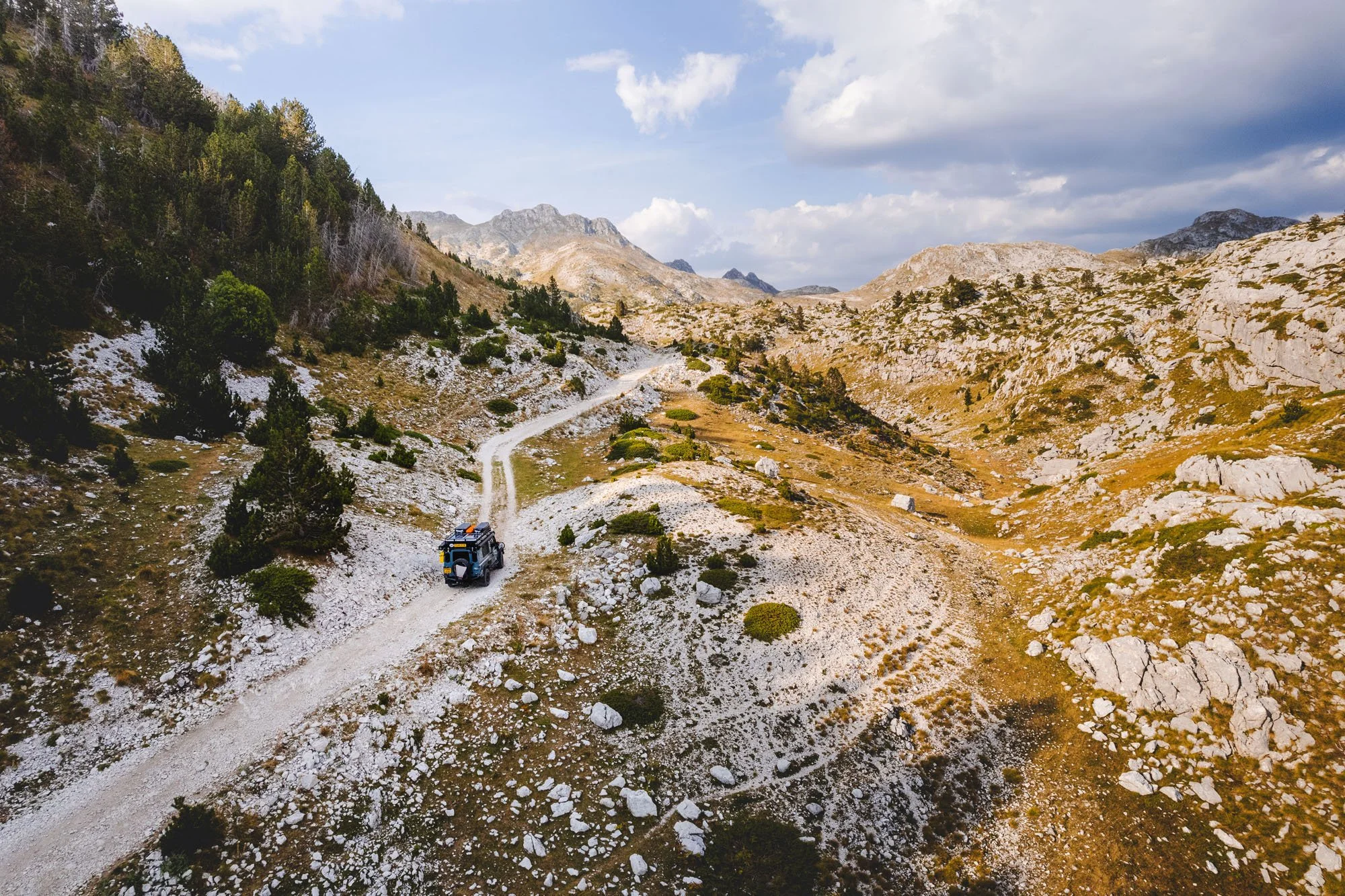
Durmitor National Park, Montenegro. The reward of trained intuition. When the technical mechanics become invisible, you simply start experiencing more.
So What: 3 Rules for Training Your Instinct
If you want to balance the art and the science of photography, change the way you train:
Do the thinking in the study: Study composition, dissect and analyse successful frames with your analytical mind (because studying and deconstructing the work of others is proven to be one of the most effective ways to learn). That is where you build the cognitive archive.
Surrender control behind the glass: When you raise the camera, turn off the intellectual commentary. Stop asking if the photo follows the rules. If your gut twitches, press the shutter.
Remember, grammar serves the poetry: Learning the mechanics of perception is like learning the grammar of a language. Nobody reads a poem to admire the punctuation; they read it to feel the emotion. But if your grammar is broken, the poem is unreadable.
The Operating Manual for Your Eye
This exact balance is why I built The Signal in the Frame.
I didn't design it as a paint-by-numbers formula or a list of rigid rules to memorise. I created it as an operating manual for the human visual cortex—a way for photographers to train their hardware and turn practical study of successful photos into a lightning-fast creative framework.
If you are ready to stop guessing in the field and start creating work people can truly feel, hone your instincts today and discover The Signal in the Frame Here 👈
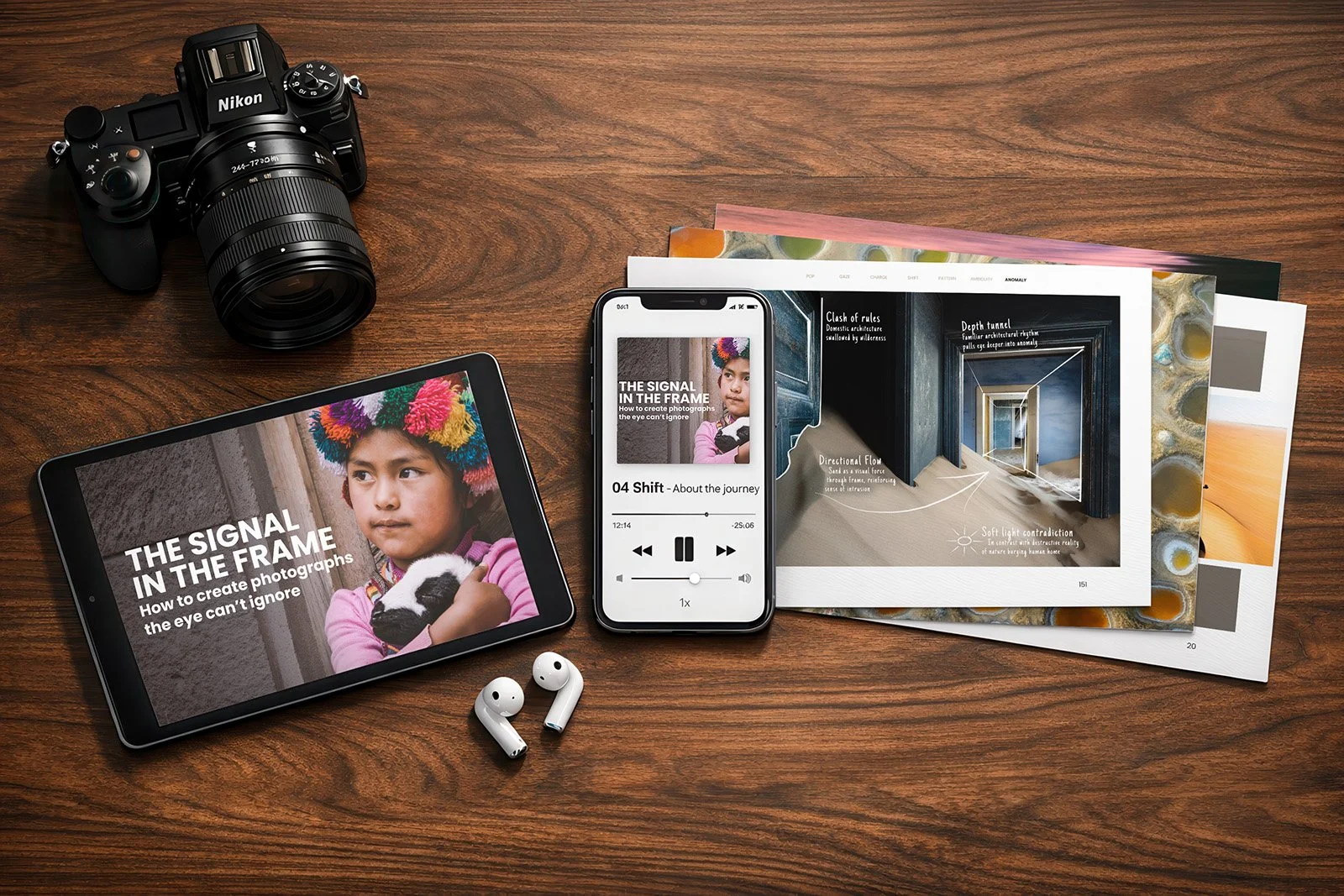
The Signal in the Frame is a science-backed operating manual designed to turn deliberate study into effortless creative instinct.