
Lenses get dusty. Gear gets marked. Things get scuffed.
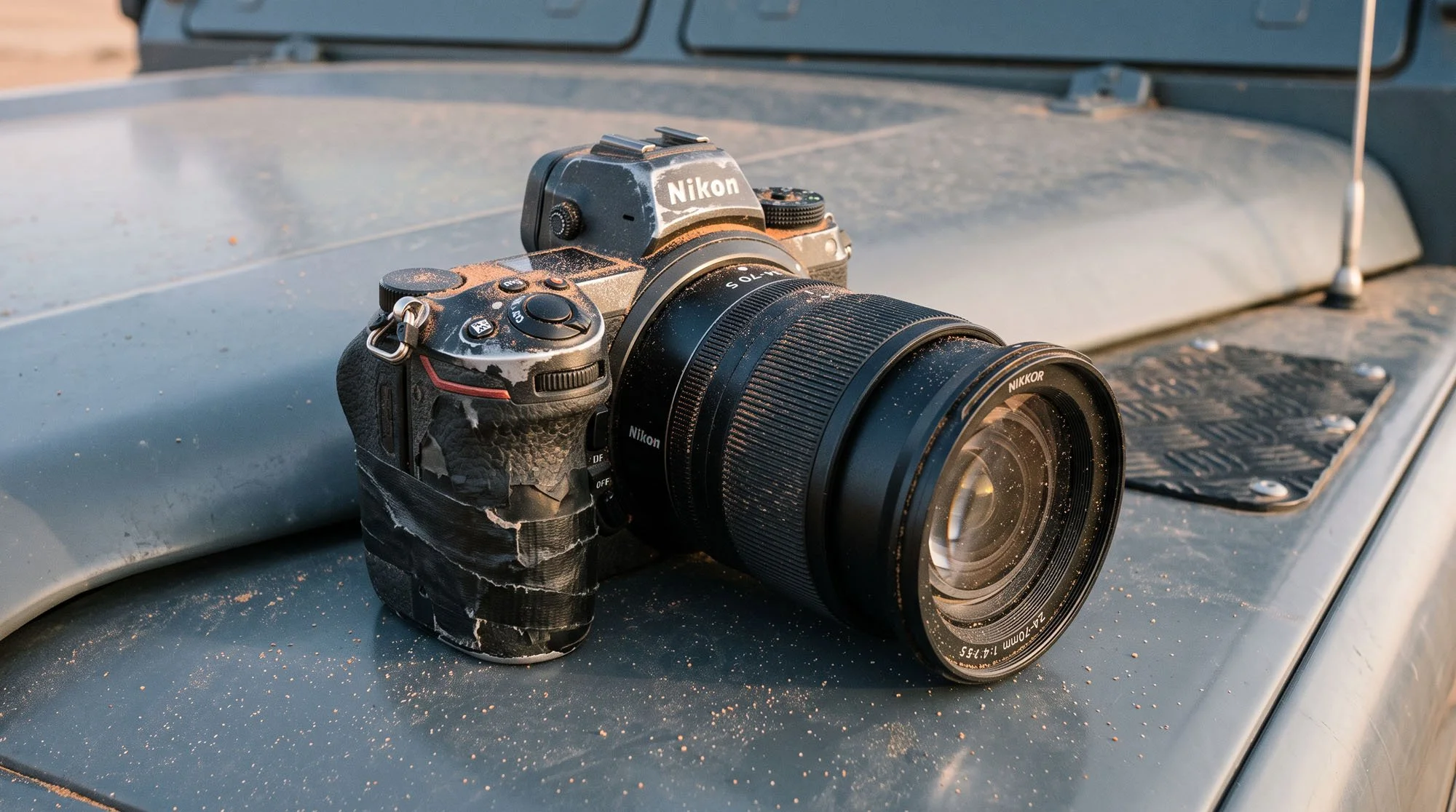
The reality behind the lens. While this concept visual was generated using AI to capture the point, the reality - a Defender’s bonnet, scuffed magnesium alloy, desert sand in the dials - is identical to the one my camera ensures
A friend was looking at my camera recently while we were having a coffee, and I watched his eyes track across the body.
He noticed the chipped paint on the corners of the magnesium frame. He noticed the worn rubber on the grip, the nick on the lens, and the dusting of red Kalahari sand sitting inside the knurling of the command dial.
He winced slightly and asked, “Aren't you worried about keeping it in good condition? What about the resale value?”
I had to smile.
I understand where he was coming from. Photography kit is expensive and we want it to last. Many wrap their gear in silicone skins, transport it in moisture-sealed cases, and treat it like fine porcelain. There’s panic if a single drop of rain hits the prism, or if a lens barrel collects a smear of dust.
I’m certainly not suggesting you be reckless or start throwing your lenses onto concrete. But somewhere along the line, many photographers have forgotten a very basic truth:
A camera is a tool to capture the world. It is not an ornament to be protected from it.
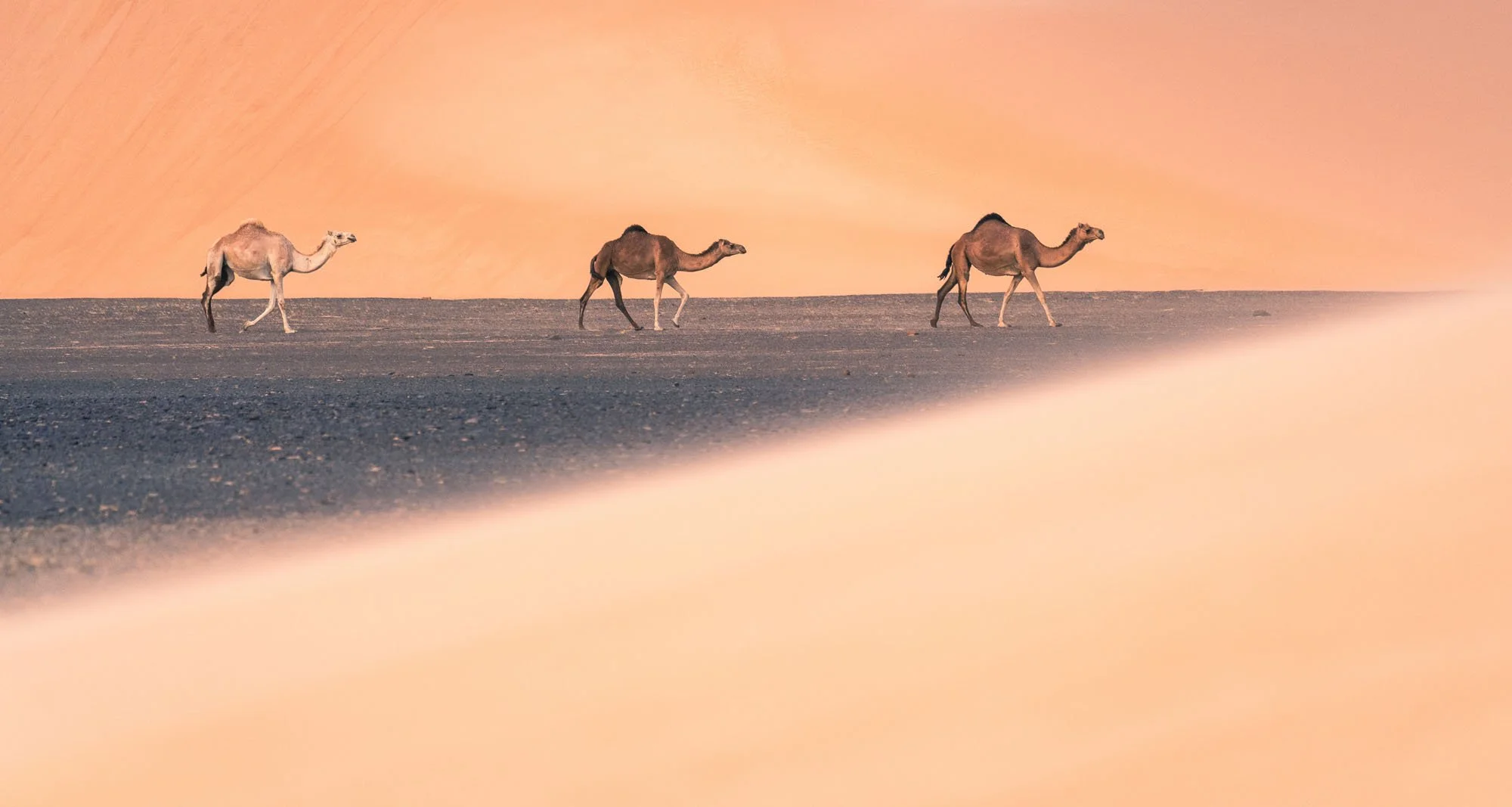
Mauritania. When Saharan sand whips across the dunes, you don’t leave the camera in a padded bag to protect its resale value. You pull it out, swallow the grit, and make the frame.
The Safety of the Bubble Wrap
Over the last several years, overlanding across continents in my Land Rover Defender, my cameras have lived a very unglamorous life.
They have sat on the passenger seat while bouncing across corrugated washboard tracks in Namibia. They have been coated in salt spray on coastal cliffs in Angola, chilled to the bone on high mountain passes in Montenegro, and cleaned with a microfibre cloth on the tailgate of my truck while Saharan sands whipped across the dunes in Mauritania.
Are they marked? Absolutely.
Is there dust inside the zoom ring? Without question.
Have they survived? Every single time.
More importantly: not once has a speck of dust in a lens barrel or a scratch on a camera body ruined a photograph.
Nobody who has ever looked at an image that moved them—an intimate portrait in an African village, a herd of elephants in the dust, or a solitary mountain ridge at dawn—ever zoomed in to ask if the camera body had full resale value. They only cared whether the frame had a pulse.
In psychology, our obsession with keeping things pristine is often a subtle form of emotional protection.
If we treat the camera as something fragile and precious, it gives us a convenient subconscious excuse to stay comfortable. We leave it in the padded bag when it starts to drizzle. We don't take it out when the wind kicks up dust in an alleyway. We avoid the messy, awkward, uncomfortable situations where real life actually happens.
Keeping your gear bubble-wrapped keeps your photography safe. But is safe photography what you want to be about?
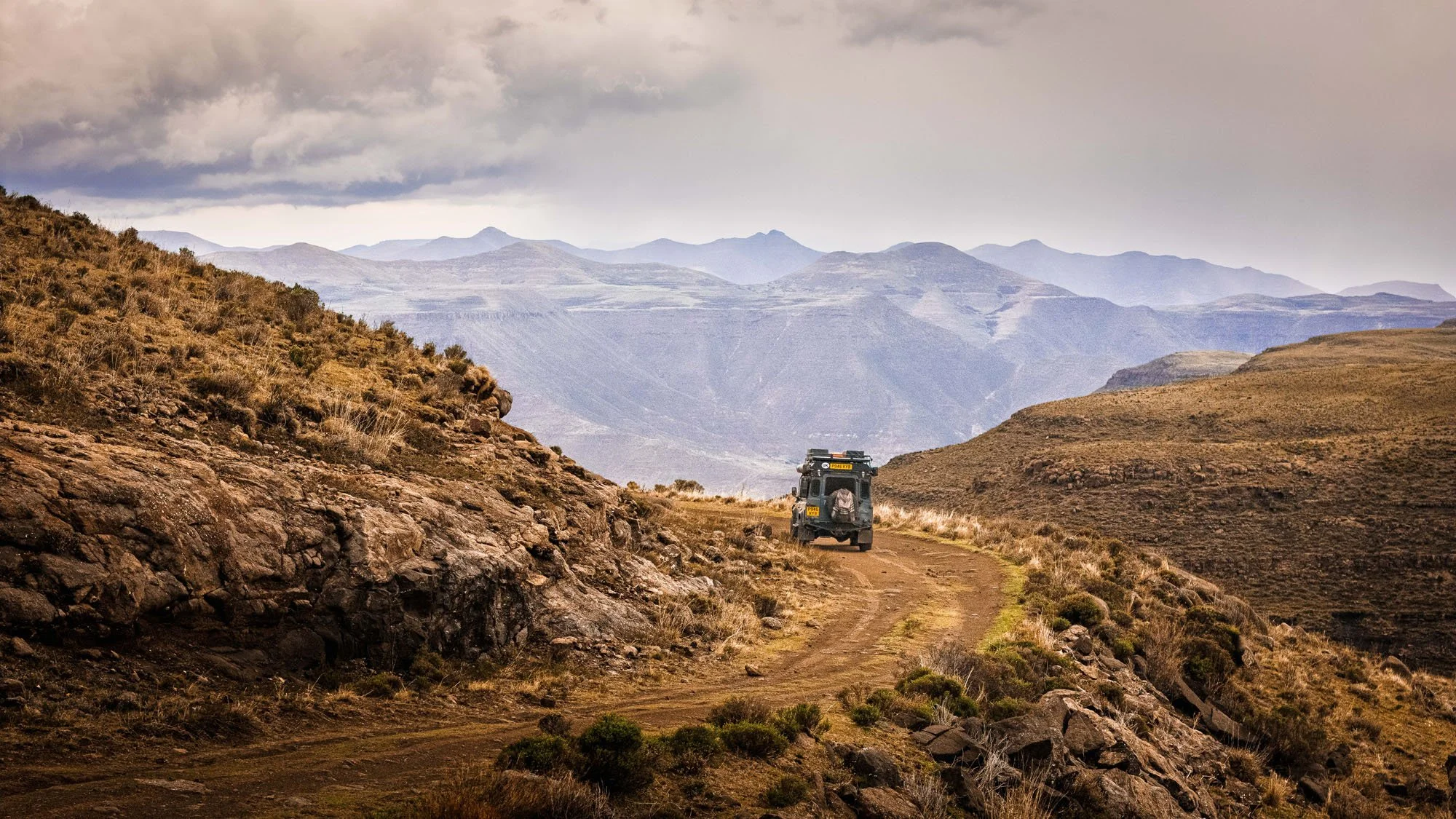
Lesotho. High in the freezing mountain passes, a pristine camera sitting safe at home is useless. The best tool is the one you trust to bounce on the passenger seat through the rough stuff.
The Camera You’ll Actually Take Out
Around this time of year, with Black Friday and the holiday season approaching, you will be told by dozens of advertisements that what you need is the next sensor, the newest autofocus, or a lens with zero optical aberrations.
The underlying message is always the same: buy this, and your work will be better.
I want to offer a much quieter, simpler thought:
Don't worry about having the fanciest camera. Have the camera you won't hesitate to pull out of your bag.
If owning a £3,000 camera makes you so terrified of scratching it that you leave it at home when the weather looks grim, that camera is worse than useless to you. A modest, ten-year-old body with scuffed corners that lives on your shoulder through rain, dust, and crowded streets will produce a hundred times more meaningful work than a pristine masterpiece sitting in a cupboard.
There is a Japanese concept called Wabi-Sabi—the philosophy of finding beauty in things that are weathered, worn and marked by time.
The scratches on your camera body aren't defects. They are the physical journal of where you had the courage to go. They are the marks of rainstorms you stood in, mountains you climbed, and moments you were present for.
Your gear should look like it has lived a life.

England. The camera you are willing to take out in the pouring rain is the one you need to own. If I hadn’t been willing to get my camera wet I would never have captured this shot that turned the rain into something magical.
Invest in the Eye, Not the Silicon
Invest your money and your time in your skills. Invest it in your own visual curiosity.
Buy a ferry ticket.
Fill the fuel tank.
Take a train to the end of the line.
Spend the weekend walking through a neighborhood you’ve never visited, or sitting quietly on a hillside watching how the light moves across the valleys.
Learn how human attention works. Learn how the eye reads contrast, how shadows create volume, and how human gestures reveal character.
Your current camera already has enough dynamic range, megapixels and sharpness to make images that people fall in love with.
It is waiting for you to trust it.
So, don’t worry about having the latest gear and stop worrying about the dust, the rain and the scuffs on the body.
Pull the tool out of your bag, step out the front door and go use it.
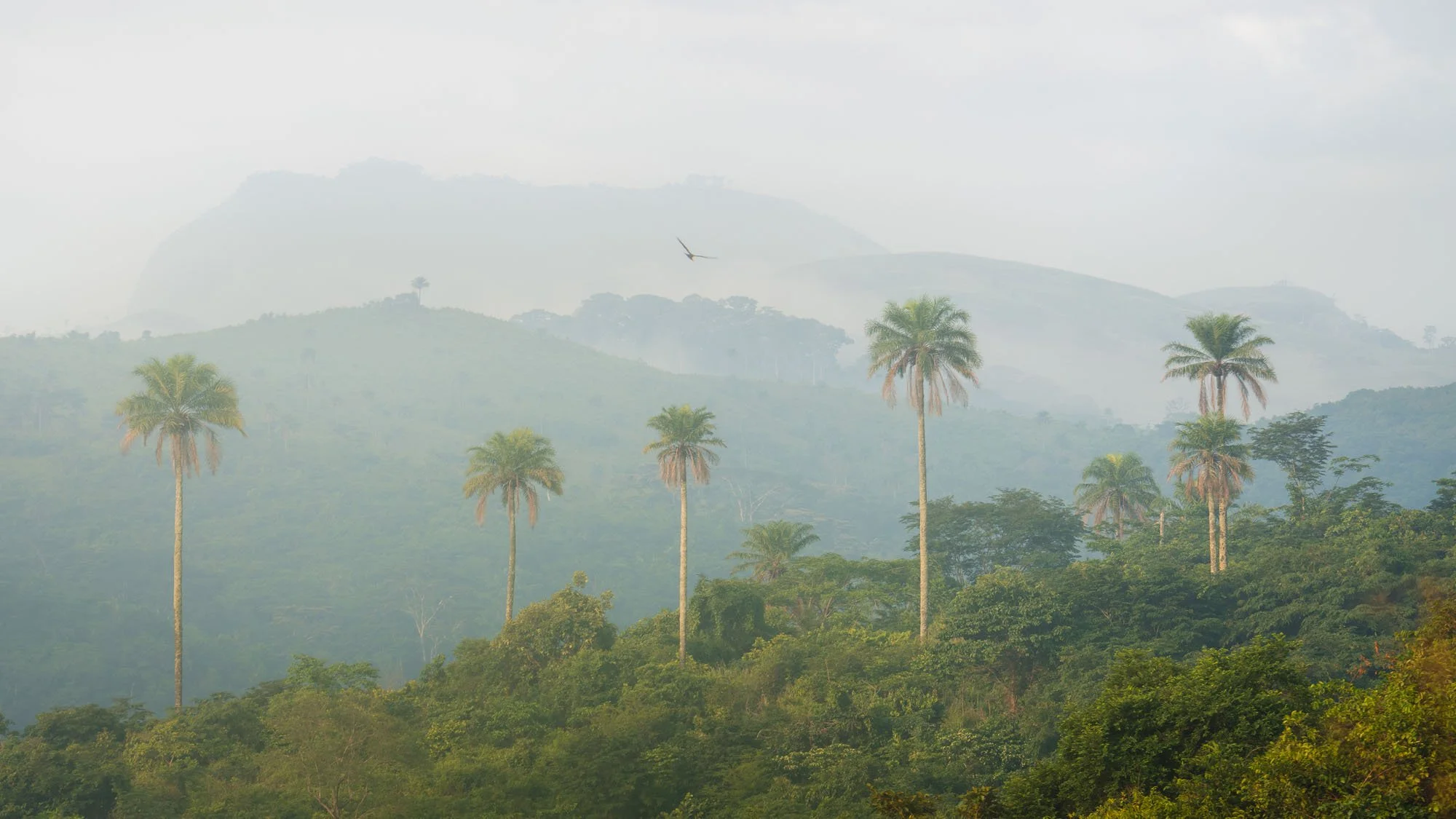
Guinea. Rain, high humidity, and mud aren’t reasons to pack your gear away—they are the exact environmental ingredients that give a photograph an emotional pulse.
See the Signal in Your Work
Great photography isn’t about camera specs; it’s about understanding the visual psychology of how the human brain actually works.
If you are ready to stop looking for answers in camera catalogs and want to master the mental frameworks that turn ordinary scenes into powerful photographs, explore my field system:
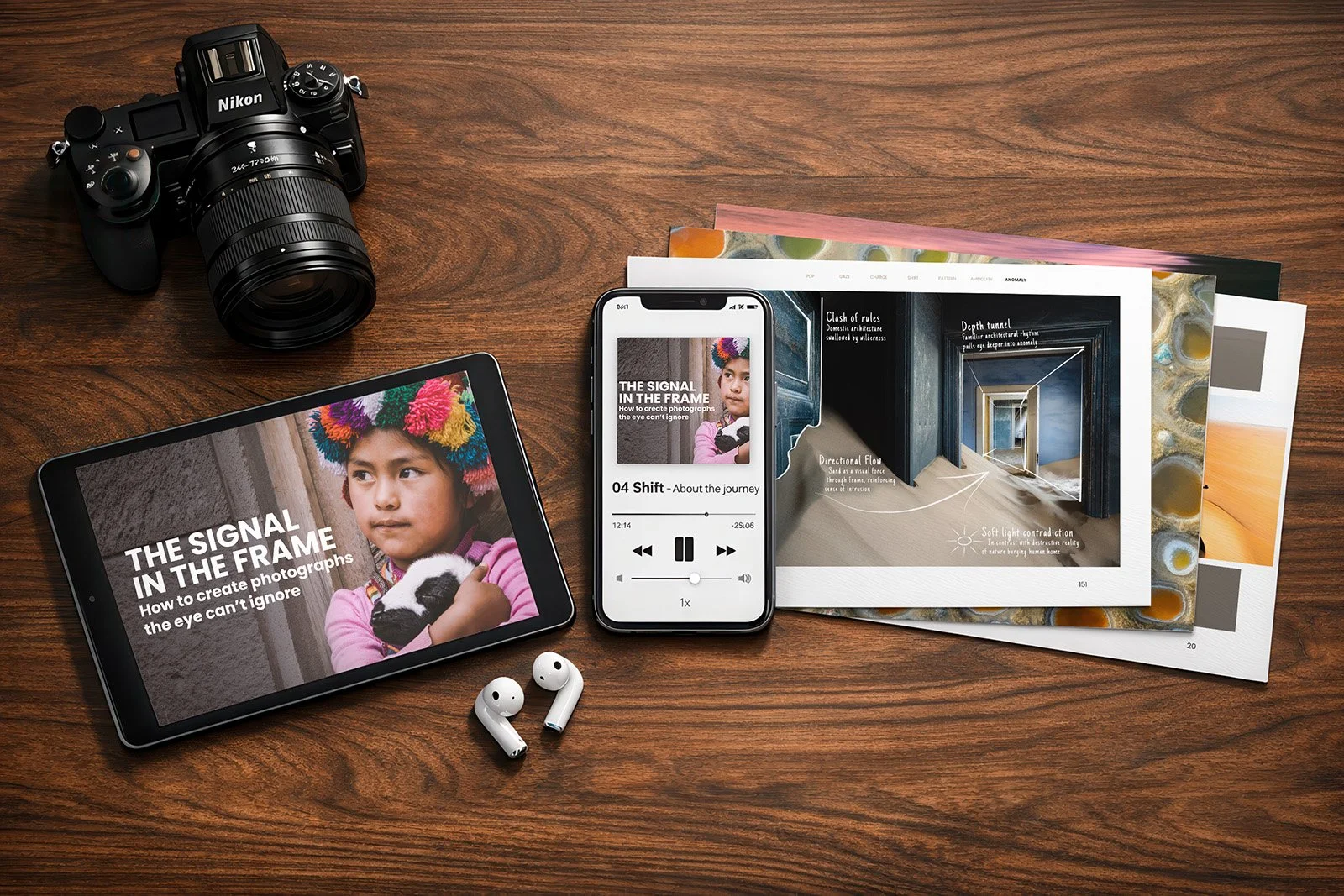
The Signal in the Frame is a science-backed operating manual designed to turn deliberate study into effortless creative instinct.